




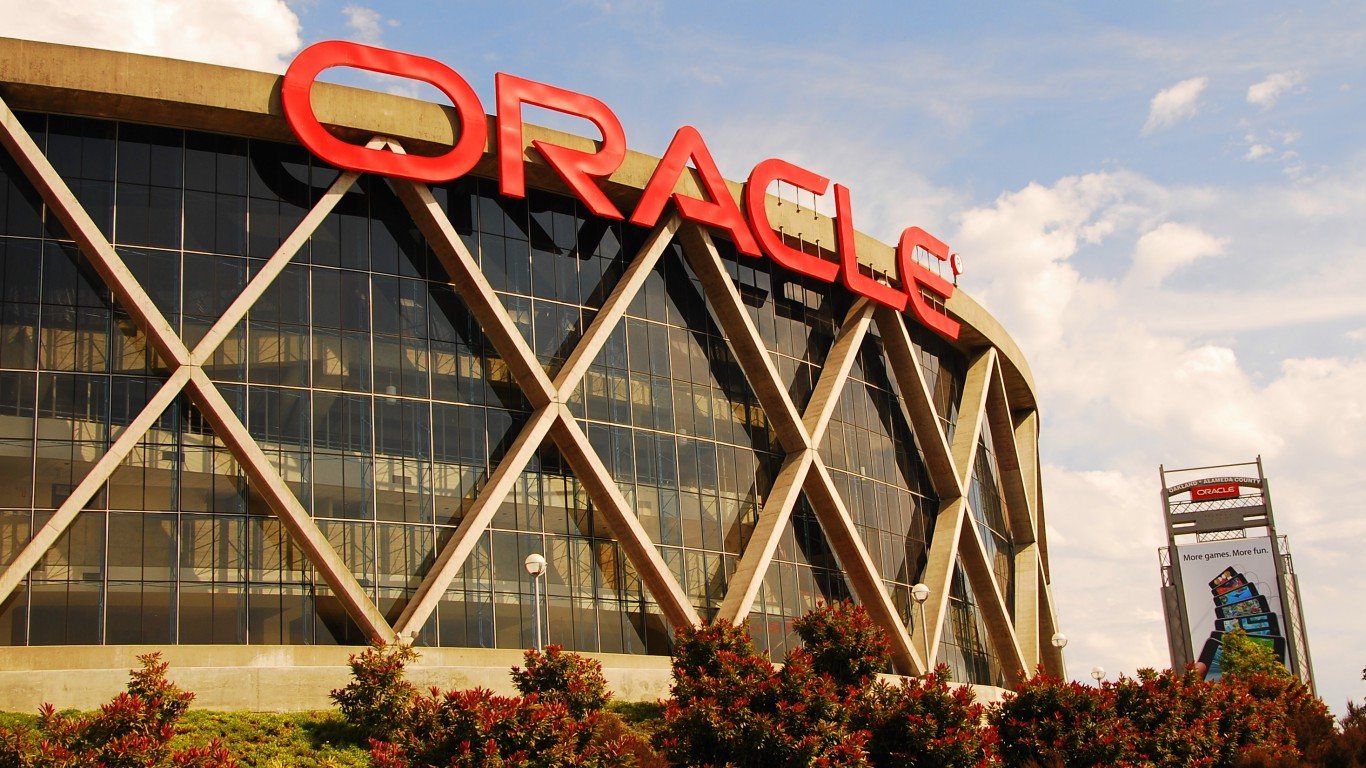
Shares of Oracle (NYSE:ORCL | ORCL Price Prediction) are trading at $139.90 in Monday afternoon action, up 8% on a broad AI-cloud rally. Even with today’s pop, Oracle stock remains down 28% year to date (YTD), a striking gap given cloud peers in the same AI infrastructure conversation are green on the year.
The question investors keep asking: what would it take to push Oracle stock back to $200? That’s a 40% climb from current levels, and framing it as a scenario rather than a forecast is the right approach here.
Oracle is the primary focus, so both sides deserve airtime. The bull case rests on a massive cloud backlog converting to profitable revenue. The bear case rests on capital intensity that could keep free cash flow deeply negative for another year or two.
Why Oracle Stock Fell So Hard
Oracle stock sold off after the company’s fiscal Q4 2026 report in early June missed on cloud sales, and sentiment hasn’t fully recovered. Investors have layered on concerns about heavy AI capital spending, negative free cash flow, and heavy reliance on a large multi-year OpenAI cloud-infrastructure deal reportedly worth about $300 billion.
The financial footprint of that buildout is unusual. Oracle’s fiscal 2026 capital expenditures ran $55.66 billion, and free cash flow came in at negative $23.69 billion. Management also plans to raise roughly $40 billion in debt and equity in fiscal 2027 to fund the next leg of buildout.
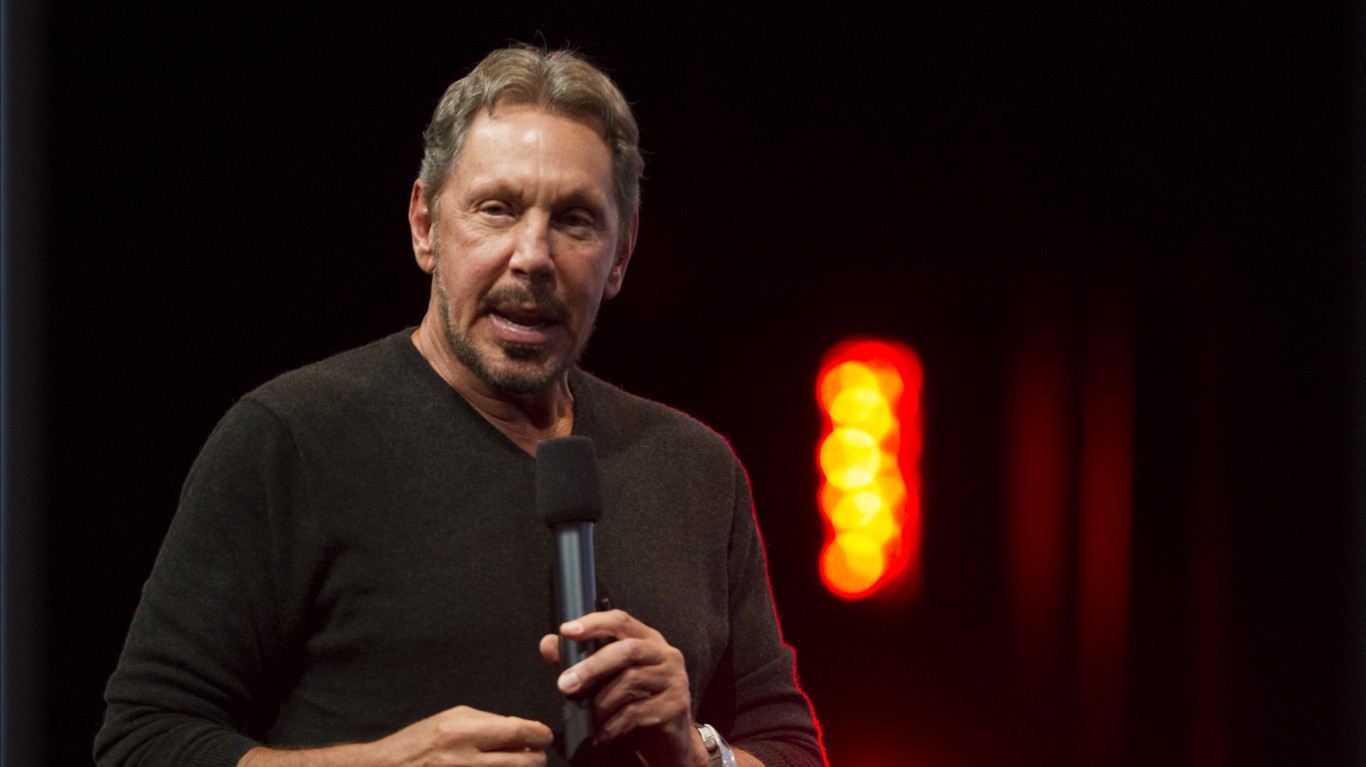
Retail investors on Reddit have piled onto a separate concern. Larry Ellison, Oracle’s chief technology officer, has pledged 346 million ORCL shares as loan collateral, and the slide has amplified that overhang. The dominant Reddit narrative on Oracle reflects skepticism, not enthusiasm.
The Path Back to $200
Bank of America analyst Vivek Arya frames the bull case in terms of scale. Oracle disclosed $638 billion in remaining performance obligations last quarter, its cloud backlog, with 12% due within one year and 34% in the two-to-three year window.
Across the top four cloud providers, backlogs now exceed $2.3 trillion, up 16% from the first quarter. Arya sees 2026 hyperscaler capex above $860 billion, up 80% year over year (YoY), with a path toward roughly $1.2 trillion by 2027.
He expects negative free-cash-flow margins to bottom around -5% to -6% in 2027-2028 before returning to healthy profitability. Compute, in his view, remains supply-constrained.

The best-case path to $200 for Oracle stock likely requires four things to line up: converting that backlog into profitable OCI (Oracle Cloud Infrastructure) revenue, demonstrating clear return on the AI capex bill, easing the free-cash-flow overhang, and earning a valuation re-rating back toward the level Oracle stock held earlier in the year. Oracle’s trailing 12-month (TTM) P/E ratio of 24.06x is already reasonable, so multiple expansion isn’t the main lever. Earnings execution is.
How Oracle Stacks Up Against Cloud Peers
The peer group tells the story of Oracle as the large-cap laggard. Snowflake (NYSE:SNOW) shares are up 41% YTD, with Snowflake stock riding raised product revenue guidance and RPO growth. Meanwhile, CoreWeave (NASDAQ:CRWV) stock is up 19% YTD (mostly from today’s price gains, and still a laggard compared to SNOW) despite triple-digit revenue growth, weighed down by widening losses. Neither Snowflake nor CoreWeave carries a TTM P/E ratio because both aren’t profitable on a trailing 12-month basis.
The WisdomTree Cloud Computing Fund (NASDAQ:WCLD) offers a thematic read on the group. The ETF trades at a holdings-weighted P/E ratio of 33.73x, and WCLD shares are broadly participating in today’s rally. The ETF is concentrated in cloud software and isn’t leveraged, so it can be a diversified way to express a cloud-bullish thesis without single-name binary risk.
What Investors Can Watch For Now
Oracle will report its fiscal Q1 2027 results next quarter, and management has guided to 27% to 29% total revenue growth and 58% to 64% cloud revenue growth for the period. That earnings report is the next scheduled test of whether the backlog is converting on schedule and whether the free cash flow drag is narrowing.
Investors can watch for signs that OCI revenue is compounding fast enough to justify the capex bill, and for any update on the OpenAI arrangement’s cadence. Given the size of the move required to reach $200, investors should consider keeping their Oracle position sizes modest while the free cash flow question is still open.
Oracle stock is arguably a turnaround story rather than a clean growth trade at this point. The setup could work, or it could take longer than the current $248.15 analyst consensus price target implies.
Contact [email protected] for any questions or corrections.











 Top Gaining Stocks
 Top Losing Stocks