Detroit Car Giants Stay in Air Pollution Business
Ford and its Detroit peers favor gas-guzzling pickups over smaller, less profitable sedans. EV demand is down, and the EPA has turned its back on fuel efficiency standards.


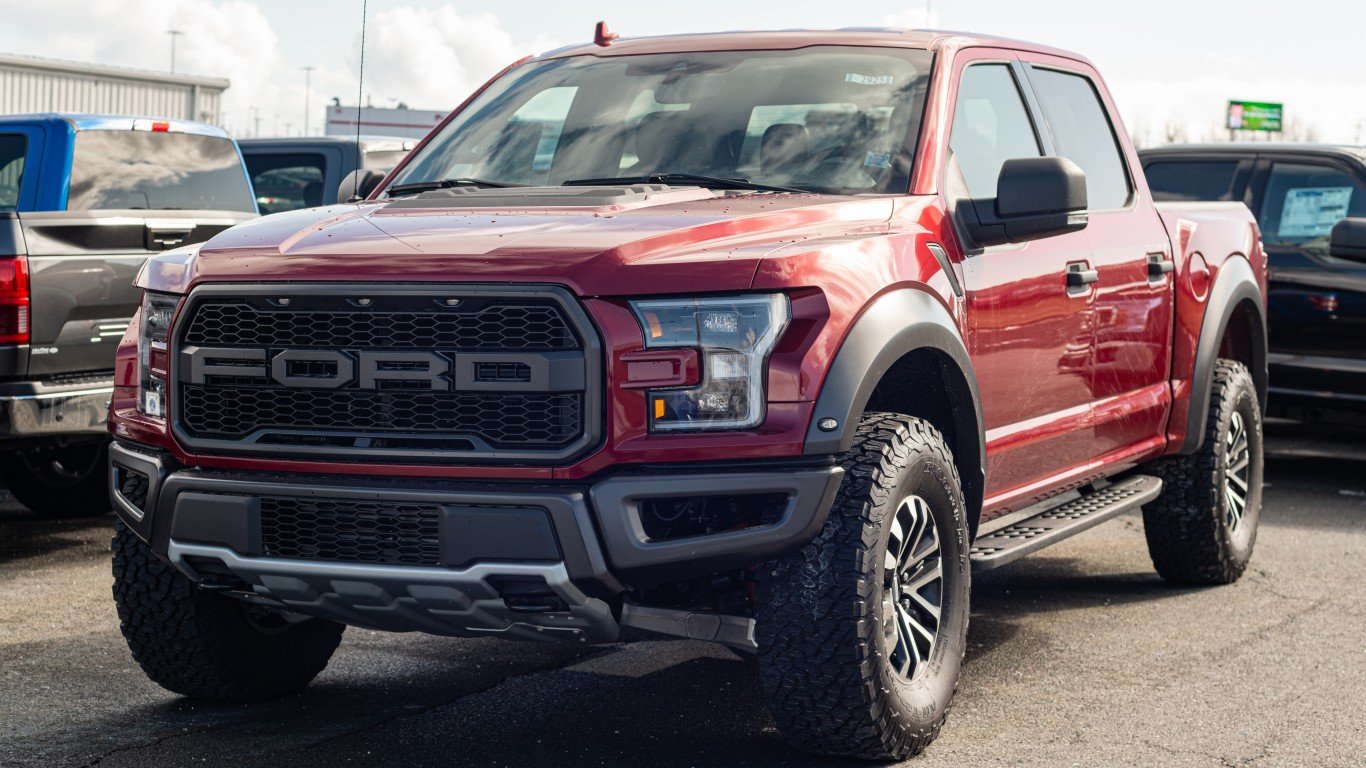
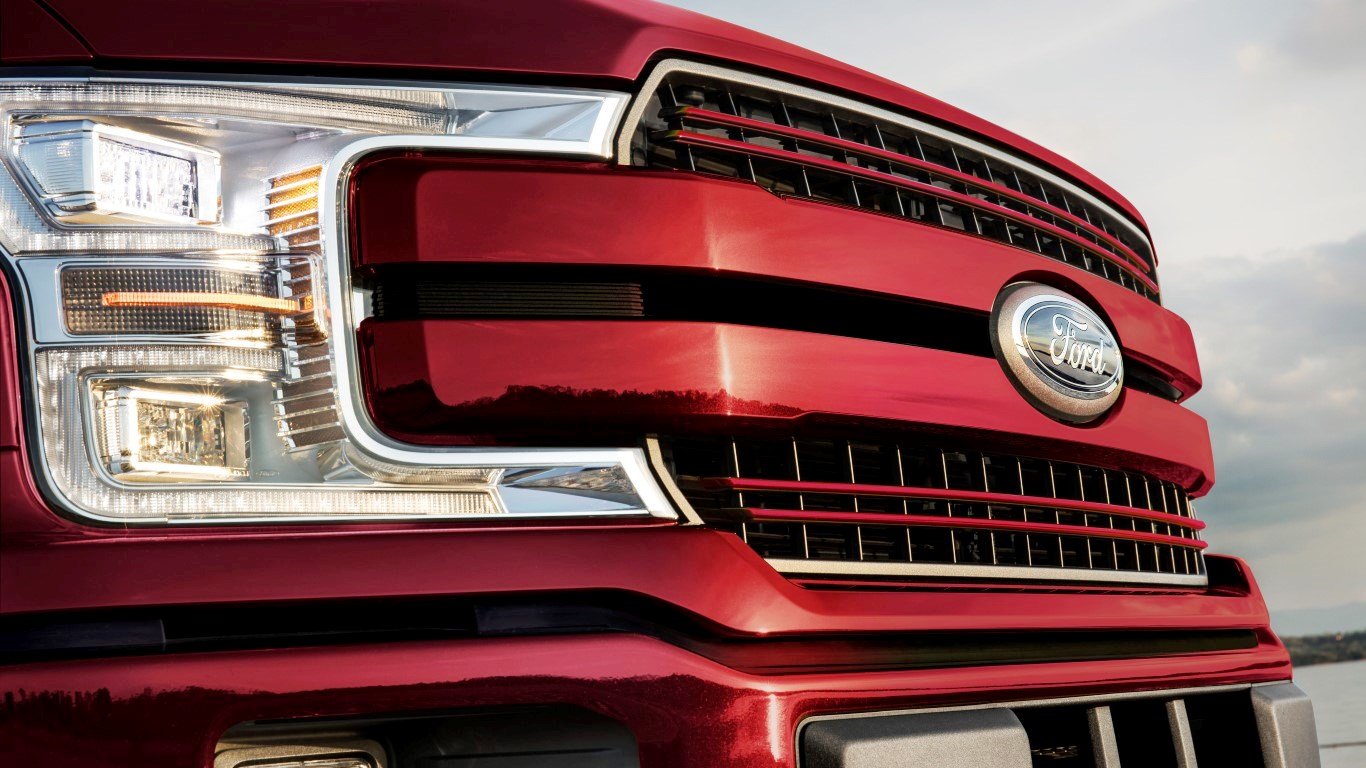
It was inevitable that a headline would show up like the one that appeared in The Wall Street Journal recently: “Detroit Rediscovers Its Love for Giant Gas Guzzlers.” The fact is, 37% of all U.S. sales of Ford Motor Co. (NYSE: F | F Price Prediction) vehicles are the F-Series pickup. Sales of the electric version, called the F-150 Lightning, were tiny in July. There were 2,381 of Ford’s total car, SUV, and pickup figure of 189,313 for the month.
The Ford F-Series has several versions powered by an eight-cylinder five-liter engine. It would be hard to find many vehicles that get worse gas mileage. The F-Series competitor Ram pickup ranked fifth based on unit sales in the first half of 2025. Another competitor, the Chevy Silverado, ranked second.
The U.S. car industry has turned its back on smaller fuel-efficient cars for several reasons. The first is that many are electric vehicles (EVs). Ford, GM, and Stellantis have had almost no success in EV sales, despite investing billions of dollars.
Small sedans are less profitable than pickups and SUVs. Ford phased out most of its sedans in 2018, leaving much of the market to the Japanese, and later the South Koreans. The company has shown no interest in getting back into that business.
One reason car companies have moved to less fuel-efficient vehicles is because they can. NPR reported on July 29: “For years the Environmental Protection Agency has pushed carmakers to reduce how much vehicles contribute to climate change. Today the EPA laid out plans to not just weaken those rules, but end them entirely.” Car companies can build less fuel-efficient cars because they no longer face penalties.
The rise in EV sales in the United States has leveled off. The $7,500 tax credit given with the sales of many of these will be gone in the fourth quarter.
Cars with poor fuel efficiency will rule the roads, perhaps for years.
Ford Stock Price Prediction and Forecast 2025-2030
Contact [email protected] for any questions or corrections.
Douglas A. McIntyre is the co-founder, chief executive officer and editor in chief of 24/7 Wall St. and 24/7 Tempo. He has held these jobs since 2006.
McIntyre has written thousands of articles for 24/7 Wall St. He is an expert on corporate finance, the automotive industry, media companies and international finance. He has edited articles on national demographics, sports, personal income and travel.
His work has been quoted or mentioned in The New York Times, The Wall Street Journal, Los Angeles Times, The Washington Post, NBC News, Time, The New Yorker, HuffPost USA Today, Business Insider, Yahoo, AOL, MarketWatch, The Atlantic, Bloomberg, New York Post, Chicago Tribune, Forbes, The Guardian and many other major publications. McIntyre has been a guest on CNBC, the BBC and television and radio stations across the country.
A magna cum laude graduate of Harvard College, McIntyre also was president of The Harvard Advocate. Founded in 1866, the Advocate is the oldest college publication in the United States.
TheStreet.com, Comps.com and Edgar Online are some of the public companies for which McIntyre served on the board of directors. He was a Vicinity Corporation board member when the company was sold to Microsoft in 2002. He served on the audit committees of some of these companies.
McIntyre has been the CEO of FutureSource, a provider of trading terminals and news to commodities and futures traders. He was president of Switchboard, the online phone directory company. He served as chairman and CEO of On2 Technologies, the video compression company that provided video compression software for Adobe’s Flash. Google bought On2 in 2009.