Is Data the Oil of the Future?
Some of the world's largest oil traders are beefing up their technology chops, hiring more data scientists to help them garner insights into price movements from the masses of available data. One oil major is also in the hunt.

More than nine years ago, Netscape founder turned venture capitalist Marc Andreessen summed up his view of the future: “In short, software is eating the world.” That pronouncement came just four years after the introduction of Apple’s iPhone, when the company’s annual sales of the smartphone barely topped 50 million per year. Last year, Apple shipped more than 190 million iPhones.
Here’s another comment Andreessen made at the same time: “Today’s stock market actually hates technology.” He was referring to low valuation for tech firms like Apple, even as Apple passed Exxon Mobil to become the largest company in the United States measured by market cap.
The stock market today hates energy. Energy stocks have lost about 47% of their value in the past 12 months, largely due to the damage caused to the global economy from the coronavirus pandemic. The tech sector meanwhile has added 46% to its share value in the past 12 months.
Oil supermajor Royal Dutch Shell PLC (NYSE: RDS-A) last year announced strategies that will turn the company away from fossil fuels and toward electricity and renewables. But can the world replace energy with software?
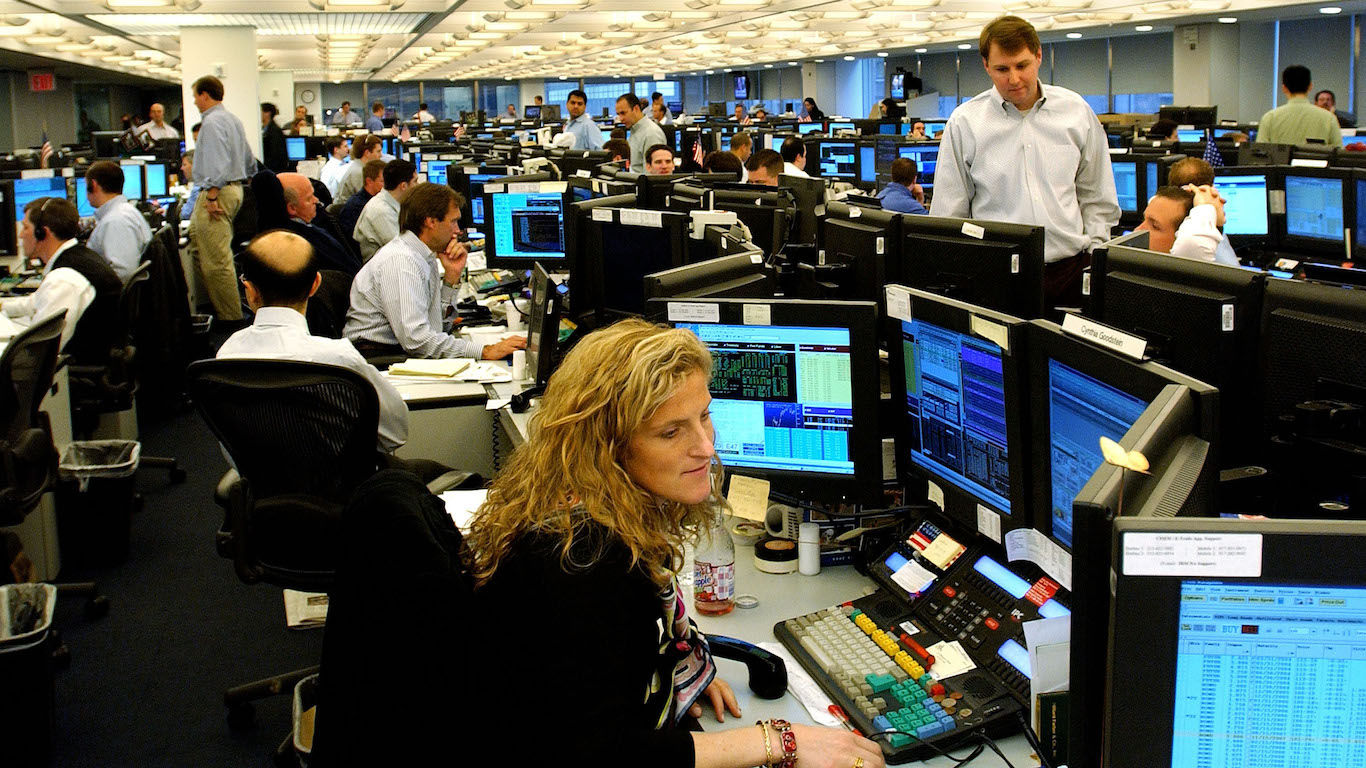
Maybe not, but some of the world’s largest commodities trading houses have come to understand that software is indeed eating the world. The world’s largest independent oil trader, Vitol, currently employs 40 data scientists whose job it is to cull the massive amounts of data now available to the firm’s traders and turn it into actionable information.
At the Financial Times’s virtual Commodities Global Summit on Monday, Vitol’s chief information officer noted, “Some say data is the oil or energy of the future.”
Vitol has been building a “data refinery” to sift through millions of data points collected on everything from real-time auto mileage data to airline flight bookings and cancellations that can then be used to give Vitol’s traders predictive information on the near-term and longer-term demand for oil and other commodities.
Mercuria Energy Group, a smaller player than Vitol, has 30 data scientists focused on natural gas and electricity trading, according to a report at Bloomberg. Mercuria’s chief information officer echoes Vitol: “Data is the new currency.”
When Shell released second-quarter results in July, it announced a write-down on the value of its assets totaling nearly $17 billion. In 2018, Shell said it had completed a three-year program to divest $30 billion in assets and, last year, committed to another $10 billion in divestitures by this year. Shell dumped about $5 billion assets in 2019 and reported $2.9 billion in divestment proceeds through the second quarter of this year.
Shell plans eventually to become an electricity trader and an owner of some generating assets, although the oil giant said last year that it prefers to remain asset-light. Shell already has a significant trading operation in oil, refined products and natural gas. In the second quarter, oil trading accounted for a third ($800 million) of the company’s adjusted earnings. That may make the conversion easier, but Shell could be a very different (read, smaller) company.
If one of the world’s half-dozen largest oil companies plans (eventually) to get out of the oil business and compete with commodities traders in the market for electricity, that seems like a textbook example of software eating the world. Not only that, software also may save the world from the ravages of climate change.
Contact [email protected] for any questions or corrections.
Paul Ausick has been writing for 247Wallst.com for more than a decade. He has written extensively on investing in the energy, defense, and technology sectors. In a previous life, he wrote technical documentation and managed a marketing communications group in Silicon Valley.
He has a bachelor's degree in English from the University of Chicago and now lives in Montana, where he fishes for trout in the summer and stays inside during the winter.