Inflation Is Back, Time to Worry
The Producer Price Index surged in July, in part due to tariffs. Consumers could face sharp inflation again toward the end of the year.


While the Consumer Price Index (CPI) was up only 2.7% year over year in July, a more important measure rose much higher. The Producer Price Index (PPI ) was up 3.3% in July compared to a year ago. More importantly, the number was up 0.9% month over month. Excluding food, energy, and trade services, the index was up 0.6%, the biggest gain since March 2022.
Seeing the PPI so much higher than the CPI raises the question whether businesses are absorbing price increases (some of which may be from tariffs) or the consumer will soon see these price increases. Either answer is bad news. Chris Zaccarelli, chief investment officer at Northlight Asset Management, told CNBC, “The large spike in the Producer Price Index this morning shows inflation is coursing through the economy, even if it hasn’t been felt by consumers yet.”
The increase also means the Federal Reserve will need to pause as it considers sharp cuts in interest rates for the balance of the year. The stock market, at its current levels, is counting on lower interest rates to help the economy. One of the effects should be a drop in mortgage rates.
Economists worry that once tariffs actually take effect, the PPI could rise even faster. Today, the number is probably up as U.S. businesses buy goods ahead of the tariffs. If this is the case, consumers may face sharp inflation again toward the end of the year.
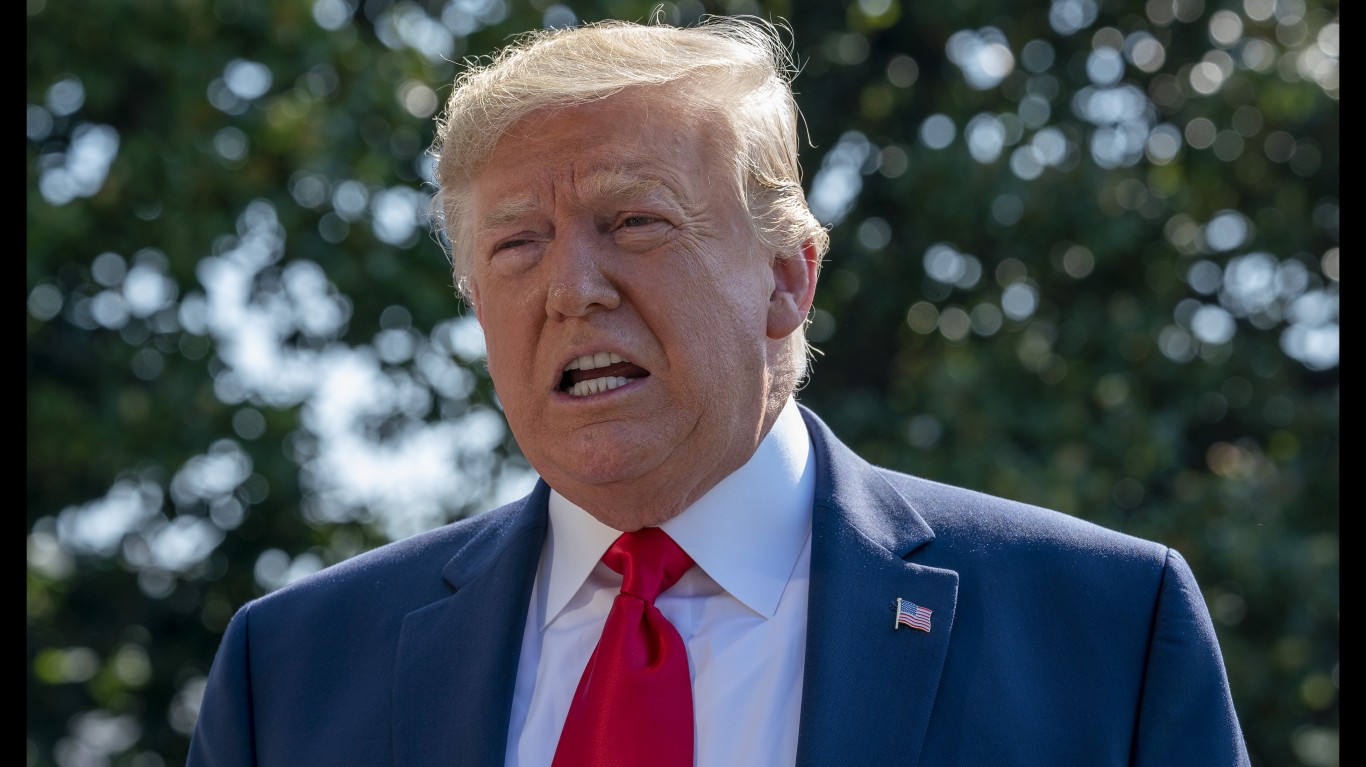
What experts can only guess is whether businesses can take price hikes and not pass them on to customers. Walmart says it will pass along some costs, which brought angry comments from President Trump. The large car companies said they would need to raise prices as well.
The threat is that tariffs will lead to inflation like that in 2022. That’s when it topped 6%—and hit 9% one month. Businesses cannot survive for long with compressed margins. The consumer will be stuck with part of the tariff bill.
Contact [email protected] for any questions or corrections.
Douglas A. McIntyre is the co-founder, chief executive officer and editor in chief of 24/7 Wall St. and 24/7 Tempo. He has held these jobs since 2006.
McIntyre has written thousands of articles for 24/7 Wall St. He is an expert on corporate finance, the automotive industry, media companies and international finance. He has edited articles on national demographics, sports, personal income and travel.
His work has been quoted or mentioned in The New York Times, The Wall Street Journal, Los Angeles Times, The Washington Post, NBC News, Time, The New Yorker, HuffPost USA Today, Business Insider, Yahoo, AOL, MarketWatch, The Atlantic, Bloomberg, New York Post, Chicago Tribune, Forbes, The Guardian and many other major publications. McIntyre has been a guest on CNBC, the BBC and television and radio stations across the country.
A magna cum laude graduate of Harvard College, McIntyre also was president of The Harvard Advocate. Founded in 1866, the Advocate is the oldest college publication in the United States.
TheStreet.com, Comps.com and Edgar Online are some of the public companies for which McIntyre served on the board of directors. He was a Vicinity Corporation board member when the company was sold to Microsoft in 2002. He served on the audit committees of some of these companies.
McIntyre has been the CEO of FutureSource, a provider of trading terminals and news to commodities and futures traders. He was president of Switchboard, the online phone directory company. He served as chairman and CEO of On2 Technologies, the video compression company that provided video compression software for Adobe’s Flash. Google bought On2 in 2009.