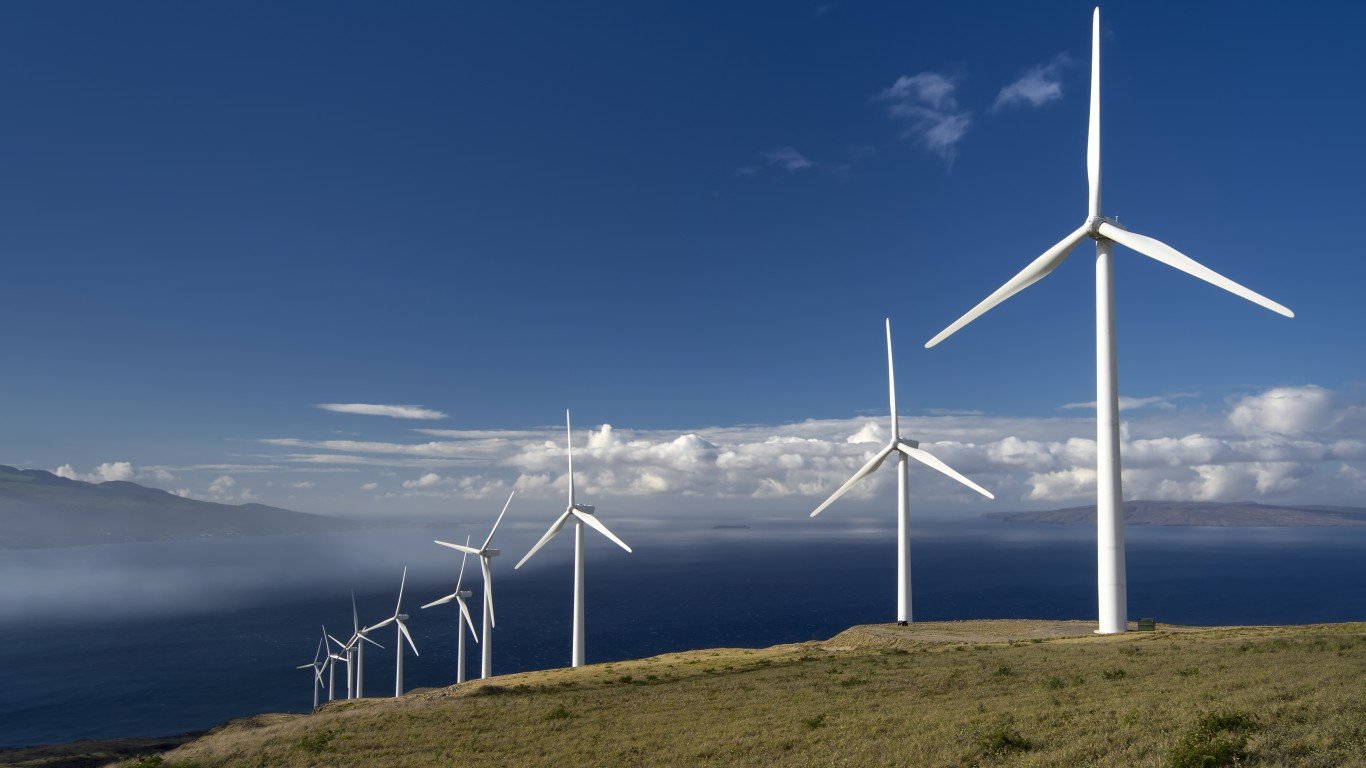
Wind Power: The Realization Of America’s Energy Dreams
The great dream of America’s energy planners and nightmare of the oil companies and coal producers is that one day the US will have a large scale, economic way to bring electricity to homes across the United States. The Department…


That part of the analysis is obvious. What is not is how quickly the American alternative energy industry can evolved to a period when wind energy has a substantial ability to deliver a large portion of the nation’s energy needs. The government analysis predicts that 20% of all US electrical power could come from wind by 2030.
To make matters even better:
$200 billion in new economic activity and create more than 43,000 permanent, well-paid technical jobs in manufacturing, construction, engineering, operations and maintenance. Extrapolating from European studies, NREL estimates that offshore wind will create more than 20 direct jobs for every megawatt produced in the United States. of added wind capacity could come from offshore wind. Achieving 20% wind would provide significant benefits to the nation, such as increased energy security, reduced air and water pollution, and the stimulation of the domestic economy.
The government document goes so far as to describe the placement and technology behind that turbines that would power the electrical grid.
What the study does not provide in any abundance is a way that the government will raise the money for the one-time cost to upgrade the American energy grid in a fashion that will allow the coastal wind power to reach the rest of the nation. There are also challenges when wind rigs are set up in water that is more than sixty meter deep.
Forecasts that look out two decades are rarely right, particularly when they do not fully address the core issues on which the forecasts are based.
Douglas A. McIntyre
Contact [email protected] for any questions or corrections.
Douglas A. McIntyre is the co-founder, chief executive officer and editor in chief of 24/7 Wall St. and 24/7 Tempo. He has held these jobs since 2006.
McIntyre has written thousands of articles for 24/7 Wall St. He is an expert on corporate finance, the automotive industry, media companies and international finance. He has edited articles on national demographics, sports, personal income and travel.
His work has been quoted or mentioned in The New York Times, The Wall Street Journal, Los Angeles Times, The Washington Post, NBC News, Time, The New Yorker, HuffPost USA Today, Business Insider, Yahoo, AOL, MarketWatch, The Atlantic, Bloomberg, New York Post, Chicago Tribune, Forbes, The Guardian and many other major publications. McIntyre has been a guest on CNBC, the BBC and television and radio stations across the country.
A magna cum laude graduate of Harvard College, McIntyre also was president of The Harvard Advocate. Founded in 1866, the Advocate is the oldest college publication in the United States.
TheStreet.com, Comps.com and Edgar Online are some of the public companies for which McIntyre served on the board of directors. He was a Vicinity Corporation board member when the company was sold to Microsoft in 2002. He served on the audit committees of some of these companies.
McIntyre has been the CEO of FutureSource, a provider of trading terminals and news to commodities and futures traders. He was president of Switchboard, the online phone directory company. He served as chairman and CEO of On2 Technologies, the video compression company that provided video compression software for Adobe’s Flash. Google bought On2 in 2009.