U.S. Leads Globe in Exports — Of Wood Pellets
The U.S. has just overtaken Canada as the world’s largest exporter of wood pellets. According to the North American Wood Fiber Review, U.S. exports of wood pellets in the first half of 2012 totaled 760,000 tons, and that total is…


Most of the U.S. exports come from the southeastern U.S., where softwood forests grow quickly and exports are aimed primarily at Europe, where rising crude oil prices have lowered demand for heating oil as consumers convert to pellet stoves. Finland and Austria already use biomass to deliver about 20% of the country’s energy requirements.
In the U.S. wood pellets have become popular in the northeast, where heating oil costs have also risen dramatically. A 40-pound bag of wood pellets costs about $4 and it would take about 1.5 bags to heat an average size home for 24 hours. That’s $6 a day for 30 days or $180 a month. And that’s a maximum because most pellet stoves can be thermostatically controlled, just like a gas or electric furnace.
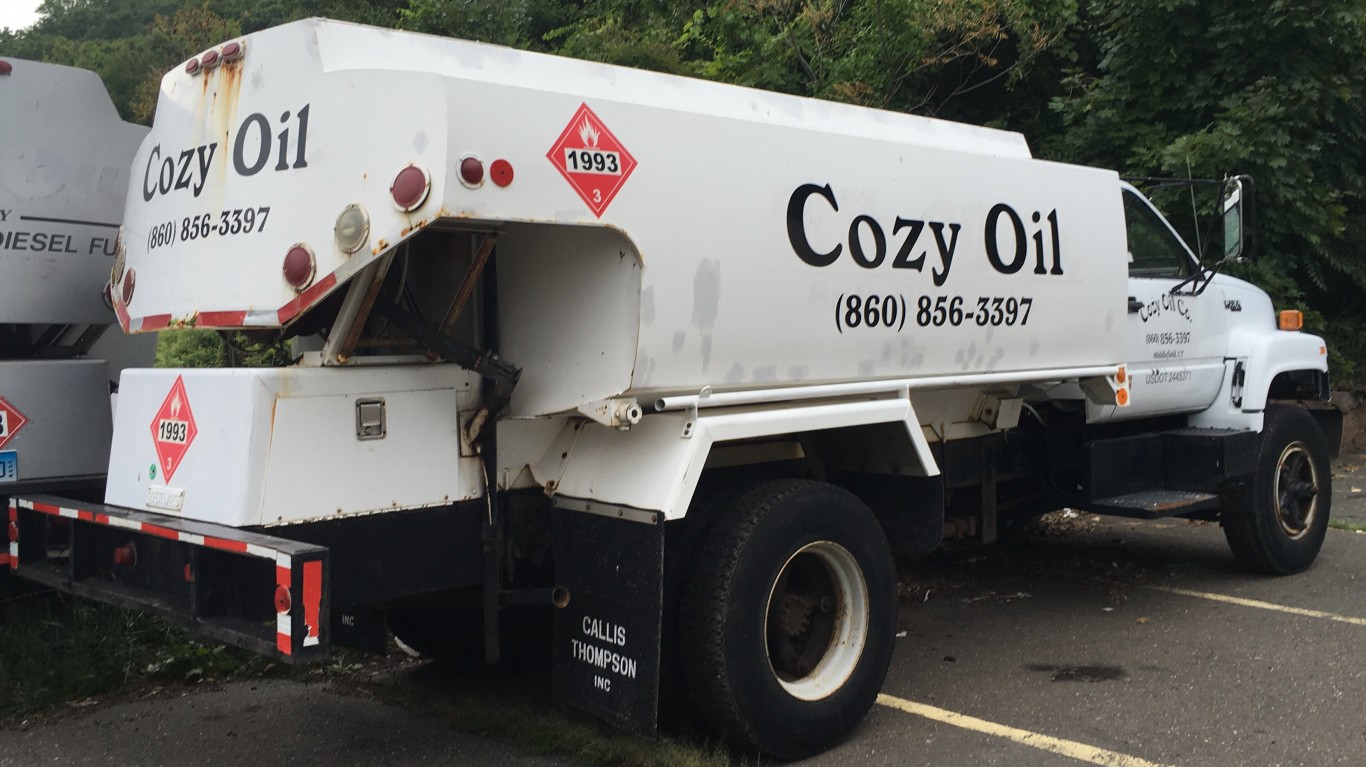
Heating oil in Portland, Maine, recently cost $3.50 a gallon and a typical Maine household would burn 750 gallons in a typical winter. That’s $2,625. Even if winter lasted 12 months, a pellet stove or furnace would be cheaper than that.
Paul Ausick
Contact [email protected] for any questions or corrections.
Paul Ausick has been writing for 247Wallst.com for more than a decade. He has written extensively on investing in the energy, defense, and technology sectors. In a previous life, he wrote technical documentation and managed a marketing communications group in Silicon Valley.
He has a bachelor's degree in English from the University of Chicago and now lives in Montana, where he fishes for trout in the summer and stays inside during the winter.