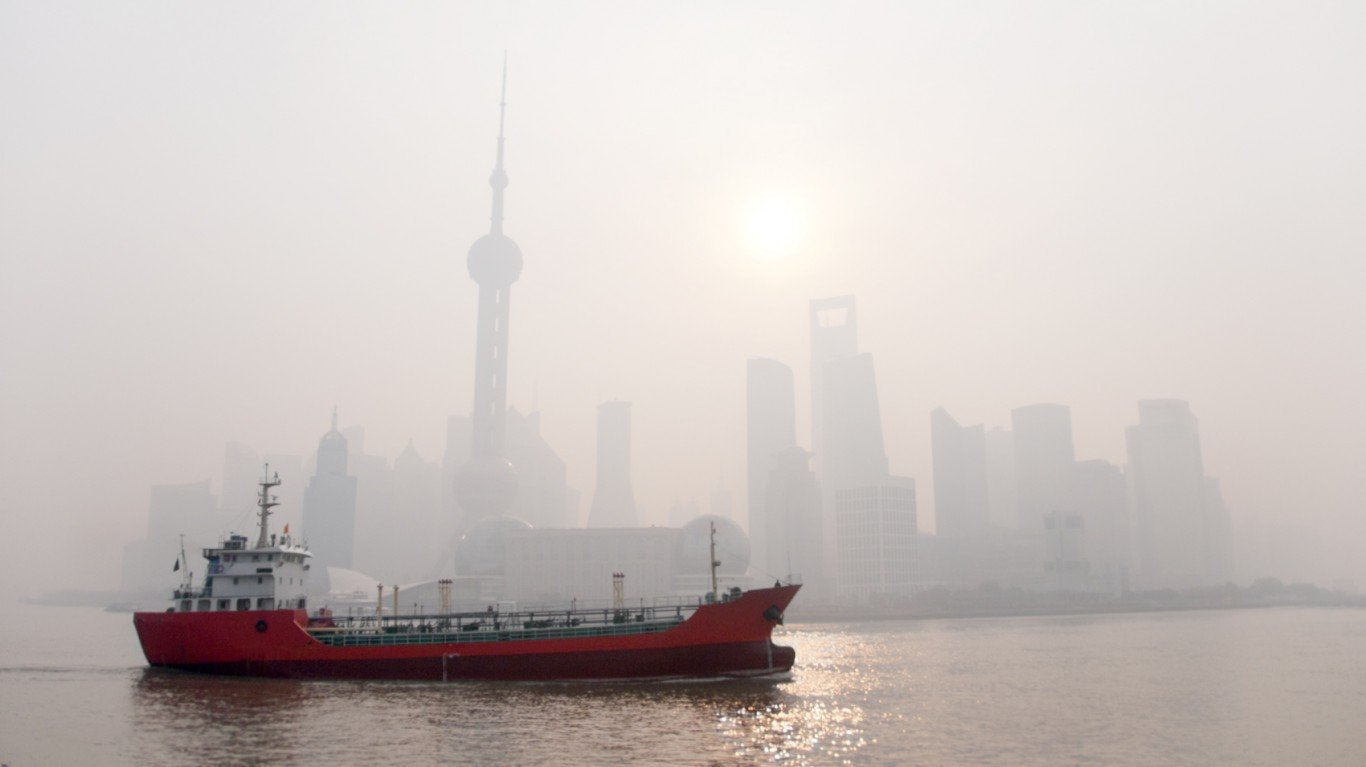
Saudi Arabia to Ship More Crude
The Financial Times, in an exclusive report, says that Saudi Arabia will ship additional crude to some of the world’s largest consuming nations. The kingdom fears that the increasing cost of oil will stifle what is already a troubled global economic…


Saudi Arabia wants to reduce prices while avoiding an open confrontation with Iran. Tehran has warned Saudi Arabia not to increase crude oil production to offset the impact of US and European sanctions on Iranian crude oil exports, which fell to a 22-year low of 2.85m b/d last month.
The oil market is on edge as anti-US protests spread across the Middle East and tensions rise between Israel and Iran. A large naval minesweeping drill is also being conducted by more than 20 navies including those of the US, UK and France in the Strait of Hormuz, the world’s most important potential chokepoint for oil tankers.
Douglas A. McIntyre
Contact [email protected] for any questions or corrections.
Trey has been an editor and author at 24/7 Wall St. for more than a decade, where he has published thousands of articles analyzing corporate earnings, dividend stocks, short interest, insider buying, private equity, and market trends. His comprehensive coverage spans the full spectrum of financial markets, from blue-chip stalwarts to emerging growth companies.
Beyond 24/7 Wall St., Trey has created and edited financial content for Benzinga and AOL's BloggingStocks, contributing additional hundreds of articles to the investment community.
Trey's editorial expertise extends across multiple publishing environments. He served as production editor at Dearborn Financial Publishing and development editor at Kaplan, where he helped shape financial education materials. Earlier in his career, he worked as a writer-producer at SVE. His freelance editing portfolio includes work for prestigious clients such as Sage Publications, Rand McNally, the Institute for Supply Management, the American Library Association, Eggplant Literary Productions, and Spiegel.
Outside of financial journalism, Trey writes fiction and has been an active member of the writing community for years, moderating workshop sessions at regional conventions.