Russia And China: Rioting For Fun And Profit
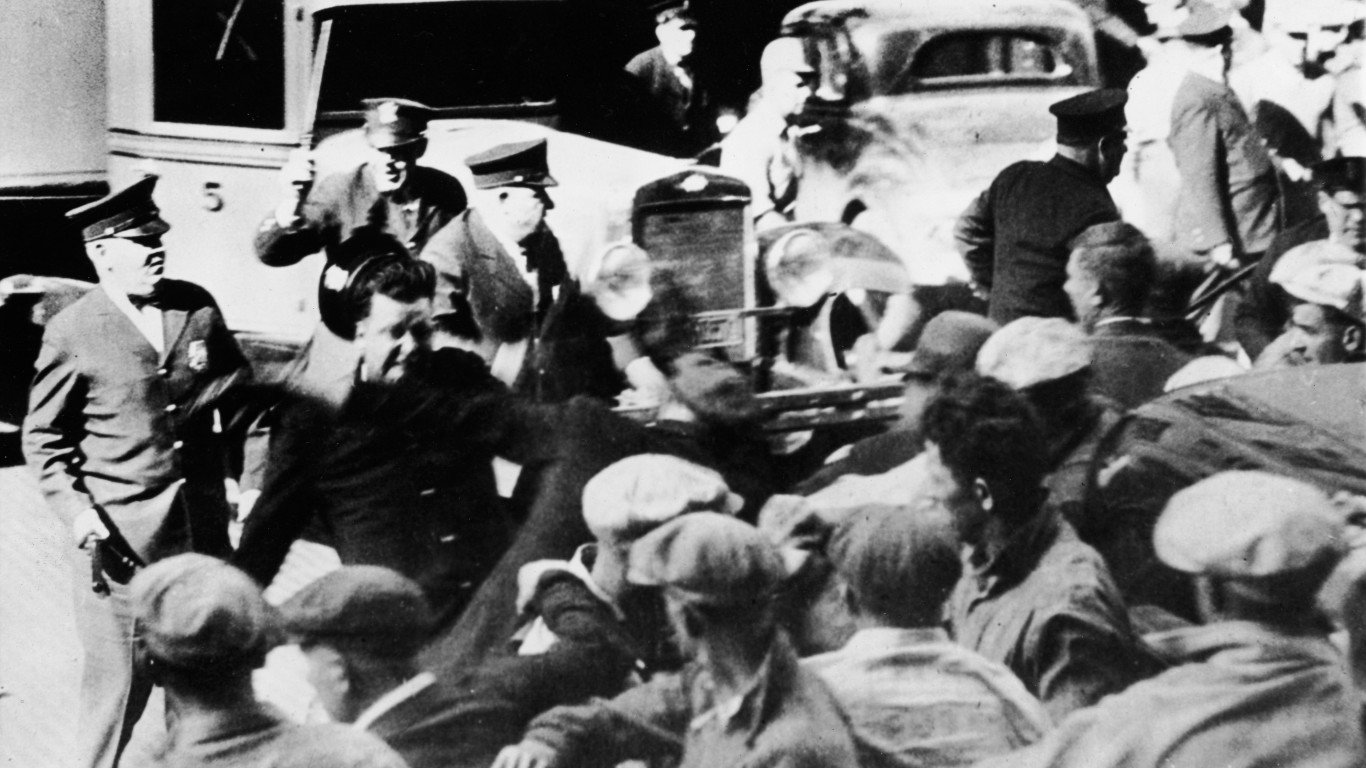
Violent labor unrest in the US may have seen its best days end with the Columbine Mine Massacre of 1927. There were some incidents after that, but they were not as notorious. American workers have taken to the negotiating tables,…

 Violent labor unrest in the US may have seen its best days end with the Columbine Mine Massacre of 1927. There were some incidents after that, but they were not as notorious. American workers have taken to the negotiating tables, and, based on contracts set up in the newspaper and auto industries, the tactic has worked quite well.
The Russians and Chinese may have a greater tendency to hit the streets to settle economic scores which is hardly good for government stability. Recent incidents in the two countries show that a recession can turn especially unpleasant in a relatively short period of time.
According to The Wall Street Journal, taxi drivers in China have begun to spread labor unrest and the Communist government tried to calm the situation. "Unsatisfied with the government’s response, the taxi drivers struck again 10 days later. More workers turned out this time, and some of the protests turned violent, as strikers damaged cars and clashed with police." In Russia, police are showing up at most labor demonstrations and protesters are being hauled away. Given the drop in oil prices and fall in the value of the ruble, the winter promises to be especially dangerous for both the government and people willing to take their grievances into public.
Whether China and Russia can spread enough money around the economy to keep unemployment at a relatively low level remains to be seen, but the early signs are not encouraging.
Douglas A. McIntyre
Contact [email protected] for any questions or corrections.
Douglas A. McIntyre is the co-founder, chief executive officer and editor in chief of 24/7 Wall St. and 24/7 Tempo. He has held these jobs since 2006.
McIntyre has written thousands of articles for 24/7 Wall St. He is an expert on corporate finance, the automotive industry, media companies and international finance. He has edited articles on national demographics, sports, personal income and travel.
His work has been quoted or mentioned in The New York Times, The Wall Street Journal, Los Angeles Times, The Washington Post, NBC News, Time, The New Yorker, HuffPost USA Today, Business Insider, Yahoo, AOL, MarketWatch, The Atlantic, Bloomberg, New York Post, Chicago Tribune, Forbes, The Guardian and many other major publications. McIntyre has been a guest on CNBC, the BBC and television and radio stations across the country.
A magna cum laude graduate of Harvard College, McIntyre also was president of The Harvard Advocate. Founded in 1866, the Advocate is the oldest college publication in the United States.
TheStreet.com, Comps.com and Edgar Online are some of the public companies for which McIntyre served on the board of directors. He was a Vicinity Corporation board member when the company was sold to Microsoft in 2002. He served on the audit committees of some of these companies.
McIntyre has been the CEO of FutureSource, a provider of trading terminals and news to commodities and futures traders. He was president of Switchboard, the online phone directory company. He served as chairman and CEO of On2 Technologies, the video compression company that provided video compression software for Adobe’s Flash. Google bought On2 in 2009.