Bill Ackman Now Has $13 Billion In Just 11 Stocks
Bill Ackman’s hedge fund, Pershing Square Holdings, is well-known for concentrating bets in fewer than a dozen names at any given time. Indeed, many portfolios get out of hand with the number of holdings, especially over time, as investors opt…


Bill Ackman’s hedge fund, Pershing Square Holdings, is well-known for concentrating bets in fewer than a dozen names at any given time. Indeed, many portfolios get out of hand with the number of holdings, especially over time, as investors opt to initiate new positions while holding existing ones or just trimming them rather than eliminating some of the weeds. Of course, there’s nothing wrong with over-diversifying if you’re a new investor who’s looking to enjoy all the perks that diversification has to offer.
That said, over-diversifying brings little, if any, value to the table after a certain point. And since it gets harder to keep up with a portfolio of more than 30 holdings, it just makes sense to sell out of a few, especially if you’ve spotted an opportunity that’s timelier, and perhaps more of a needle-mover.
In any case, Ackman is a notable disciple of the great Warren Buffett. In fact, I’ve heard Ackman be referred to as “Baby Buffett” a while back. So, it should be no surprise that the man practices what Buffett preaches regarding the number of portfolio holdings.
Ackman isn’t afraid to concentrate his bets
Indeed, owning too many stocks in a portfolio can make it harder for a portfolio to top the markets consistently, especially if one spreads investment dollars across names that aren’t their best idea at any given time.
“Diversification is protection against ignorance. It makes little sense if you know what you are doing.” Buffett once said.
Ackman knows what he’s doing, and he’s not afraid to place a big bet on an idea he has conviction in, even if it means parting ways with another cherished holding that just falls short of being best (or least good enough to be in the top seven or so).
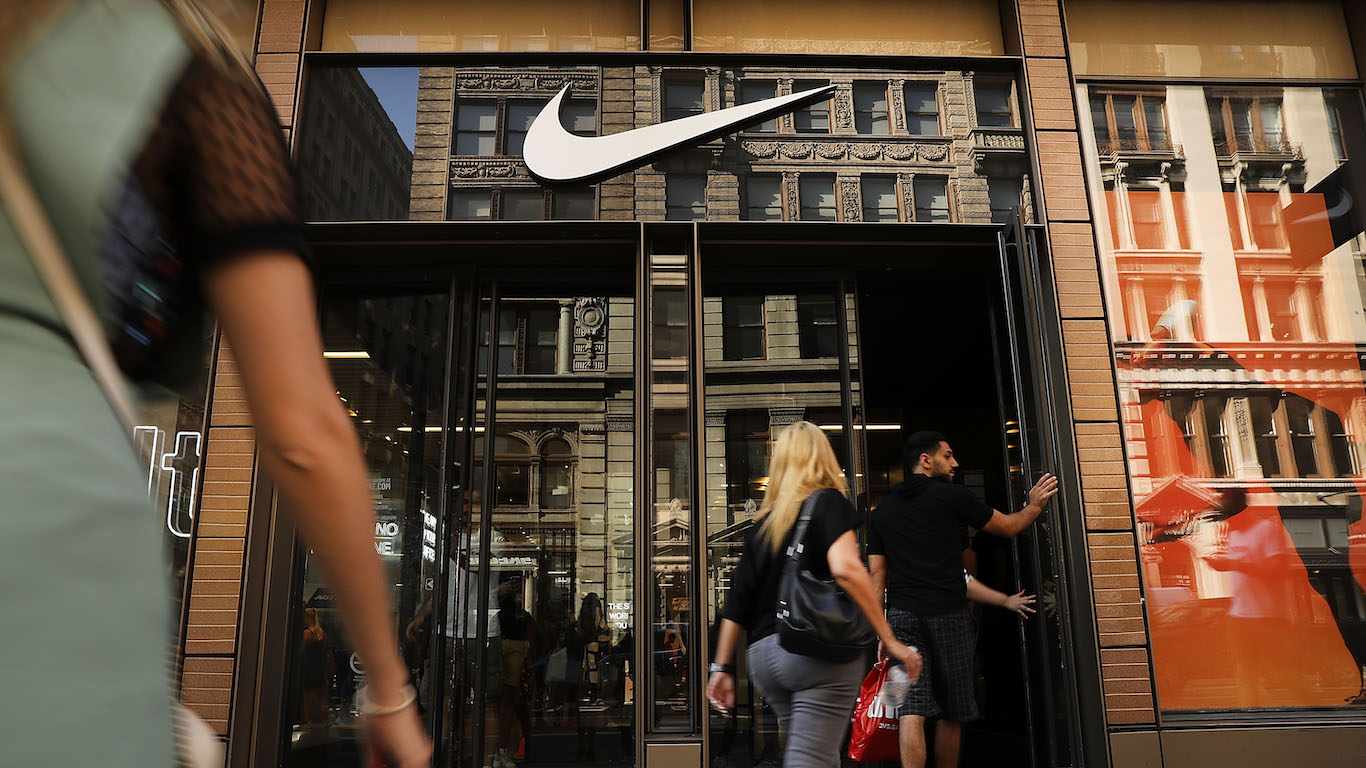
In a past rotation, Ackman surprisingly sold out of shares of Nike (NYSE:NKE | NKE Price Prediction), a name many were convinced he’d stick around for the long haul as new management looked to turn the tide around. While the uphill battle for Nike could be met with outsized returns, sometimes it’s just better to go with the easier opportunity. For Ackman, Uber Technologies (NASDAQ:UBER) became a major cornerstone of the fund. However, recent capital allocations have shifted the absolute top spots of the fund to long-term compounding giants like Brookfield Corp. (NYSE:BN) and Amazon.com Inc. (NASDAQ:AMZN), reflecting his willingness to dynamically re-weight even his highest conviction plays.
What about the rest of the portfolio?
The core of the portfolio has experienced a massive structural overhaul. Ackman initiated a substantial new position in tech giant Microsoft Corp. (NASDAQ:MSFT), establishing it instantly as one of the largest allocations in the fund. To make room for this massive tech rotation, Pershing Square aggressively divested 95% of its long-held stake in Alphabet (NASDAQ:GOOG/GOOGL), reducing the search giant to a minor fraction of a percent of overall assets.
Additionally, the fund completely liquidated its legacy position in Hilton Worldwide Holdings (NYSE:HLT) and parted ways with Canadian Pacific Kansas City (NYSE:CP). The core engine of Pershing Square now heavily consolidates around Brookfield Corp, Amazon, Uber, Microsoft, Restaurant Brands International (NYSE:QSR), and Meta Platforms (NASDAQ:META).
For investors who like what’s underneath the hood and Ackman’s ability to spot value, Pershing Square may look even more attractive than the rest of the market as it navigates macroeconomic shifts. Following this aggressive tech realignment and e-commerce push, the concentrated Pershing Square portfolio looks radically repositioned to isolate itself from traditional retail and tariff vulnerabilities while doubling down on cloud infrastructure and enterprise AI software.
Editor’s Note: This article has been updated to incorporate the latest 13F regulatory filing data, which includes adjusting the total portfolio asset value to $13.7 billion, reflecting Brookfield Corp and Amazon as the top two holdings, introducing Microsoft as a major new core position, detailing the near-total liquidation of Alphabet, and removing Hilton Worldwide and Canadian Pacific from the portfolio breakdown.
Contact [email protected] for any questions or corrections.
Joey is a 24/7 Wall St. contributor and seasoned investment writer whose work can also be found in publications such as The Motley Fool and TipRanks. Holding a B.A.Sc in Computer Engineering from the University of British Columbia (UBC), Joey has leveraged his technical background to provide insightful stock analyses to readers.
Joey's investment philosophy is heavily influenced by Warren Buffett's value investing principles. As a dedicated Buffett disciple, Joey is committed to unearthing value in the tech sector and beyond.