Serious Credit Card Delinquencies Hit 14-Year High: 2 Stocks to Buy, 1 to Avoid
Recent data from the New York Federal Reserve Bank and Equifax (NYSE:EFX | EFX Price Prediction) highlight a troubling trend in U.S. consumer finances: credit card accounts that are 90+ days delinquent reached 12.27% in the second quarter, just 1.4…


Recent data from the New York Federal Reserve Bank and Equifax (NYSE:EFX | EFX Price Prediction) highlight a troubling trend in U.S. consumer finances: credit card accounts that are 90+ days delinquent reached 12.27% in the second quarter, just 1.4 percentage points below the all-time high of 13.7% recorded in the second quarter of 2011, marking a 14-year peak.
While there may be a slight improvement from the 12.31% recorded in Q1, a sharp increase from 10.93% a year ago underscores a deteriorating financial picture. The situation is compounded by other serious delinquencies: 5% of auto loans and a staggering 10.2% of student loan debt — likely exacerbated by the resumption of repayments — are also on the rise.
These trends suggest the U.S. consumer is increasingly financially strained. Investors need to tread carefully in this potential minefield. Below are two stocks to buy and one to avoid during this period of economic stress.
Stock to Buy No. 1: Visa (V)
Visa (NYSE:V) stands out as a premier payment network provider, distinct from traditional banks as it does not issue credit or bear the direct burden of loan defaults. This structural advantage shields Visa from the immediate impact of rising delinquencies, though a potential recession or market crash could dampen transaction volumes and slow its growth trajectory.
Nevertheless, Visa’s financial fortitude is impressive, with a diversified revenue base spanning over 200 countries, a low-cost operational model, and substantial cash reserves. These strengths ensure the company can navigate economic turbulence and emerge stronger, particularly as digital payment adoption continues to surge.
Visa also has a robust history of paying dividends, with a compound annual growth rate of approximately 15% over the past decade, making it a reliable choice for income-seeking investors. Its ongoing investments in innovative technologies, such as contactless payments and blockchain, further solidify its long-term growth potential, positioning V as a compelling buy despite current consumer financial challenges.
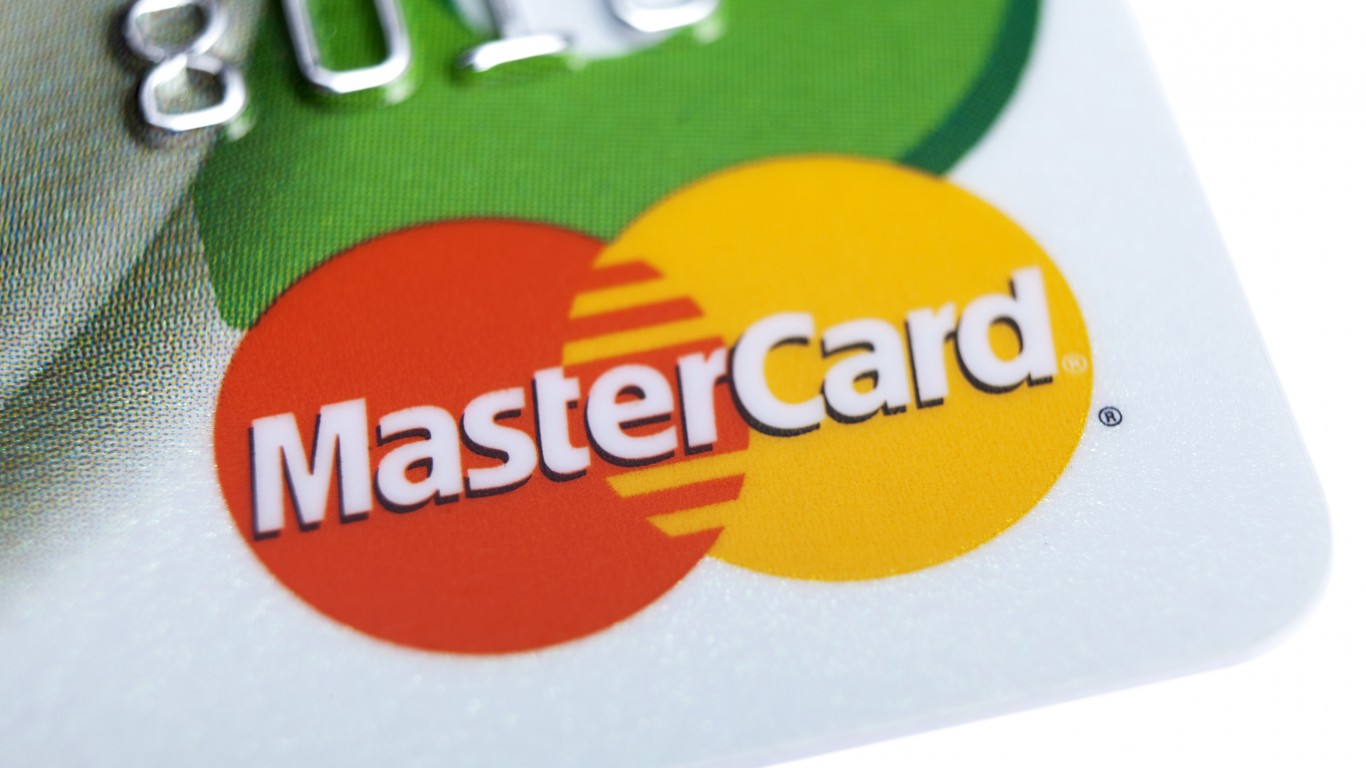
Stock to Buy No. 2: Mastercard (MA)
Like Visa, Mastercard (NYSE:MA) operates solely as a payment network, avoiding the risks associated with issuing credit and thus also remaining insulated from the rising tide of potential defaults.
While a broader economic downturn could reduce consumer spending and transaction activity — potentially impacting short-term revenue — Mastercard’s financial resilience is a key asset. The company boasts a strong balance sheet with consistent cash flow generation, a low debt-to-equity ratio, and a global network that processed over $8 trillion in payment volume in 2024.
This stability, combined with a proven track record of dividend payments — featuring a 10-year dividend growth rate of almost 21% — makes MA an attractive option for investors seeking both safety and income.
Mastercard’s strategic focus on enhancing digital payment solutions, including its partnership with fintechs and expansion into emerging markets, underscores its ability to thrive post-recession. For these reasons, it remains a stock to buy in August.
Stock to Avoid: Capital One Financial (COF)
Capital One Financial’s (NYSE:COF) transformative acquisition of Discover Financial Services, finalized earlier this year, has elevated it to a credit card powerhouse, potentially commanding 18% of all U.S. credit card balances.
This consolidation amplifies its market presence but also heightens its vulnerability to consumer defaults, especially as delinquencies soar. The company’s second-quarter earnings report highlights this risk, reporting an $11.4 billion provision for credit losses — up 80% from the year-ago period — including an $8.8 billion initial allowance for Discover’s portfolio, reflecting cautious underwriting amid economic uncertainty.
Despite impressive financial metrics — such as a 25% year-over-year revenue increase and a 34% rise in pre-provision earnings — the potential for escalating default rates poses a significant threat to profitability.
With its direct exposure to consumer credit health, COF faces heightened risk in a potential recession, making it a stock to sell. Investors should consider reallocating funds to more resilient sectors given these dynamics.
Contact [email protected] for any questions or corrections.
After two decades of patrolling the dark corners of suburbia as a police officer, Rich Duprey hung up his badge and gun to begin writing full time about stocks and investing. For the past 20 years, he’s been cruising the markets looking for companies to lock up as long-term holdings in a portfolio while writing extensively on the broad sectors of consumer goods, technology, and industrials. Because his experience isn’t from the typical financial analyst track, Rich is able to break down complex topics into understandable and useful action points for the average investor. His writings have appeared on The Motley Fool, InvestorPlace, Yahoo! Finance, Money Morning, and, of course, 24/7 Wall St. He has been featured in both U.S. and international publications, including MarketWatch, Financial Times, Forbes, Fast Company, and USA Today.