Two Schwab ETFs That Deliver Big Passive Income for Retirees
As you shift gears into retirement, you’re going to want passive income to cover necessities and other expenses. One way to achieve this is by investing in dividend ETFs. Dividends are payments companies make to their shareholders out of their…

As you shift gears into retirement, you’re going to want passive income to cover necessities and other expenses.
One way to achieve this is by investing in dividend ETFs. Dividends are payments companies make to their shareholders out of their profits. But rather than picking dividend-paying stocks yourself, dividend ETFs are professionally managed funds that invest in sometimes hundreds of dividend paying stocks.
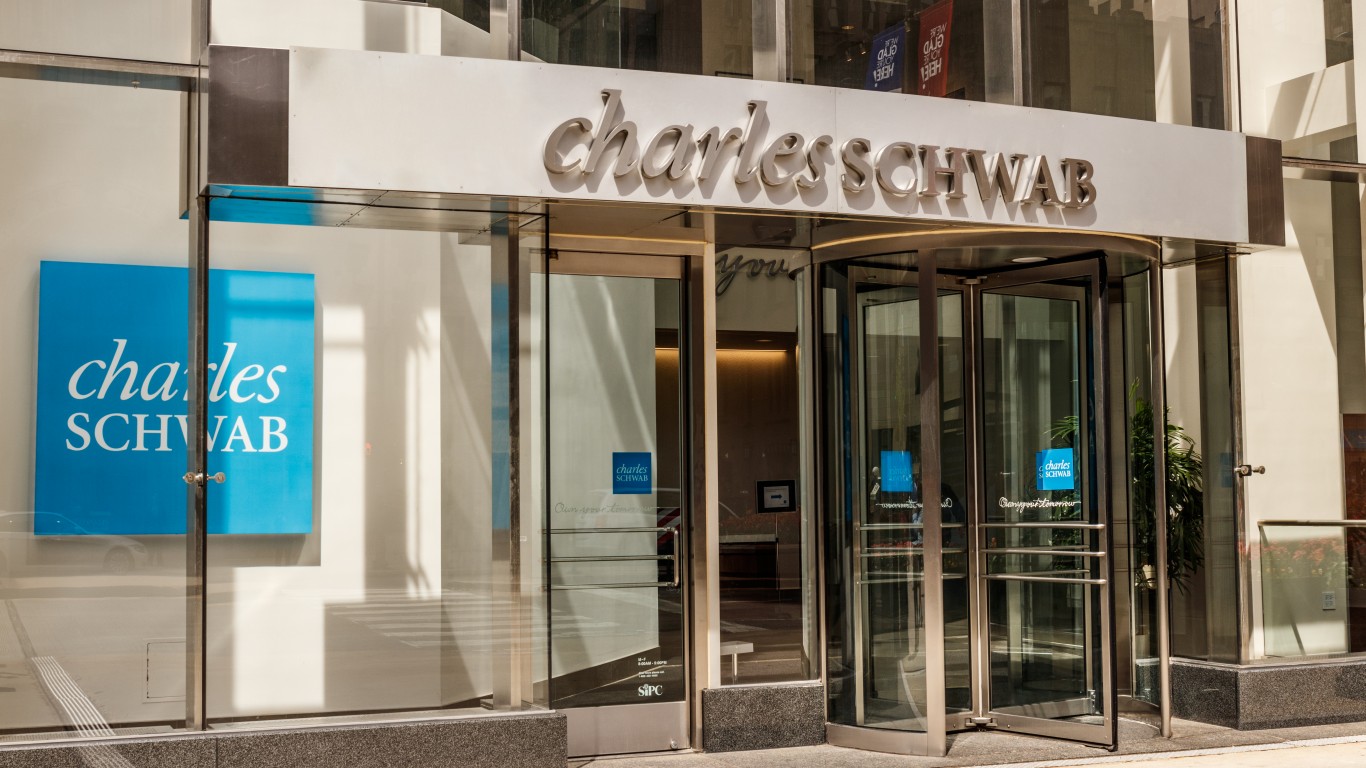
And two dividend ETFs have long stood out for their dividend muscle. They are brought to you by Schwab, one of the biggest brokerages in the country. So let’s take a closer look at these dividend powerhouses.
Schwab U.S. Dividend Equity ETF (SCHD)
The Schwab U.S. Dividend Equity ETF (SCHD) focuses on high-quality, large-cap stocks with a steady record of dividend payments. It aims to mimic the total return of the Dow Jones U.S. Dividend 100. This index focuses on the quality and sustainability of dividends.
SCHD has an impressive SEC 30-day yield of 3.88%.
The fund’s main holdings are based in sectors like energy, consumer staples, and healthcare. These are known as defensive or safe haven sectors that are often seen as resilient even in times of economic turmoil.
The ETF’s holdings include large-cap stocks like PEPSICO INC (NASDK:PEP | PEP Price Prediction), CHEVRON CORP (NYSE: CVX) and ABBVIE INC (NYSE: ABBV).
Large-cap stocks are associated with companies deemed to be financially stable. In fact, Schwab selects stocks in this ETF based on fundamental strength relative to their peers.
Moreover, SCHD carries an ultra low expense ratio of 0.060%. That equates to just $6 for every $10,000 invested annually. And the fund has about $71.55 billion in net assets.
But diversification is essential when it comes to investing. SCHD focuses on domestic stocks. And you don’t want to keep all your eggs in one basket. But you can also benefit from international exposure by investing in our next Schwab ETF.
Schwab International Dividend Equity ETF (SCHY)
The Schwab International Dividend Equity ETF (SCHY) offers exposure to high-quality companies in emerging and developing markets that are known for a steady stream of dividend payments.
In fact, Schwab screens stocks for a history of paying dividends for at least 10 consecutive years. It also seeks companies with a track record of strong financials like cash flow as well as low volatility.
Moreover, the SCHY invests in stocks within markets like Europe, Japan, Canada and Australia.
It can be a good idea to put some of your focus outside the U.S. to mitigate risk, as this strategy can give you exposure to markets that may behave differently than the U.S.
The fund aims to capture the return of the Dow Jones International Dividend 100 Index.
SCHY has accomplished a noteworthy year-to-date total return of 23.49%. It also has a strong 30-day SEC yield of 4.15%. And it holds a total net assets of 1.36 billion. Additionally, it also carries a low expense ratio of 0.08%.
Should you invest?
Both SCHD and SCHY are impressive dividend-paying ETFs. SCHD stands out for its focus on high-quality companies. And SCHY compliments the fund with international dividend diversification.
Together, they could create a well-diversified portfolio that provides a reliable and steady stream of income for retirees.
Why invest in dividend ETFs
Of course, these two Schwab funds aren’t your only options when it comes to dividend paying ETFs. You should explore others of its kind, as dividend paying ETFs could be a staple in any retiree’s portfolio.
Beyond offering passive income, they provide other benefits. For instance, many dividend ETF providers seek out dividend growth stocks or companies that consistently raise their dividend payments over time. This gradually rising stream of income can help you battle inflation, which has taken a massive blow to retirees’ purchasing power in recent years.
And while many dividend ETFs pay dividends on a quarterly basis, some do so monthly. This can get you better prepared to cover every-day expenses.
In addition, the inherent diversification within dividend ETFs can mitigate risk if any particular company slashes its dividend or performs poorly.
And if you don’t need the dividends, you can always reinvest them and continue benefiting from compound interest.
But don’t just stop at dividend-paying ETFs. You can also diversify your portfolio with other options like bond funds, Treasury securities and alternative investments.
Contact [email protected] for any questions or corrections.
Javier Simon is a contributor for 24/7 Wall St. His work has appeared on major financial publications like Fox Business, The Motley Fool, Money Magazine, and more. He’s experienced in covering a range of personal finance topics including retirement planning, investing, taxes, student loans, and mortgages. He’s also versed in writing in-depth reviews of brokerage and fintech products. Javier earned his bachelor’s degree in multimedia journalism from SUNY Plattsburgh. That’s where he first embarked on his journey into journalism as a staff writer for the award-winning newspaper Cardinal Points. His first professional gig in the world of personal finance was as a staff writer for the fintech company SmartAsset. There, he became a Certified Educator in Personal Finance (CEPF) and led a project producing high-ranking reviews of 529 college savings plans sponsored by different states.