Nvidia Has Been Investing Heavily in AI Startups. Here are 3 to Watch
Nvidia (NASDAQ:NVDA | NVDA Price Prediction) has been really making a lot of big-league deals in AI that have captured the attention of Wall Street of late. Undoubtedly, the Nvidia-OpenAI investment and partnership is the big one that’s sparked significant…

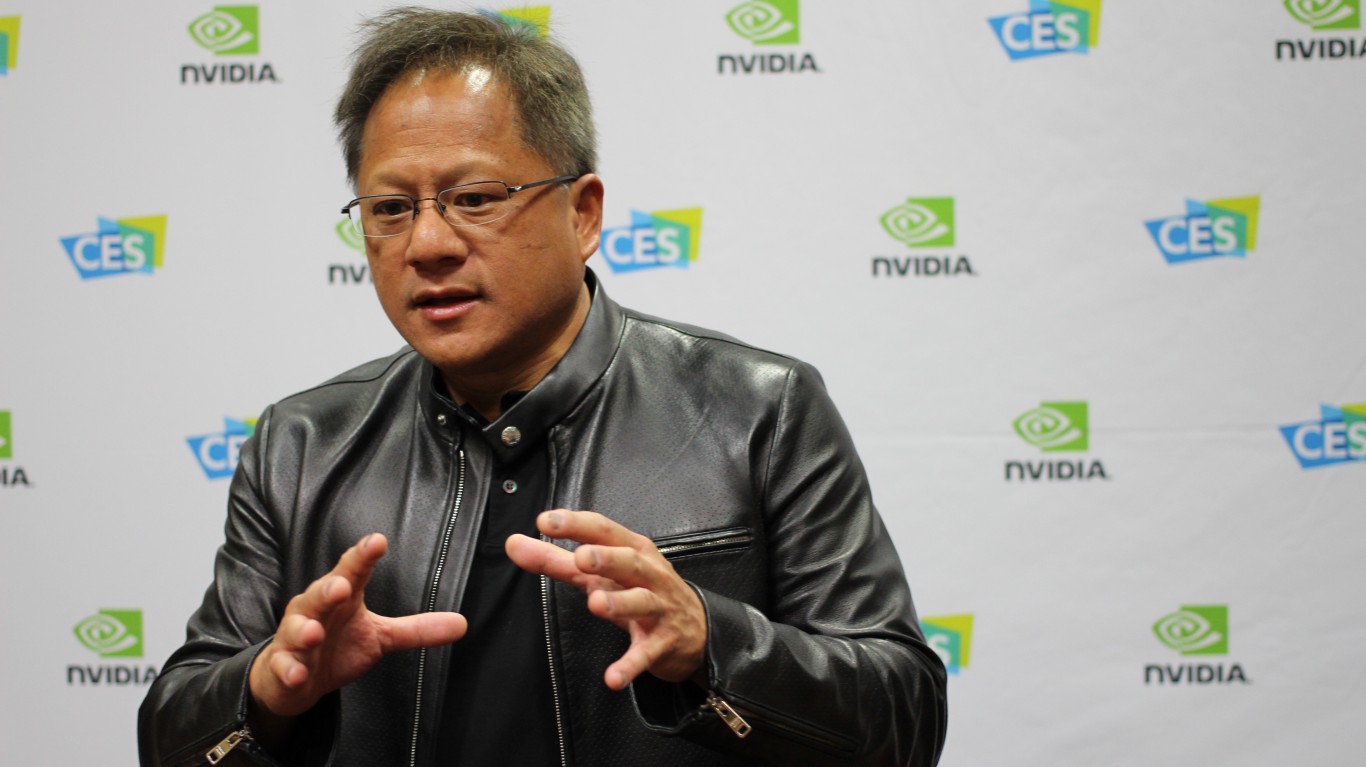
Nvidia (NASDAQ:NVDA | NVDA Price Prediction) has been really making a lot of big-league deals in AI that have captured the attention of Wall Street of late. Undoubtedly, the Nvidia-OpenAI investment and partnership is the big one that’s sparked significant excitement as well as a considerable amount of skepticism by some who think that AI deals are getting a tad “circular,” causing some to compare the current AI boom to the events that fuelled the dot-com boom and its eventual bust.
The Nvidia deals are coming in fast. But that’s raised AI bubble concerns for some.
Though “circular financing” was an issue that eventually led to the unwinding of the great international bubble close to 25 years ago, I don’t think it’s fair to jump to conclusions, especially since valuations, at least in my view, are still nowhere near as obscene as they were during the peak of the dot-com bubble.
At the time of this writing, Nvidia shares trade at just shy of 30 times forward price-to-earnings (P/E), not exactly a multiple that screams bubble, especially when you consider the real, profitable growth that you’re getting from the GPU maker. Arguably, Nvidia stock looks cheap when you consider the firm is still growing at more than 50% despite being a nearly $4.4 billion behemoth.
Indeed, it’s quite unprecedented to have a giant that’s clocking in such growth numbers that are translating to real cash flows in the present. Until demand for AI chips falls off a cliff (it most certainly could, and it’ll be a painful correction, to say the least), it’s hard to gauge how much froth is in the AI names right here.
Nvidia has the cash to invest. The pace of dealmaking could continue
Personally, I wouldn’t use the word bubble to describe AI stocks. To borrow the term from Fed chairman Jerome Powell, I think “fairly highly valued” is a better descriptor for the price of admission into markets today. Why? There’s a lot of healthy skepticism, and Nvidia’s making some serious cash that allows it to invest more in other AI innovators.
Of course, Nvidia has been investing considerable sums in AI startups for quite some time now. It’s just that the magnitude of its latest deals has become bigger.
As its cash pile grows, it’ll have more to spend, and I think there’s a good chance that Jensen Huang and company can achieve a return on investment that’s more than satisfactory. Perhaps Huang put it best when he told CNBC that his “only regret” is that he didn’t invest more in the likes of Elon Musk’s xAI and other firms.
xAI, OpenAI, and Mistral AI: Three of the most notable private firms that Nvidia has placed its chips on
OpenAI, which recently won a massive $100 billion investment from Nvidia, Elon Musk’s xAI (Nvidia is poised to invest up to $2 billion as a part of the latest funding round), and France’s Mistral AI (it’s unknown just how large Nvidia’s stake is) are three AI titans that are difficult to ignore now that Nvidia has skin the game.
In some ways, it appears Nvidia is spreading its chips across the board to increase its odds of hitting a winner while also increasing its broader exposure to the AI boom. That’s a smart thing to do with the extra buying power, at least in my view. With a stake in the firms behind Grok, ChatGPT, and Le Chat (Mistral’s AI model), Nvidia seems poised to become a big winner from its bets. And if its chips continue to sell, I wouldn’t be too surprised to learn of more deals and upped stakes from the world’s largest company.
Undoubtedly, retail investors can’t yet invest in these private AI innovators. That said, I’d just go with Nvidia as the firm is investing a great deal in firms (large and small) that aren’t yet available for the general public to bet on. Indeed, perhaps it’s the fact that so many AI innovators are private (including OpenAI) that leads me to believe we’re not in an AI bubble quite yet.
Indeed, perhaps things could change once these firms go live on public markets. In any case, OpenAI, xAI, and Mistral AI are the firms to keep tabs on as the relationships between Nvidia and the LLM makers deepen.
Contact [email protected] for any questions or corrections.
Joey is a 24/7 Wall St. contributor and seasoned investment writer whose work can also be found in publications such as The Motley Fool and TipRanks. Holding a B.A.Sc in Computer Engineering from the University of British Columbia (UBC), Joey has leveraged his technical background to provide insightful stock analyses to readers.
Joey's investment philosophy is heavily influenced by Warren Buffett's value investing principles. As a dedicated Buffett disciple, Joey is committed to unearthing value in the tech sector and beyond.