2026 Could Be Explosive For The SPDR Dow Jones REIT, And It’s 4% Dividend
The SPDR Dow Jones REIT ETF (NYSEARCA:RWR) occupies an unusual space in the REIT universe. With just $1.7 billion in assets, it’s small enough to fly under the radar, yet its 24-year track record and roughly 4% dividend yield have…


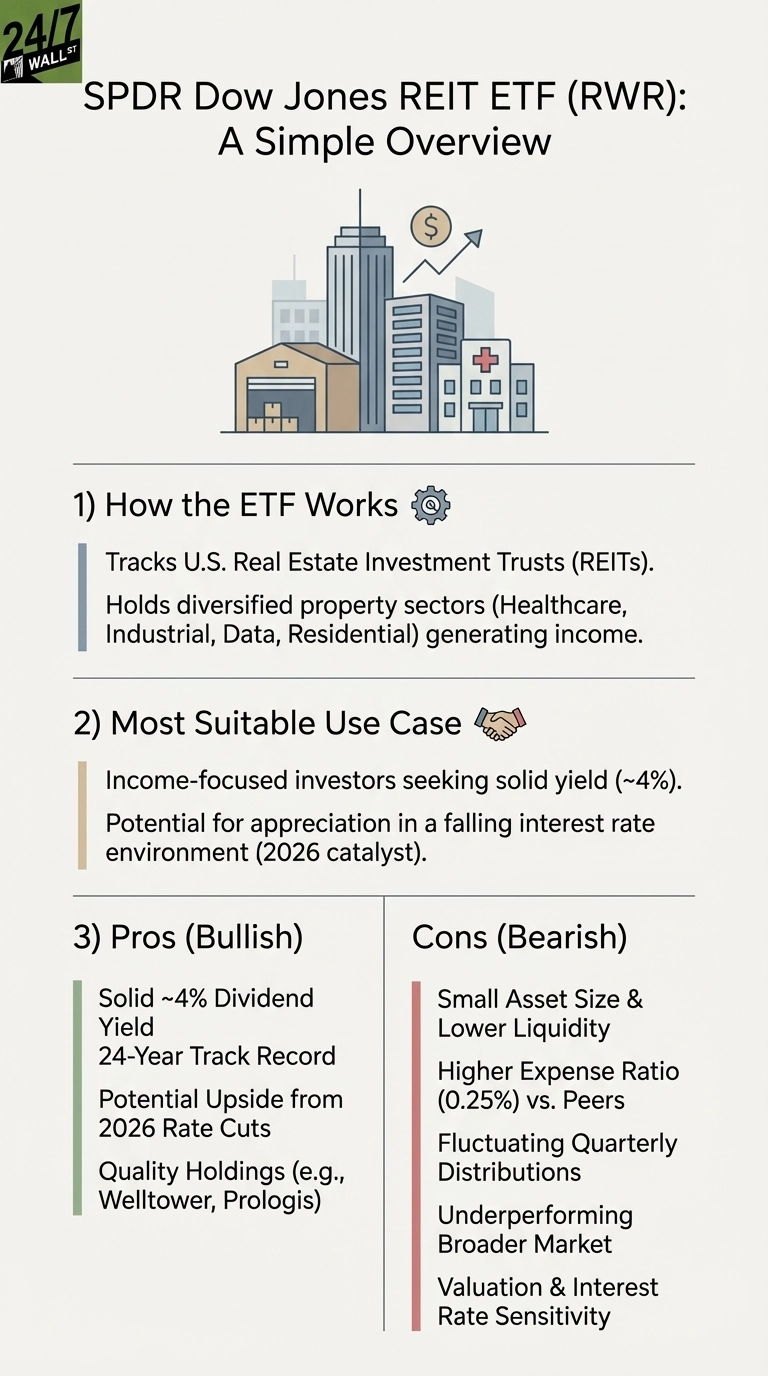
The SPDR Dow Jones REIT ETF (NYSEARCA:RWR) occupies an unusual space in the REIT universe. With just $1.7 billion in assets, it’s small enough to fly under the radar, yet its 24-year track record and roughly 4% dividend yield have kept it quietly relevant. The ETF recently trades around $99, up 3% year-to-date through mid-December, significantly trailing the broader market’s double-digit gains. For income-focused investors, 2026 could mark a turning point if the Federal Reserve continues its rate-cutting cycle.
The Rate Catalyst That Could Reshape REIT Valuations
Interest rates are the single most important macro variable for RWR heading into 2026. Goldman Sachs Research (NYSE:GS | GS Price Prediction) forecasts the Fed will deliver two more rate cuts next year, bringing the federal funds rate down to 3% to 3.25% from the current 3.75% to 4% range. Lower rates create a double benefit for REITs: they reduce borrowing costs for property acquisitions and development, directly improving cash flows, and make REIT dividend yields more attractive relative to Treasury bonds, potentially driving capital into the sector.
Monitor the Fed’s quarterly Summary of Economic Projections and post-meeting statements, typically released eight times per year following FOMC meetings. Pay particular attention to the dot plot, which shows individual policymakers’ rate expectations. Any acceleration in cuts beyond Goldman’s forecast could provide meaningful upside for RWR, while a pause or reversal would likely pressure share prices.
What’s Inside: Quality Holdings With Valuation Questions
RWR’s top two holdings reveal the micro-level dynamics at play. Welltower Inc (NYSE:WELL), the healthcare REIT comprising 11.5% of the portfolio, trades at 131x trailing earnings despite a 44% year-over-year decline in quarterly earnings. That premium valuation reflects investor optimism about aging demographics driving demand for senior housing, but leaves little room for disappointment. Meanwhile, Prologis Inc (NYSE:PLD), the industrial logistics giant at 11% of assets, trades at a more reasonable 37x earnings with superior profit margins of 35%.
The dividend mechanics matter here. RWR’s quarterly distributions fluctuate significantly, ranging from $0.61 to $0.99 per share in 2025 alone. This variability stems from the underlying REITs’ own distribution schedules and amounts. Review RWR’s quarterly fact sheet on State Street’s website, typically updated within days of quarter-end, to track distribution trends and any shifts in sector allocations among the fund’s diversified mix of healthcare, industrial, data center, and residential properties.
A Larger Alternative With Lower Costs
The iShares Core U.S. REIT ETF (NYSEARCA:USRT) offers a compelling comparison. With $3.3 billion in assets and an expense ratio of just 0.08% compared to RWR’s 0.25%, USRT provides similar broad REIT exposure at one-third the cost. It holds nearly identical top positions, including Welltower and Prologis, but with slightly different weightings. The larger asset base also means tighter bid-ask spreads and better liquidity for investors trading larger positions.
If the Fed delivers on rate cuts and REIT fundamentals strengthen in 2026, watch for RWR’s dividend growth trend and any narrowing of its valuation gap with the broader equity market.
Contact [email protected] for any questions or corrections.
I am a long time investor and student of business, and believe finding good companies that can become great investments is the best game on earth. After 20 years of writing and researching the public markets it is clear that individuals have never had more tools and information to take control of their financial lives. From ETFs and $0 commissions to cryptos and prediction markets there has never been a greater democratization of access to investing.
I write to help people understand the investments available to them so they can make the best choice for their portfolio, whether they're starting out or looking for income in retirement.