If You Invested $10,000 in Nvidia 10 Years Ago, Here’s How Much You Would Have Today
Nvidia (NASDAQ:NVDA | NVDA Price Prediction) has become the face of the artificial intelligence (AI) boom, powering much of the infrastructure behind generative AI and data centers. This demand propelled its market capitalization to $4.5 trillion, supported by a roughly…

This post may contain links from our sponsors and affiliates, and Flywheel Publishing may receive compensation for actions taken through them.

Nvidia (NASDAQ:NVDA | NVDA Price Prediction) has become the face of the artificial intelligence (AI) boom, powering much of the infrastructure behind generative AI and data centers. This demand propelled its market capitalization to $4.5 trillion, supported by a roughly 39% year-to-date gain in its stock price.
Yet concerns persist about increasing competition from rivals and a potential slowdown in AI spending, raising fears of an AI bubble burst. While the stock’s performance may feel disappointing to some investors after explosive gains in prior years, a near-40% return would have been phenomenal for Nvidia 10 years ago. But had you had the foresight to invest $10,000 in the stock in early January 2016 and hold through today, the results tell a remarkable story of transformation.
Digging Into Its Roots in Gaming Graphics
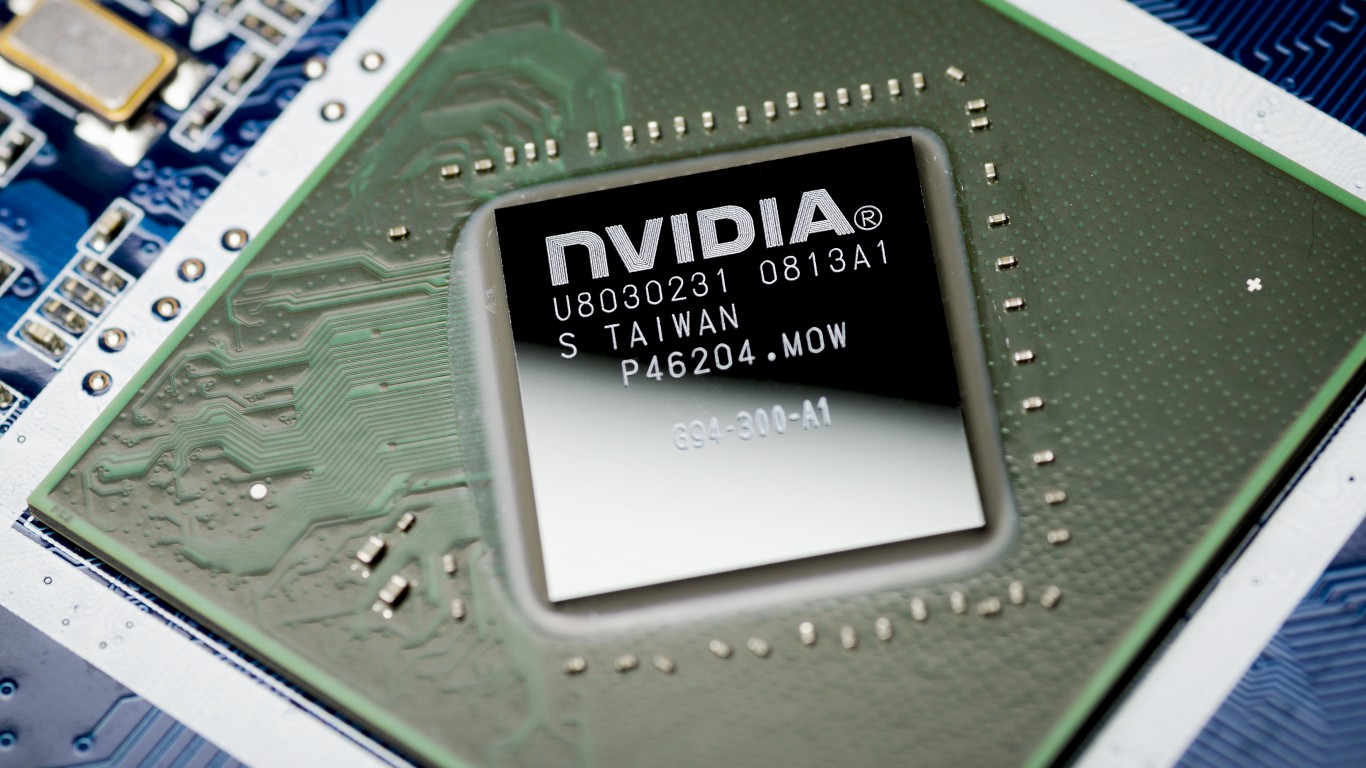
It is important to see where Nvidia came from over the past decade to understand where it stands today. In early 2016, Nvidia primarily focused on graphics processing units for PC gaming. Its GeForce lineup dominated the market for video game graphics accelerators, delivering high-performance visuals for gamers. The company generated record annual revenue in fiscal 2016, largely from its gaming segment, which accounted for about three quarters of the total.
At the time, AI applications remained in their infancy and had not yet entered the public consciousness as a viable technology for changing industry and the world around us. Back then, Nvidia’s data center business was small, generating only $339 million for all of 2015.
The stock traded at split-adjusted prices around $0.80 per share as the new year began, accounting for subsequent splits, including the 4-for-1 split in 2021 and the 10-for-1 split in 2024.
The Crypto Mining Boost and Pivot to AI
Nvidia’s evolution accelerated in the late 2010s. The metaverse was a thing for 15 minutes until cryptocurrency mining surged between 2017 and 2018, with miners using Nvidia GPUs for proof-of-work algorithms in coins like Ethereum (CRYPTO:ETH). This drove unexpected demand, boosting gaming segment revenue despite volatility — Nvidia noted crypto’s contributions but maintained its focus on its core gaming GPUs.
As crypto mining waned after several market crashes, Nvidia shifted toward AI and deep learning. Researchers had used its GPUs for machine learning since the early 2010s, and the company released products like the DGX-1 in 2016 for AI training. Explosive growth in generative AI after 2022 — ChatGPT was released in late November that year the public began to take notice — cemented Nvidia as the premier AI chipmaker, with its data center segment now dominating.
Explosive Revenue and Stock Growth
Nvidia’s revenue transformation has been just as dramatic. Where 2016 annual revenue stood at $5 billion, Nvidia reported $57 billion in revenue for just the third quarter of fiscal 2026 — exceeding the entire 2016 yearly figure tenfold in just three months.
Its stock price growth mirrored this shift. From those penny-per-share split-adjusted levels near January 2016, Nvidia is currently trading above $187 per share today. This represents a price appreciation of over 23,600%. Considering Nvidia’s entire market cap was about $17 billion a decade ago, it’s not surprising to learn you would be sitting on a not-so-small fortune with it priced at $4.5 trillion. But how big is big?
Making It Rain
Over the last 10 years, Nvidia’s total return — yes, the chipmaker pays a nominal dividend yielding 0.02% — would have turned a $10,000 investment in early January 2016 into more than $2.37 million.
This performance underscores Nvidia’s successful pivot from gaming to AI leadership, turning early investors into millionaires despite the occasional downturn. It’s why you should buy stocks with the idea of never selling them, and holding on through periods of volatility. It’s not necessary that all your stocks perform like Nvidia, as just one monster homerun swing can set you up for life.
Contact [email protected] for any questions or corrections.
After two decades of patrolling the dark corners of suburbia as a police officer, Rich Duprey hung up his badge and gun to begin writing full time about stocks and investing. For the past 20 years, he’s been cruising the markets looking for companies to lock up as long-term holdings in a portfolio while writing extensively on the broad sectors of consumer goods, technology, and industrials. Because his experience isn’t from the typical financial analyst track, Rich is able to break down complex topics into understandable and useful action points for the average investor. His writings have appeared on The Motley Fool, InvestorPlace, Yahoo! Finance, Money Morning, and, of course, 24/7 Wall St. He has been featured in both U.S. and international publications, including MarketWatch, Financial Times, Forbes, Fast Company, and USA Today.