AMD Is Where Nvidia was 4 Years Ago — This Is Where It Begins To Catch Up
Four years ago, Nvidia (NASDAQ:NVDA | NVDA Price Prediction) sat at the dawn of the AI revolution. Its data center revenue hit $10.61 billion for fiscal 2022. Investors who spotted the GPU wave early watched the stock turn a once-relatively…

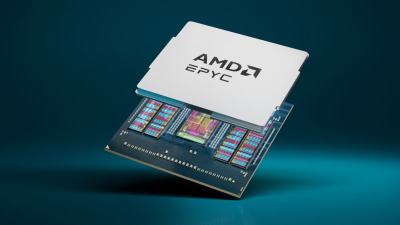
Four years ago, Nvidia (NASDAQ:NVDA | NVDA Price Prediction) sat at the dawn of the AI revolution. Its data center revenue hit $10.61 billion for fiscal 2022. Investors who spotted the GPU wave early watched the stock turn a once-relatively obscure gaming chipmaker into a multi-trillion-dollar AI powerhouse. Today, that same inflection point is unfolding for Advanced Micro Devices (NASDAQ:AMD).
The AI market has shifted from simple chatbots to agentic systems that plan, research, code, and iterate for hours. GPUs remain essential, but CPUs now handle most of the work. AMD, with its high-core EPYC processors already gaining ground, sits exactly where Nvidia stood in 2022. This is where it starts to catch up.
The GPU Era That Made Nvidia King
For the past few years, AI meant training massive models and running fast inference. Nvidia’s GPUs defined the entire conversation. Investors priced every AI stock through the lens of GPU shortages and pricing power. That era delivered explosive results: Nvidia’s data center revenue exploded from $10.61 billion in fiscal 2022 to records exceeding $193.7 billion in 2025.
But the game has changed. Agentic AI agents no longer spit out one answer and stop. They call databases, run code, scrape websites, check results, and loop autonomously. According to Dylan Patel of SemiAnalysis, CPU-side processing now accounts for 50% to 90% of total latency in these workloads, leaving expensive GPUs idle while the CPU orchestrates.
Amazon (NASDAQ:AMZN) has tripled its CPU-server installations year-over-year. Server CPU prices rose 30% in late 2025 — AMD reportedly raised prices another 15% in March — and hyperscalers like Microsoft (NASDAQ:MSFT) sold off spare capacity to keep up. The bottleneck everyone chased for years has quietly moved from GPUs to the “boring” old CPU. In short, the hardware that powered the first AI wave is no longer the only story.
Agentic AI Flips the Script
Agentic AI creates long-running, multi-step tasks that demand orchestration, memory bandwidth, and parallel processing. That’s CPU territory, especially high-core-count server chips.
Patel’s February 9 report for SemiAnalysis, “CPUs are Back: The Datacenter CPU Landscape in 2026,” notes that reinforcement learning and agent tool-use are accelerating CPU demand like never before. Frontier labs now compete directly with cloud providers for x86 servers. The server CPU market itself is set for “strong double-digit” growth in 2026.
Nvidia still leads the GPU side of AI racks, of course. Yet every new agentic workflow pairs those GPUs with a powerful CPU head node. The result? CPU revenue is suddenly the surprise growth driver.
Why AMD Is Positioned to Catch Up
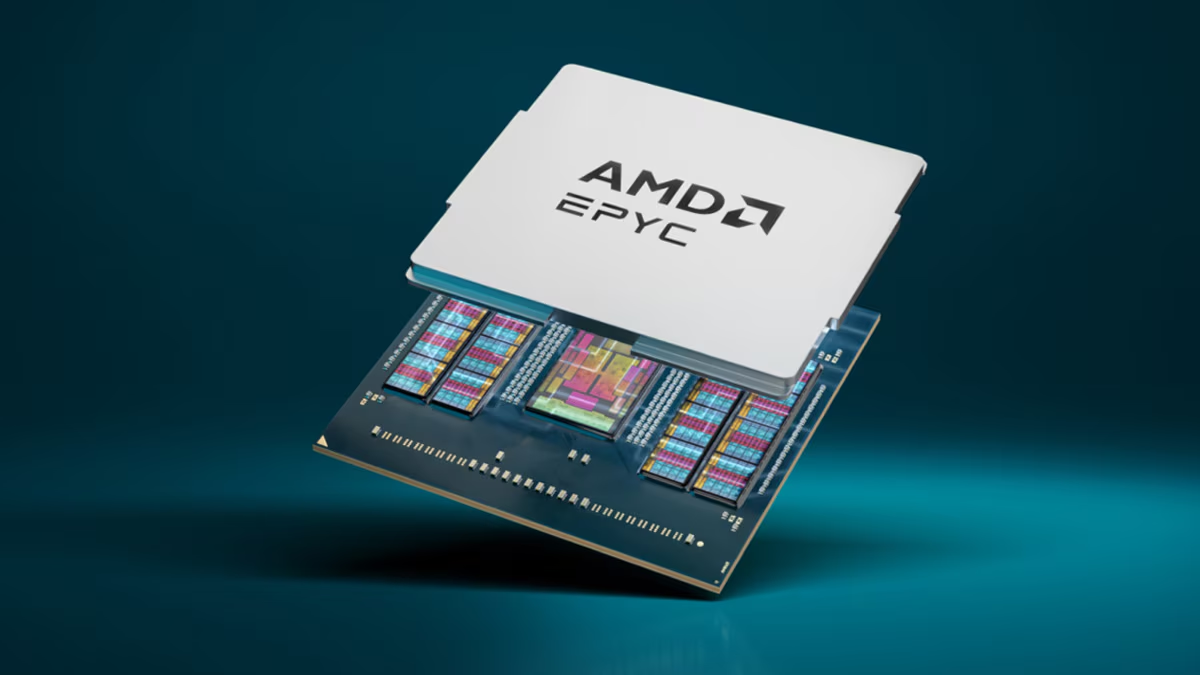
This is where AMD enters the picture, right where Nvidia stood four years ago. AMD’s fiscal 2025 data center revenue reached a record $16.6 billion, up 32% year-over-year. The EPYC processor line, especially the fifth-generation Turin, already accounts for more than half of AMD’s server revenue in the fourth quarter.
Mercury Research’s Q4 CPU shipment report shows AMD’s server unit share climbed to 28.8% (up 3.1 points year-over-year), while its revenue share hit a record 41.3%. Intel (NASDAQ:INTC) still holds the overall lead, but AMD is winning the premium, high-core sockets that agentic workloads crave.
Compare that to Nvidia in 2022: solid but pre-explosion. AMD now trades at a roughly $400 billion market cap with a trailing P/E of 92x. Nvidia sits at about 38x on a far larger scale. The valuation gap reflects the market still pricing AMD as the GPU also-ran rather than the CPU leader in the next phase. CEO Lisa Su highlighted “accelerating adoption of our high-performance EPYC” CPUs in the same earnings call, with hyperscalers launching over 500 new AMD-based instances in 2025 alone.
Granted, risks remain. Intel retains majority share and is fighting back with its own server CPUs. Custom Arm chips from Amazon and Google nibble at the edges for cost-sensitive inference. Valuation is already premium. That said, AMD’s EPYC roadmap, efficiency edge in multi-threaded agent tasks, and proven share gains position it to expand faster than the overall market. No matter how you slice it, the CPU crunch Patel flagged is real, and AMD is the x86 vendor best placed to benefit.
Key Takeaway
AMD is not chasing Nvidia’s past; it is stepping into the exact market opening Nvidia seized four years ago, only this time the bottleneck is CPUs. Smart investors who bought Nvidia in 2022 didn’t need it to be the only game in town; they simply needed to be early to the shift. The same setup exists for AMD today.
The CPU maker is scheduled to report Q1 results on May 6. Investors will see just how much CPU demand has caused the data center segment to grow and EPYC adoption to expand. This isn’t blind hype; the numbers from AMD’s own filings, Mercury Research, and SemiAnalysis line up. AMD is where Nvidia was at the start of the AI revolution, but the agentic wave — not inference and training — will do the heavy lifting now.
Contact [email protected] for any questions or corrections.
After two decades of patrolling the dark corners of suburbia as a police officer, Rich Duprey hung up his badge and gun to begin writing full time about stocks and investing. For the past 20 years, he’s been cruising the markets looking for companies to lock up as long-term holdings in a portfolio while writing extensively on the broad sectors of consumer goods, technology, and industrials. Because his experience isn’t from the typical financial analyst track, Rich is able to break down complex topics into understandable and useful action points for the average investor. His writings have appeared on The Motley Fool, InvestorPlace, Yahoo! Finance, Money Morning, and, of course, 24/7 Wall St. He has been featured in both U.S. and international publications, including MarketWatch, Financial Times, Forbes, Fast Company, and USA Today.