What a $1,000 Bet on IonQ Since Its SPAC Debut Is Worth Today
From University Lab to Quantum Hype Stock IonQ (NYSE:IONQ | IONQ Price Prediction) hit the public market in October 2021 via a SPAC merger with dMY Technology Group III, becoming the first pure-play quantum computing stock investors could actually buy.…

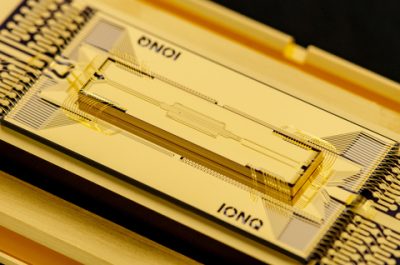
From University Lab to Quantum Hype Stock
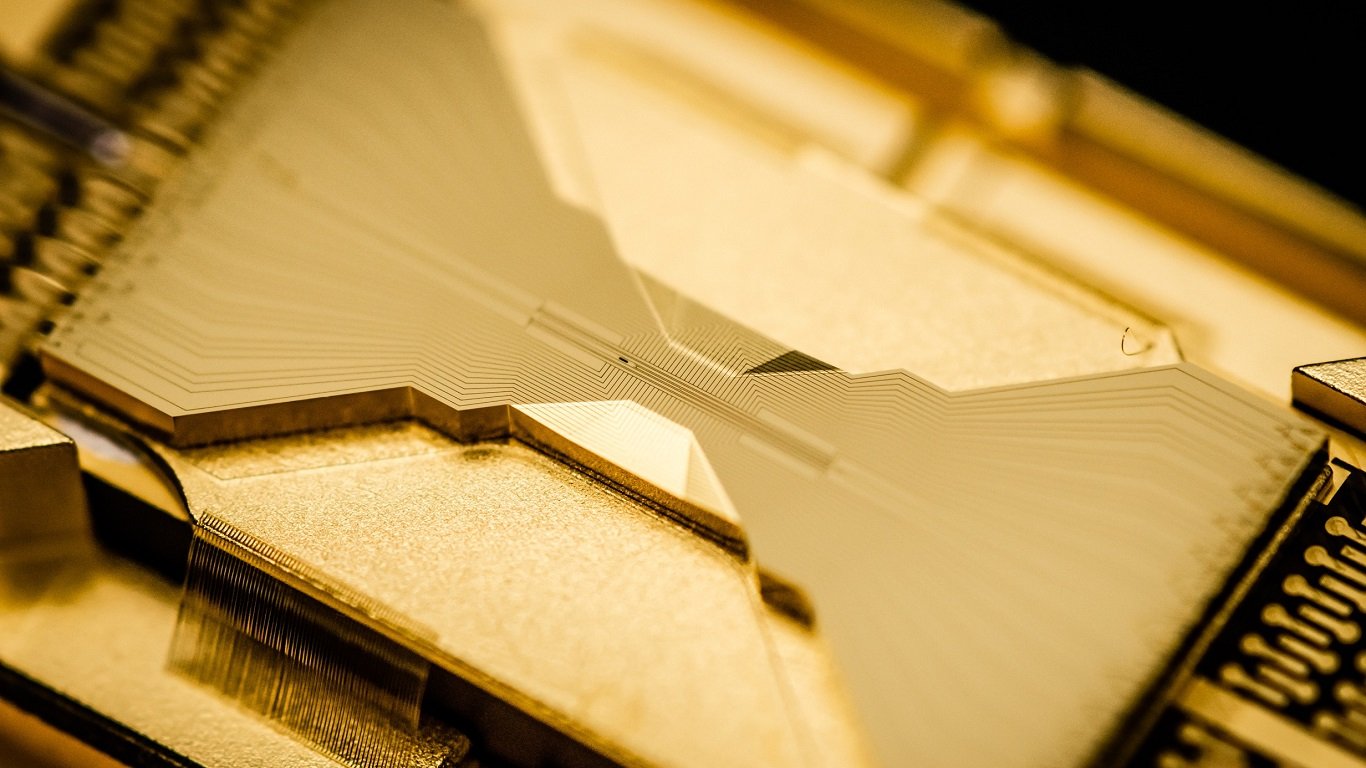
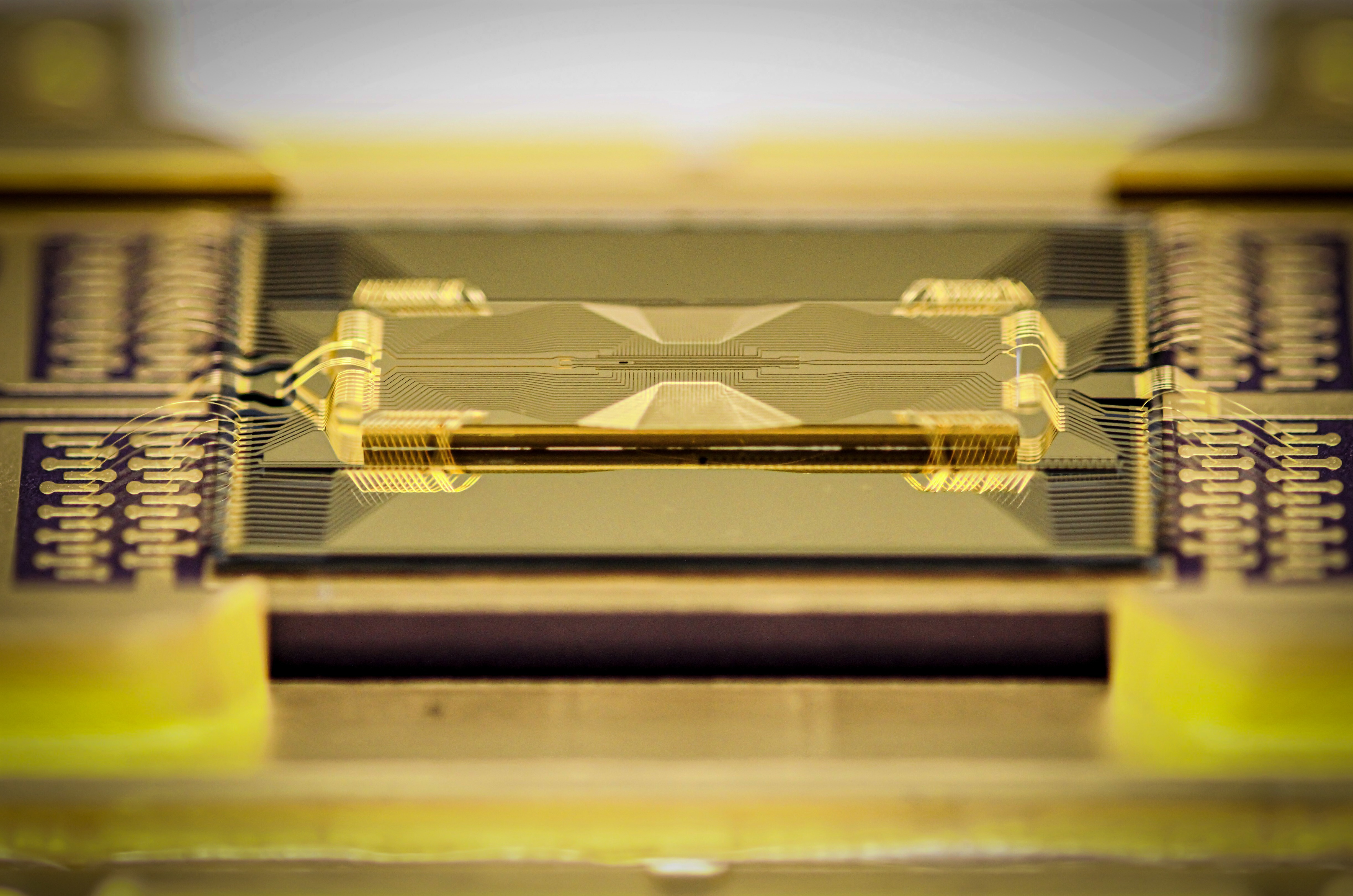
IonQ (NYSE:IONQ | IONQ Price Prediction) hit the public market in October 2021 via a SPAC merger with dMY Technology Group III, becoming the first pure-play quantum computing stock investors could actually buy. The pitch was bold: a trapped-ion architecture spun out of University of Maryland and Duke research, aimed at solving problems classical computers cannot.
The journey since has been brutal and then euphoric. Shares cratered through the 2022 quantum winter, falling about 80% in 2022 alone, before AI-adjacent enthusiasm reignited the sector in late 2024. Under CEO Niccolo de Masi, the company went on an acquisition spree in 2025, scooping up Oxford Ionics for roughly $1.075 billion, along with Lightsynq, Capella, Vector Atomic, and announcing SkyWater Technology. An October 2025 $2 billion equity raise pushed pro-forma cash to roughly $3.5 billion.
The fundamentals finally caught up to the story. IonQ became the first quantum company to exceed $100 million in annual GAAP revenue, and Q1 FY26 revenue hit $64.67 million, up 755% year over year.
Your $1,000 Since the SPAC Merger Is Now $7,760
Since SPAC Merger (October 2021)
- Initial Investment: $1,000
- Current Value: $7,760
- Total Return: 676.09% (from $9.20 to $71.40)
- Annualized Return: roughly 55%
- S&P 500 (same period): approximately $1,450 (45%)
1-Year Return
- Initial Investment: $1,000
- Current Value: $1,760
- Total Return: 75.99%
- S&P 500 (same period): approximately $1,140 (14%)
IonQ went public in October 2021, so a true 10-year window does not exist. Holding from the SPAC required surviving a drawdown that wiped out roughly four-fifths of the starting price. The reward came almost entirely in the final 18 months, as quantum sentiment reversed and revenue inflected.
The Bull Case, With Eyes Open
The bull case rests on whether quantum computing is entering a real commercial adoption curve and that a $3.5 billion cash war chest plus 99.99% two-qubit gate fidelity give it a durable lead. The Q1 print and raised $260 million to $270 million full-year guide back that thesis.
The bear case centers on dilution and burn. The company posted a $512 million net loss in FY25, Q1 stock-based compensation hit $128.52 million, and the stock trades at 139x sales. IBM, Google, and Quantinuum are not standing still.
The takeaway: a small position with a long horizon suits the risk profile. The risk is real, but so is the optionality. A venture-style sizing, rather than a core holding allocation, fits the risk profile.
Contact [email protected] for any questions or corrections.
Alex Sirois is a financial writer with experience spanning both retail and institutional investing. He has written for InvestorPlace and held roles at BNY Mellon and Bernstein, giving him a perspective that bridges Main Street portfolios and Wall Street analysis.
Alex holds an MBA from George Washington University and has built his career across multiple industries, including e-commerce, education, and translation — a breadth of experience that informs how he breaks down complex financial topics for everyday investors. His writing is conversational, actionable, and grounded in long-term, buy-and-hold investing principles.
At 247 Wall St., Alex focuses on delivering analysis that is both accessible and useful, with a clear emphasis on helping readers make more informed decisions with their money.