After The Crash, CNRG Starts 2026 With A 40% Rally
Clean energy was the hot trade of 2020 and 2021, pulling in retail investors eager to capitalize on renewable momentum. Then came the crash. Interest rates climbed, policy uncertainty grew, and the sector spent years in the wilderness. But after…


Clean energy was the hot trade of 2020 and 2021, pulling in retail investors eager to capitalize on renewable momentum. Then came the crash. Interest rates climbed, policy uncertainty grew, and the sector spent years in the wilderness. But after that extended drawdown, SPDR S&P Kensho Clean Power ETF (NYSEARCA:CNRG) rallied 41% in 2025, outpacing its larger competitor and signaling renewed interest in power generation as AI data centers scramble for electricity.
A Bet on the Infrastructure Behind the AI Boom
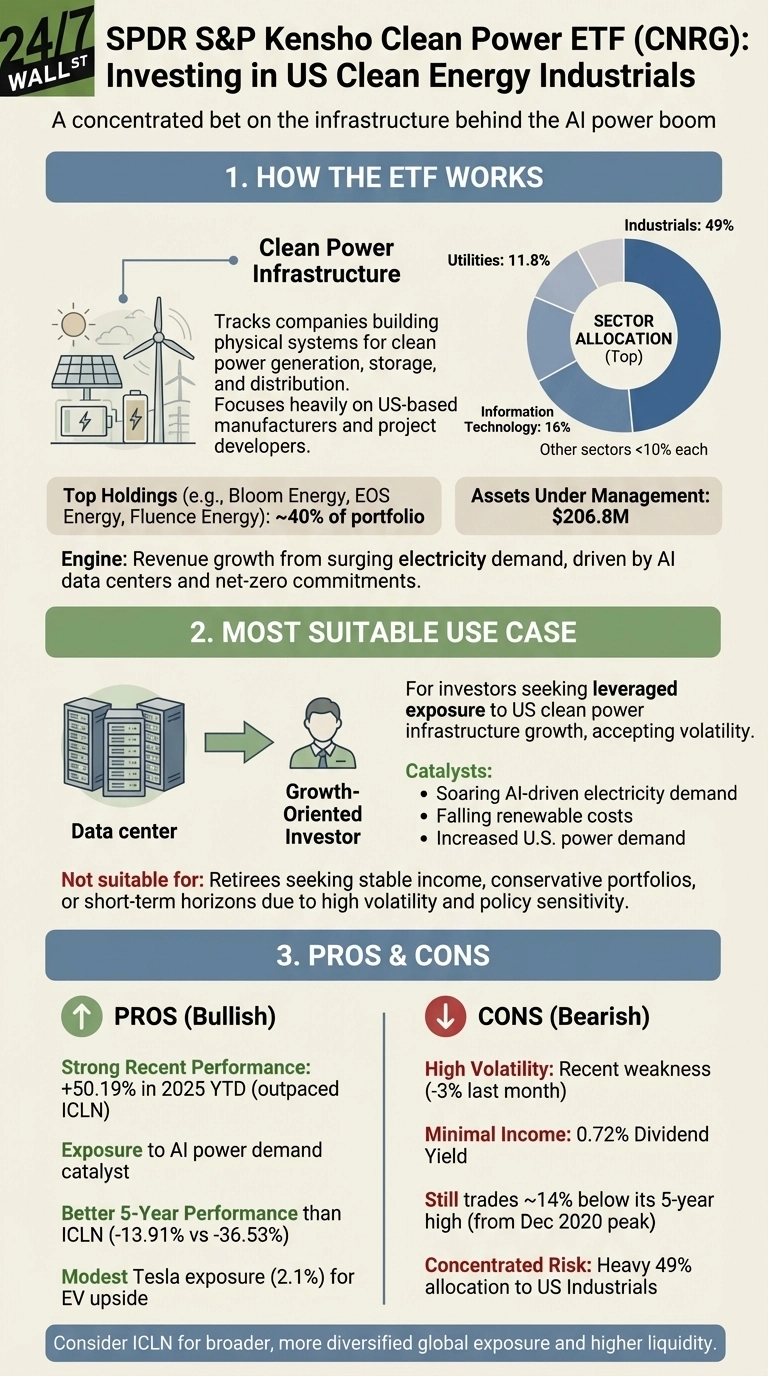
CNRG tracks companies building the physical systems that generate, store, and distribute clean power. With 49% allocated to industrials, this is not a diversified renewable energy play. It’s a concentrated wager on US-based manufacturers and project developers like Bloom Energy, EOS Energy, and Fluence Energy. These companies supply fuel cells, battery storage, and grid-scale energy management systems. The return engine here is straightforward: as electricity demand surges from AI data centers and tech giants sign power purchase agreements to meet net-zero commitments, the companies building that capacity should see revenue growth. CNRG captures that upside without the complexity of picking individual winners.
The fund’s 2025 rally wasn’t random. Investments in clean energy ETFs are attractive due to soaring AI-driven electricity demand, falling renewable costs, and increased U.S. power demand. That thesis has only strengthened heading into 2026, with S&P Global projecting data center electricity demand could nearly triple by 2030.
The Fund Delivers Exposure, Not Income
CNRG’s 0.72% dividend yield makes it irrelevant for income investors. The 0.45% expense ratio is reasonable but not cheap. More importantly, the fund still trades 14% below its 2020 peak despite last year’s surge. Investors who bought at the top have endured five years of losses. That history matters because it illustrates the sector’s volatility and policy sensitivity. CNRG can deliver strong returns during favorable cycles, but it has also proven capable of extended underperformance.
Who Should Avoid This
Retirees seeking stable income have no business here. The negligible yield and high volatility make CNRG unsuitable for conservative portfolios. Similarly, investors with short time horizons or low risk tolerance should stay away. Clean energy policy remains subject to political whims, and concentrated sector bets can reverse quickly.
Consider ICLN for Broader Diversification
The iShares Global Clean Energy ETF (NASDAQ:ICLN) offers a less volatile alternative. With $1.9 billion in assets compared to CNRG’s $207 million, ICLN provides greater liquidity and global diversification, including significant exposure to European and Asian utilities. Its 0.39% expense ratio undercuts CNRG by 0.06%, and its 0.95% dividend yield is modestly higher. For investors wanting clean energy exposure without concentrated industrial risk, ICLN’s broader approach may prove steadier over time.
CNRG works for growth-oriented investors willing to accept volatility in exchange for leveraged exposure to US clean power infrastructure, but the sector’s boom-bust history demands caution and a multi-year time horizon.
Contact [email protected] for any questions or corrections.
I am a long time investor and student of business, and believe finding good companies that can become great investments is the best game on earth. After 20 years of writing and researching the public markets it is clear that individuals have never had more tools and information to take control of their financial lives. From ETFs and $0 commissions to cryptos and prediction markets there has never been a greater democratization of access to investing.
I write to help people understand the investments available to them so they can make the best choice for their portfolio, whether they're starting out or looking for income in retirement.