Why Rocket Lab’s Sky-High Valuation Is a Big Risk in 2026
Rocket Lab (NASDAQ:RKLB | RKLB Price Prediction) stock climbed about 30% in one week in December following reports of a planned SpaceX initial public offering in 2026 at a valuation of up to $1.5 trillion. The news renewed investor interest…

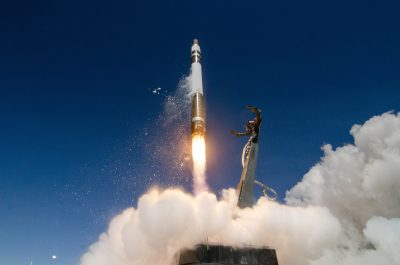
Rocket Lab (NASDAQ:RKLB | RKLB Price Prediction) stock climbed about 30% in one week in December following reports of a planned SpaceX initial public offering in 2026 at a valuation of up to $1.5 trillion. The news renewed investor interest in space stocks, with Rocket Lab shares rising 174% over the full year. The company also advanced its launch business, completing 21 Electron missions in 2025, a new record.
With the Neutron rocket set for debut this year, Rocket Lab could access larger payload markets and boost revenue. Analysts project sales could more than double to $1.2 billion by 2027, driving bullish consensus ratings and price targets. Yet after such gains, questions arise on whether the stock faces a crash landing.
Neutron Rocket’s High Stakes
Rocket Lab has a lot riding on its reusable Neutron rocket, now in final development stages. The vehicle is expected to arrive at its Virginia launch site in the first quarter of 2026, with a debut flight to follow after testing.
This medium-lift option targets constellation deployments and heavier payloads, unlike the small-lift Electron, which has served as the core launcher with prices averaging $8.4 million per flight. Neutron contracts are priced at $50 million to $55 million each, far above Electron’s fees, and could enable higher launch rates. If Rocket Lab’s launch cadence scales, analysts see potential for significant revenue growth, as Neutron’s larger capacity — 13,000 kilograms for low-Earth orbit (LEO) — opens up new mission opportunities.
Launch Delays and Revenue Risks
Yet there is some reason for concern. Neutron’s timeline has been pushed back multiple times — from an initial 2024 target to late 2025, and now into 2026. The company cites needs for more qualification work to ensure success, with the first launch expected no earlier than mid-2026. But further setbacks remain possible, with some reports indicating mid-2026 is the more realistic window, or even later if engine and integration issues develop.
Delays add costs, estimated at $15 million per quarter, and could push the first flight to late 2026 or even 2027. Missing the first-quarter window might trigger a sharp stock decline — worse if next year looks like the launch timetable — as Neutron is key to competing in the medium-lift segment.
Facing SpaceX Head-On
Competition poses challenges as well. Neutron’s 13,000-kg capacity is less than Falcon 9’s 17,500 kg, and less than a tenth of Starship’s 150 metric tons. SpaceX dominates with lower per-kilogram costs on Falcon 9 rideshares, priced around $67 million to $70 million per dedicated launch, and it could readily lower prices to match or undercut Neutron’s $55 million target, limiting Rocket Lab’s projected margins of 40% to 50%.
While demand for launches grows, increased competition could cap its revenue upside. Firefly Aerospace (NASDAQ:FLY), for example, is targeting a late-2026 launch of its Eclipse rocket developed with Northrop Grumman (NYSE: NOC).
SpaceX’s dominance, though, extends beyond pricing. With internal costs for Falcon 9 launches estimated at around $15 million, the company has ample room to discount aggressively if Neutron gains traction. Analysts note that SpaceX’s focus on Starlink and Starship may leave medium-lift opportunities open temporarily, but a potential 2026 IPO could provide billions in fresh capital to accelerate reusability and further reduce costs across its fleet. This could erode Neutron’s niche for dedicated missions, especially for customers prioritizing reliability over slight price differences.
Additionally, SpaceX’s proven track record — hundreds of successful launches — contrasts with Rocket Lab’s need for a flawless Neutron debut to build credibility. Government contracts, while diversified, often favor incumbents, and any perception of higher risk with a new entrant could slow Neutron’s backlog growth.
Execution and Funding Pressures
Beyond competition, Rocket Lab faces ongoing cash burn from its Neutron development, with total costs approaching $360 million by the end of 2025. Negative operating cash flows persist as well, despite record revenue, requiring careful capital management. High R&D and capex could necessitate further equity raises, risking dilution at elevated valuations. Supply chain issues or regulatory hurdles at the Wallops site add layers of uncertainty, potentially extending timelines and costs.
Key Takeaway
Optimism on Rocket Lab’s trajectory is backed by its record backlog, now over $2 billion after an $816 million satellite contract, and space systems revenue growth. Yet at 48 times forward revenue, the valuation assumes sustained 30% annual growth for years, a rare feat for a company experiencing delays and intense competition.
While I am bullish on Rocket Lab’s long-term trajectory, consider waiting for the inevitable pullback in its stock, especially if Neutron misses its Q1 launchpad arrival.
Contact [email protected] for any questions or corrections.
After two decades of patrolling the dark corners of suburbia as a police officer, Rich Duprey hung up his badge and gun to begin writing full time about stocks and investing. For the past 20 years, he’s been cruising the markets looking for companies to lock up as long-term holdings in a portfolio while writing extensively on the broad sectors of consumer goods, technology, and industrials. Because his experience isn’t from the typical financial analyst track, Rich is able to break down complex topics into understandable and useful action points for the average investor. His writings have appeared on The Motley Fool, InvestorPlace, Yahoo! Finance, Money Morning, and, of course, 24/7 Wall St. He has been featured in both U.S. and international publications, including MarketWatch, Financial Times, Forbes, Fast Company, and USA Today.