Where Will Ripple (XRP) Be in 5 Years? Realistic Targets for 2031
XRP (CRYPTO: XRP) has seen mixed performances in 2026, with the coin recording its first green month of the year after posting a modest 2% gain in April. XRP is trading around $1.42 right now, after struggling to maintain momentum…

This post may contain links from our sponsors and affiliates, and Flywheel Publishing may receive compensation for actions taken through them.

XRP (CRYPTO: XRP) has seen mixed performances in 2026, with the coin recording its first green month of the year after posting a modest 2% gain in April. XRP is trading around $1.42 right now, after struggling to maintain momentum above key resistance levels for most of the year.
Over the last five years, XRP has delivered an average annual return of 105%, despite several deep corrections and weak periods. That positive performance has left traders questioning where XRP could realistically trade by 2031. To answer that, we looked into XRP’s historical performance and its near and long-term catalysts to identify realistic targets for the next five years.
How XRP Performed In the Last 5 Years

XRP had a wild ride between 2021 and 2025, with the coin experiencing massive rallies and dreadful crashes. The cryptocurrency entered 2021 under legal pressure from the SEC’s lawsuit against Ripple for selling unregistered securities in late 2020. Many analysts expected XRP to experience another massive downturn like its 66% decline in Q4 2020, but the coin did the opposite.
Across 2021, XRP gained 277%, with its biggest monthly gains coming in January (122%) and April (174%). In 2022, the market entered a bear cycle—driven by the Terra/LUNA collapse, rising interest rates, and a significant decline in liquidity. XRP was down by 59 by December, with its price falling from $0.83 to $0.34.
XRP’s biggest turning point came in July 2023 when a Judge ruled that it was not a security when sold on public exchanges. That legal win triggered a 47% rally, with XRP recording four consecutive green months between September and December.
In 2024, XRP had a mixed performance until November, when the SEC announced that its chair, Gary Gensler, would be stepping down in January 2025. Under his tenure, the SEC undertook several enforcement actions against crypto companies—which made the news a bullish trigger. XRP reacted positively with a 281.7% gain, which is still the strongest monthly performance over the last five years.
XRP’s rally continued into 2025, with the coin reaching a cycle high of $3.65—driven by news of a $50 million settlement with the SEC and a crypto-positive U.S. government. But profit-taking and a broader market downturn pulled XRP lower by the end of the year, leaving the coin with an 11% loss across twelve months.
Where Could XRP Trade in the Next 5 Years?
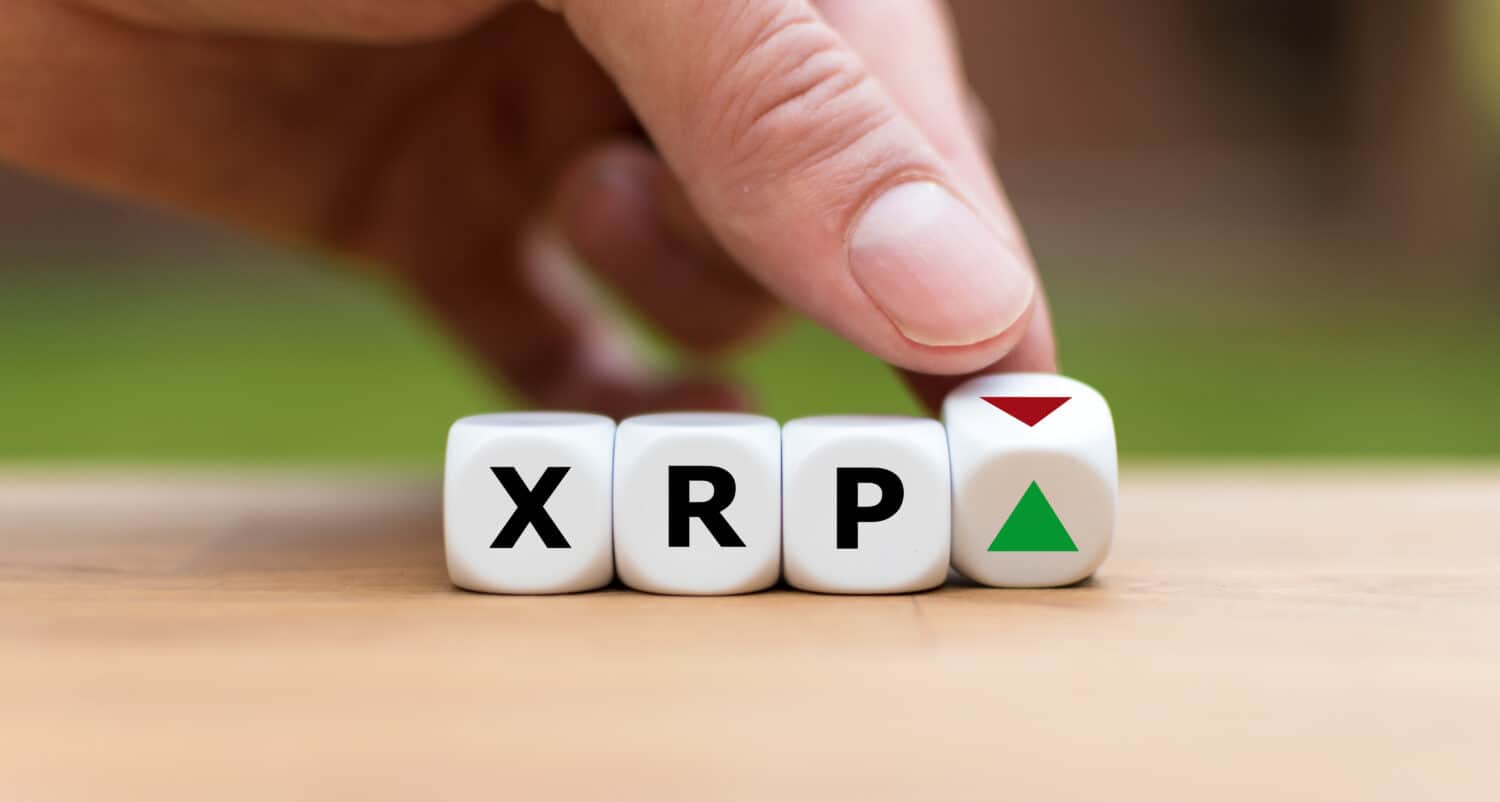
The last five years were shaped by regulation and legal clarity, with XRP rallying on positive news and collapsing on negative developments. But our prediction models suggest that the next 5 years could be different, especially if XRP has its near-term and long-term catalysts going for it.
2026-2029: $2.50-$12.00
XRP is still trading below the $1.44-$1.45 break-even zone—where sell orders of around 1.16 billion XRP are currently concentrated. Before XRP can reach our $2.50-$3.50 base prediction, the coin needs to maintain a move above that zone. And this will depend on three things: the CLARITY Act, ETF demand, and more institutional adoption.
Traders are watching the CLARITY Act in Q2, with a markup vote expected on May 14. If momentum builds and the bill advances, XRP would rally on the back of its biggest catalyst since the SEC case developments. XRP ETFs could see $4 to $8 billion in inflows if regulatory conditions improve. And if that happens, XRP could break above $1.45 and rally further to $2—a 41% upside from current levels. That move could see XRP trade around $2.50 to $3.50 by year-end.
Between Q1 2027 and Q4 2029, Ripple must take big steps in becoming a major player in global payment systems. If XRP becomes a major payment option globally, and RLUSD sees higher transaction volume, the coin could become a utility-driven asset.
Bitcoin halving has historically triggered rallies within the following 12 to 18 months. The buildup to next halving by 2028 could see XRP reach $3-$5 by the end of 2027, $5-$8 by Q4 2028, and $8 to $12 by December 2029.
2030-2031: $12 to $24
XRP’s price prediction for 2030 depends on Ripple positioning the asset for global banking systems and cross-border settlements—which would push XRP into a cycle where demand is driven by real utility. In that scenario, XRP could trade in a $12-$24 range. More bullish projections like Standard Chartered’s $28 target would require stronger institutional interest.
But 2031 could break the bullish trend, especially if XRP rallies within 12 to 18 months after the April 2028 Bitcoin halving event. History shows that crypto assets often lose 40% to 60% of their value in the cycle following a halving event—with XRP losing 59% in 2022 during the post-halving bear cycle.
If this scenario plays out again, XRP would enter a consolidation phase by 2031. But its floor could remain significantly high if institutional adoption absorbs the bearish pressure. And that would see XRP trade between $12-$18 by the end of 2031.
What to Watch Now to Decide If XRP Hits Its Long-Term Targets
For the $12-$18 XRP price for 2031 to play out, all major catalysts in 2026 need to unfold positively. The most important one is the CLARITY Act, which would give crypto assets regulatory clarity. The bill’s passage before the White House’s July 4 deadline could set the stage for XRP’s move to $2.50 to $3.50—a 76% to 146% gain from current levels.
The U.S. and Iran conflict is another important catalyst to watch. If tensions escalate, investors would pull away from crypto assets for safer options like bonds. But if both sides reach a peace deal by June, it could improve market sentiment and push XRP above $1.45, with a further rally to $2.
Even with a positive performance in 2026, XRP could still enter a consolidation phase by 2031, especially if history repeats itself with a rally after the 2028 halving event. However, a $12-$18 target in five years represents an 8.5x to 12.7x upside from current levels—which is a significant long-term upside if Ripple delivers on its institutional roadmap.
Contact [email protected] for any questions or corrections.
Sam Daodu is a crypto analyst who's spent nearly a decade making blockchain understandable—no easy task when most whitepapers read like fever dreams. He writes for 24/7 Wall St., covering Bitcoin, altcoins, and crypto market analysis for investors. Before crypto, he was a tech writer (back when explaining "the cloud" was peak innovation). Since 2018, he's written for CoinTelegraph, Yahoo Finance, The Block, Cryptonews, Zypto, Rain, and more—basically anywhere people want crypto news without the headache. Sam runs MacLabs Marketing, a content agency for crypto brands tired of sounding like AI wrote their website. He also publishes free crypto education on his site for Web3 enthusiasts who think "gas fees" is a typo. When he's not writing or staring at charts, Sam's either: - Watching anime (currently convinced One Piece has better tokenomics than most altcoins) - At the gym sculpting himself into a Greek god - Listening to the music your mum warned you only bad boys listen to Connect: LinkedIn | Email | MacLabs Marketing