Bank of Japan Rate Path Could Make or Break XRP in 2026—Here’s Why and When It Stops
The Bank of Japan just created XRP’s biggest macro headwind for 2026—and handed it a potential escape route. December’s 25-basis-point hike to 0.75% sent 10-year JGB yields above 2% for the first time since 1999, immediately pressuring yen-funded carry trades…

This post may contain links from our sponsors and affiliates, and Flywheel Publishing may receive compensation for actions taken through them.

The Bank of Japan just created XRP’s biggest macro headwind for 2026—and handed it a potential escape route. December’s 25-basis-point hike to 0.75% sent 10-year JGB yields above 2% for the first time since 1999, immediately pressuring yen-funded carry trades that have quietly fueled crypto liquidity for years. XRP (CRYPTO: XRP), more sensitive to these flows than Bitcoin or Ethereum, fell sharply as leveraged positions unwound.
With economists projecting rates could hit 1.0% by September 2026, the macro pressure looks set to persist. Each incremental hike tightens the funding conditions that made crypto speculation cheap. But Japan simultaneously approved crypto tax reform that could override the entire carry trade narrative—slashing rates from 55% to a flat 20% and opening institutional floodgates.
The tension between these forces will define XRP’s trajectory in 2026. Carry trade pressure could cap XRP’s upside until funding costs stabilize. But tax reform creates structural demand that could absorb that pressure and push XRP past its 2018 all-time high of $3.84. Which force wins determines whether XRP trades in a $2-$3 range all year or breaks into the $4-$5 territory.
How Yen Carry Trades Became XRP’s Hidden Fuel—And Why They’re Reversing

For years, the yen-funded carry trade quietly pumped liquidity into risk assets without most investors noticing the mechanism. Traders borrowed yen at near-zero rates and deployed the capital into higher-yielding markets—including crypto. When Japanese rates sat at -0.1%, the trade was autopilot profitable. Borrow for free, earn anywhere else, pocket the spread.
XRP benefited more than most from that constant flow. Its smaller market depth and higher speculative positioning made it especially responsive to marginal liquidity shifts. But that dynamic is reversing. Japan’s policy rate jumped to 0.75% in December 2025 and economists widely expect at least 1.0% by mid-2026.
As funding costs climb, carry trades that worked on autopilot for a decade now require active management. Traders are unwinding positions—they sell risk assets to close yen loans, repay funding lines, and reduce exposure before costs rise further. The yen strengthens as capital returns, which accelerates the exit and tightens liquidity across the system.
XRP feels this pressure more acutely than Bitcoin or Ethereum. Its relatively shallow order books and concentrated speculative capital make it vulnerable when funding-driven flows reverse. History confirms the pattern—each BoJ tightening cycle has triggered broad crypto weakness, but XRP consistently underperformed. Until Japanese funding conditions stabilize or U.S. rates cut faster than Japan hikes, XRP remains exposed to this macro unwind.
How BoJ Policy Sets XRP’s Price Range for 2026
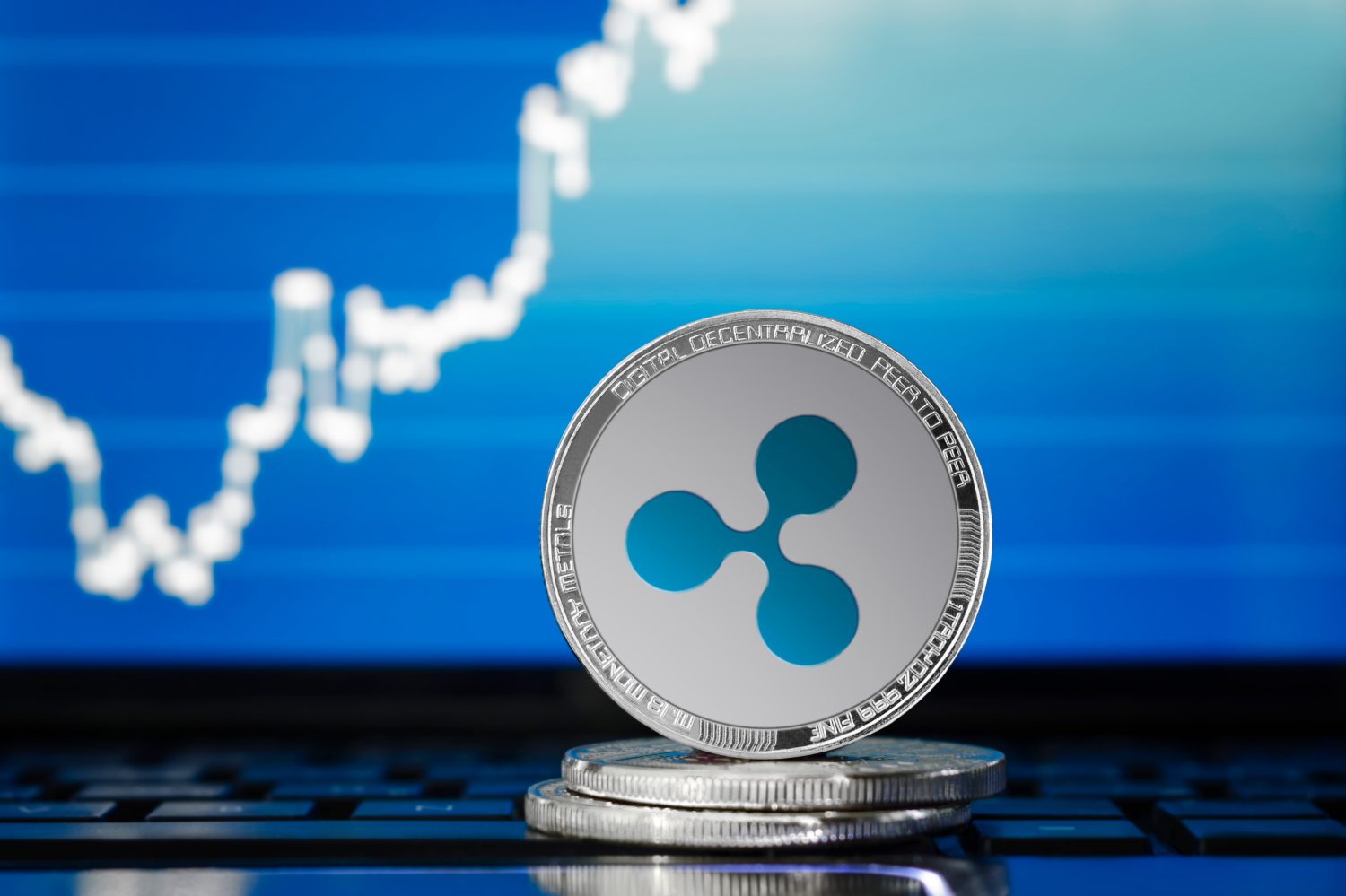
Macro policy in Japan isn’t background noise for XRP—it’s a key factor that’s settling the price ceiling and floor for 2026. Here are three possible scenarios for the XRP price based on the BoJ policy.
If BoJ Pressure Eases: XRP Targets $4-$5
The bullish case of XRP hitting $4-$5 requires the BoJ to pause after one or two hikes while the Fed cuts rates by mid-2026. In that scenario, yen funding pressure fades as the rate differential stabilizes. Carry trades stop unwinding and crypto-specific demand can dominate again.
XRP’s first test becomes its 2018 all-time high near $3.84. A decisive break and hold above that level by mid-2026 could trigger fast repricing into thin supply above prior peaks. With ETF inflows, RLUSD adoption expanding, and improving liquidity, the setup supports extension into the $4.00-$5.00 range by year-end—if macro stops capping upside.
If Pressure Stays Moderate: XRP Consolidates $2.50-$3.50
A more realistic outlook sees the BoJ hiking gradually toward 1.0%, the Fed cuts once or holds steady, and macro pressure remains but doesn’t intensify dramatically. In that scenario, XRP could trade range-bound for much of 2026 as institutional inflows absorb selling pressure without triggering breakout momentum.
A move above $3.84 likely comes in the second half of 2026 if it happens at all. Price settles between $2.50 and $3.50, reflecting steady adoption restrained by ongoing Bank of Japan macro headwinds.
If BoJ Hikes Aggressively: XRP Risks $1.50-$2.00
The bearish scenario plays out if the BoJ pushes rates toward 1.25-1.50% while the Fed holds restrictive policy. Carry trade unwinding accelerates and yen strengthens sharply, forcing leveraged positions to liquidate across crypto.
Even with positive ETF flows and growing RLUSD usage, the XRP price could struggle to reclaim prior highs. If XRP fails to break above $2.50 by mid-2026, it risks slipping to the $1.50 and $2.00 range, with the BoJ-XRP dynamic overriding crypto-specific progress entirely.
Japan’s 20% Crypto Tax Could Override Carry Trade Pressure Entirely
Japan’s 2026 tax reform might be the most underappreciated XRP catalyst on the calendar. By reclassifying crypto from “miscellaneous income” to investment products under the Financial Instruments and Exchange Act, Japan is opening institutional floodgates that could dwarf carry trade pressure.
The reform drops tax rates from progressive brackets topping out at 55% down to a flat 20%—matching treatment of stocks and investment trusts. This applies to approximately 105 “specified crypto assets” traded on registered Japanese exchanges, with implementation expected in fiscal year 2026. The change includes three-year loss carryforwards, finally giving crypto the same tax treatment as equities.
The structural shift this enables is massive. Japanese pension funds, insurance companies, and institutional asset managers couldn’t touch crypto at 55% tax rates—the math didn’t work in any portfolio model. At 20%, crypto becomes allocatable at scale using the same frameworks that govern stock and bond positions.
This isn’t speculative retail money, but institutional capital operating under fiduciary standards, building strategic positions sized for multi-year holds. That demand profile is independent of BoJ rate moves and yen funding costs. Even if carry trade unwinding creates temporary headwinds, tax-driven institutional demand provides a structural floor for XRP. Liquidity improves, volatility compresses, and crypto moves from fringe speculation to legitimate portfolio component in Japanese institutional frameworks.
For 2026, macro sets the baseline through carry trade mechanics. But regulatory catalysts may define the magnitude of XRP’s upside. If institutional participation accelerates under favorable tax treatment, XRP could outperform broader risk assets despite persistent yen funding pressure. The question is timing—whether tax reform demand scales fast enough to offset BoJ tightening through the year.
Contact [email protected] for any questions or corrections.
Sam Daodu is a crypto analyst who's spent nearly a decade making blockchain understandable—no easy task when most whitepapers read like fever dreams. He writes for 24/7 Wall St., covering Bitcoin, altcoins, and crypto market analysis for investors. Before crypto, he was a tech writer (back when explaining "the cloud" was peak innovation). Since 2018, he's written for CoinTelegraph, Yahoo Finance, The Block, Cryptonews, Zypto, Rain, and more—basically anywhere people want crypto news without the headache. Sam runs MacLabs Marketing, a content agency for crypto brands tired of sounding like AI wrote their website. He also publishes free crypto education on his site for Web3 enthusiasts who think "gas fees" is a typo. When he's not writing or staring at charts, Sam's either: - Watching anime (currently convinced One Piece has better tokenomics than most altcoins) - At the gym sculpting himself into a Greek god - Listening to the music your mum warned you only bad boys listen to Connect: LinkedIn | Email | MacLabs Marketing