MCHI Soars 45% as Chinese Equities Break Multi-Year Slump
The iShares MSCI China ETF (NYSEARCA:MCHI) has climbed 45% over the past year, crushing the S&P 500’s 19% gain by more than double. Chinese equities are emerging from a brutal multi-year downturn, and the combination of policy support and stabilizing…


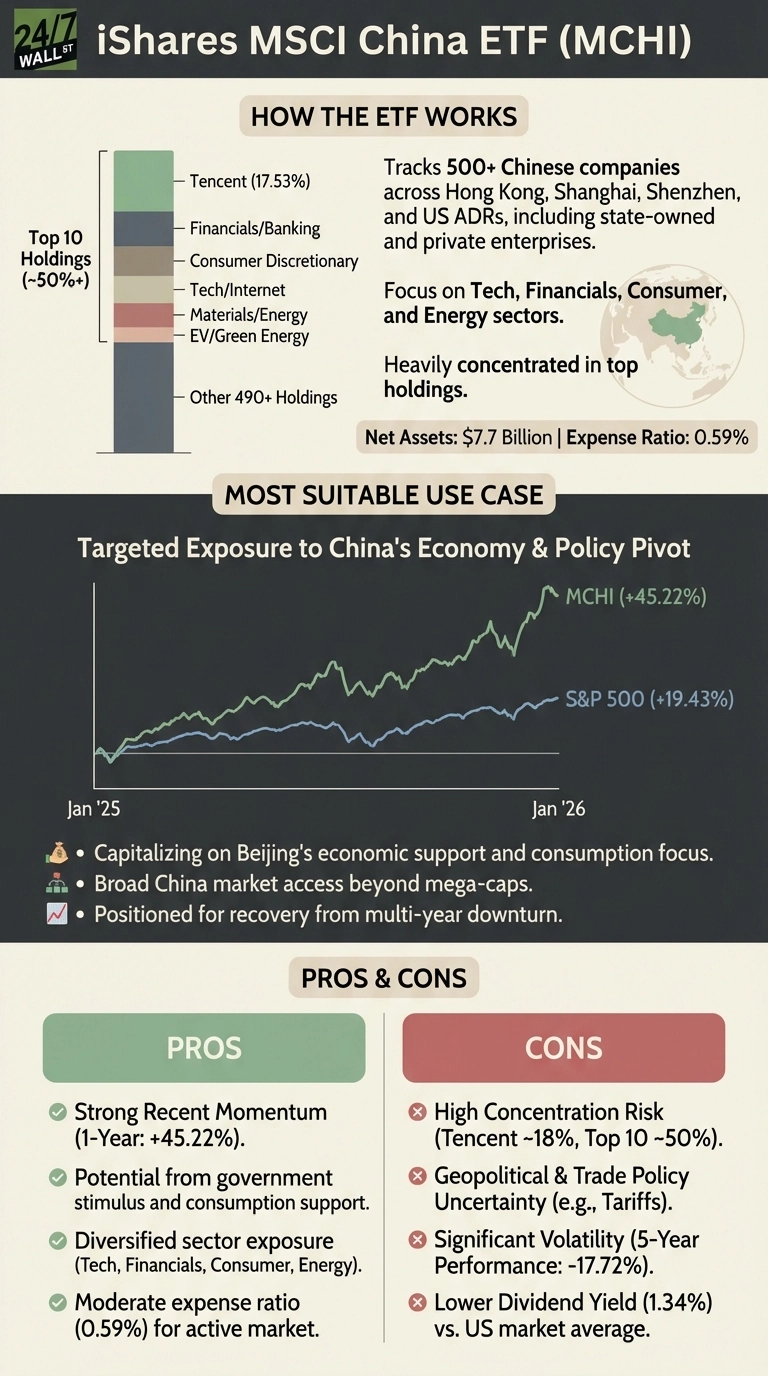
The iShares MSCI China ETF (NYSEARCA:MCHI) has climbed 45% over the past year, crushing the S&P 500’s 19% gain by more than double. Chinese equities are emerging from a brutal multi-year downturn, and the combination of policy support and stabilizing fundamentals suggests this recovery has room to run.
MCHI’s $7.7 billion portfolio tracks over 500 Chinese companies, but Tencent dominates with a 17.5% weighting. This concentration means the fund’s performance hinges largely on China’s gaming and social media giant, which has rebounded strongly as regulatory pressure eases. The remaining holdings blend traditional state banks with consumer internet disruptors like Meituan and PDD Holdings (NASDAQ:PDD | PDD Price Prediction), creating exposure to both China’s old and new economy. The fund charges 0.59% annually.
Beijing’s Stimulus Pivot Is the Tailwind That Matters
The macro story driving Chinese stocks centers on Beijing’s shift toward more aggressive economic support. The government aims to increase household consumption from 40% to 45% of GDP by 2030, a policy shift that would directly benefit internet and consumer holdings. Early evidence suggests the policy is working—retail sales grew 5% in early 2025, validating that stimulus measures are translating into real consumer activity rather than remaining theoretical.
Watch quarterly GDP reports and monthly retail sales data from China’s National Bureau of Statistics. If consumption data continues strengthening through 2026, it validates the investment case for consumer-exposed holdings like Meituan, Trip.com, and JD.com. If exports weaken under trade pressure, Beijing has signaled it will deploy additional domestic stimulus to defend growth targets, creating a policy backstop for Chinese equities.
Tencent’s Weight Creates Both Opportunity and Risk
The fund’s 17.5% allocation to Tencent means MCHI lives or dies by China’s gaming and social media giant. Investors should monitor Tencent’s quarterly earnings reports, particularly gaming revenue trends and regulatory developments around content approval and data privacy.
The fund’s low 12% portfolio turnover suggests a buy-and-hold approach, which minimizes trading costs but also means the Tencent position isn’t going anywhere. Check iShares’ monthly fact sheets and holdings files to track any meaningful shifts in sector allocation or top holdings concentration.
Consider KWEB for Pure Internet Exposure
The KraneShares CSI China Internet ETF (NYSEARCA:KWEB) offers a more focused alternative with $7.9 billion in assets and a 0.70% expense ratio. It concentrates purely on Chinese internet and e-commerce companies, providing a more targeted bet for investors who believe China’s consumer internet recovery will outpace the broader economy. Its top holdings overlap with MCHI—including Tencent, Alibaba, PDD, and Meituan—but without the financial sector and state-owned enterprise exposure.
The Bottom Line
Watch Beijing’s commitment to consumption stimulus and Tencent’s earnings trajectory. Those two factors will determine whether MCHI’s 45% run extends into 2026 or stalls out.
Contact [email protected] for any questions or corrections.
I am a long time investor and student of business, and believe finding good companies that can become great investments is the best game on earth. After 20 years of writing and researching the public markets it is clear that individuals have never had more tools and information to take control of their financial lives. From ETFs and $0 commissions to cryptos and prediction markets there has never been a greater democratization of access to investing.
I write to help people understand the investments available to them so they can make the best choice for their portfolio, whether they're starting out or looking for income in retirement.