Suze Orman: Stop Doing This One Thing or Your Social Security Check Won’t Last
Financial advisor, author and podcast host Suze Orman has issued a stark warning to retirees: Your Social Security check is disappearing faster than you think, and the primary culprit might be part of your daily routine. With more than 40%…


Financial advisor, author, and podcast host Suze Orman has a stark warning for retirees: your Social Security check is disappearing faster than you think, and the primary culprit may be hiding in your daily routine.
The stakes are real. More than 40% of Social Security recipients age 65 and over depend on those payments for at least half their household income, according to the Social Security Administration. For roughly 27% of recipients, Social Security is their only income source at all, per Pew Research Center analysis of Census Bureau data. With the average benefit check sitting at approximately $2,083 per month as of May 2026, there is almost no room for financial error. Yet millions of retirees are making one spending mistake that steadily drains what little cushion they have.
The Needs vs. Wants Trap
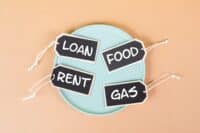
Orman’s core message is simple: retirees must learn to separate needs from wants. A need is food purchased at a grocery store. A want is dining out repeatedly at restaurants, a pattern that converts convenience into a structural financial liability for anyone living on a fixed income.
The math behind the habit is sobering. A retiree who dines out regularly and grabs a daily coffee can quietly drain more than $4,900 annually from their budget. That figure represents well over a fifth of the average annual Social Security benefit, turning what feels like an innocent routine into a compounding threat to retirement security.
Americans Are Eating Themselves Into Debt
The problem is not limited to retirees. Many American adults routinely finance discretionary spending on dining and entertainment, establishing habits that follow workers straight into retirement and undermine long-term stability.
The economic data backs Orman’s concern. The U.S. personal savings rate stood at just 3.5% in November 2025 and edged to 3.6% in December, according to the Bureau of Economic Analysis via FRED. By May 2026, it had slipped further to 3%, per Trading Economics. That means Americans are setting aside roughly three cents of every dollar they earn, leaving almost no cushion for emergencies or unexpected costs.
Consumer spending, meanwhile, has continued climbing. Retail and food services sales for June 2026 came in at $768.6 billion, up 6.7% from June 2025, according to the Census Bureau. The divergence is telling: Americans are spending more freely even as the savings rate compresses. For retirees already on fixed incomes, that cultural pattern is particularly dangerous because it normalizes spending levels that simply cannot be sustained on Social Security alone.
Restaurant Prices Are Making It Worse
The inflation picture adds another layer of pressure. The Consumer Price Index rose 2.7% year-over-year in December 2025, according to the Bureau of Labor Statistics. But food away from home climbed 4.1% over the same period, while food at home rose just 2.4%. That gap means every restaurant visit costs retirees more in real terms than it did a year ago, while home cooking remains the more affordable option by a growing margin. More recent data from the USDA shows that food-away-from-home prices were still 3.5% higher in May 2026 than a year earlier, keeping dining out expensive relative to groceries.
The 2.8% Social Security cost-of-living adjustment that took effect in January 2026 was the fifth consecutive COLA of at least 2.5%, a stretch not seen since 1988 through 1997. Even so, a 2.8% raise does not go far when restaurant inflation is running at 4.1%. The purchasing power of a fixed Social Security check erodes faster for retirees who eat out frequently than for those who cook at home.
What Retirees Should Do Instead
Orman’s recommendation is to redirect restaurant spending toward grocery shopping and home cooking. The arithmetic is straightforward: a home-cooked meal typically costs around $8 in ingredients, compared to roughly $20 at a sit-down restaurant. That $12 gap, repeated consistently across the year, preserves close to $2,000 in purchasing power. For a retiree on a fixed income, that recovered sum is enough to cover an unexpected medical bill, a home repair, or the start of an emergency fund.

For retirees who enter their later years with limited savings, financial experts broadly agree that having any savings beats having none. Even a modest emergency fund reduces the pressure on Social Security benefits and helps retirees avoid high-interest debt when unexpected costs arise.
Orman’s warning is not about eliminating the occasional meal out. It is about recognizing that a repeated pattern of restaurant visits becomes a structural drain on a fixed income. For anyone living on approximately $2,083 a month, every dollar redirected from wants to needs extends financial security. The question is not whether one dinner out is affordable. The question is whether the habit, repeated dozens of times each year, is.
Editor’s note: This article updates the average Social Security retirement benefit to approximately $2,083 per month as of May 2026, per the SSA’s Monthly Statistical Snapshot, and corrects the characterization of Social Security reliance to reflect that more than 40% of recipients age 65 and over depend on it for at least half their income, while roughly 27% rely on it as their sole income source, per Pew Research Center and SSA data. Food inflation figures have been refreshed with the latest USDA data showing food-away-from-home prices up 3.5% through May 2026.
Contact [email protected] for any questions or corrections.
Joel South covers large-cap stocks, dividend investing, and major market trends, with a focus on earnings analysis, valuation, and turning complex data into actionable insights for investors.
He brings more than 15 years of experience as an investor and financial journalist, including 12 years at The Motley Fool, where he served as an investment analyst, Bureau Chief, and later led the Fool.com investing news desk. He has also co-hosted an investing podcast and appeared across TV and radio discussing market trends.