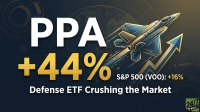
SPDR’s Aerospace & Defense ETF Took An Unusual Approach That Smoked The S&P 500 With 54% Run
When geopolitical tensions rise or defense budgets expand, investors often chase the sector through broad market funds. But SPDR S&P Aerospace & Defense ETF (NYSEARCA:XAR) doesn’t work like most sector plays. It spreads capital equally across 41 holdings, giving smaller…

This post may contain links from our sponsors and affiliates, and Flywheel Publishing may receive compensation for actions taken through them.
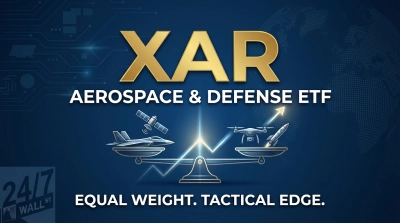
When geopolitical tensions rise or defense budgets expand, investors often chase the sector through broad market funds. But SPDR S&P Aerospace & Defense ETF (NYSEARCA:XAR) doesn’t work like most sector plays. It spreads capital equally across 41 holdings, giving smaller aerospace suppliers and emerging space companies the same weight as industry giants like Boeing (NYSE:BA | BA Price Prediction) and Lockheed Martin (NYSE:LMT). That structural choice creates a fundamentally different risk profile than market-cap weighted alternatives.
Where XAR Fits in a Portfolio
This fund serves investors who want concentrated exposure to aerospace and defense but believe smaller companies will outperform the mega-cap primes. With 98.7% allocated to industrials, XAR functions as a tactical bet rather than a core holding. The equal-weight methodology gives emerging players like Kratos Defense the same portfolio impact as Boeing, fundamentally changing how the fund responds to sector trends compared to market-cap alternatives.
The equal-weight structure delivered strong results when sector momentum favored smaller players. XAR gained 54.17% over the past year, outpacing market-cap weighted alternatives by capturing disproportionate upside when smaller aerospace suppliers rallied on defense spending optimism. This outperformance demonstrates how giving emerging companies equal portfolio weight can amplify returns during sector rallies.
The Small-Cap Tilt Creates Volatility
That outperformance came with elevated risk. The fund’s emphasis on smaller companies amplifies swings in both directions, as illustrated by the recent 4.99% monthly decline when sentiment shifted against aerospace names. Holdings like Rocket Lab (NASDAQ:RKLB) carry higher volatility that creates sharper drawdowns during sector corrections.
Boeing’s challenges illustrate the portfolio’s complexity—the company posted negative $3.2 billion EBITDA yet maintains equal weight alongside profitable contractors. This creates uneven quality across holdings, though the equal-weight structure prevents any single troubled name from dominating risk.
Lockheed Martin provides a counterbalance with $8.3 billion in EBITDA and consistent dividends, representing the stable defense prime segment of the portfolio.
Accept Concentration Risk for Sector Conviction
Investors must accept three tradeoffs: single-sector concentration that eliminates diversification benefits, heightened volatility from small-cap exposure, and vulnerability to defense budget cycles. The 0.35% expense ratio is reasonable for specialized exposure. XAR works best as a tactical allocation for investors with strong conviction that aerospace and defense will outperform, particularly if smaller innovators capture disproportionate value in emerging areas like commercial space and autonomous systems.
Contact [email protected] for any questions or corrections.
I am a long time investor and student of business, and believe finding good companies that can become great investments is the best game on earth. After 20 years of writing and researching the public markets it is clear that individuals have never had more tools and information to take control of their financial lives. From ETFs and $0 commissions to cryptos and prediction markets there has never been a greater democratization of access to investing.
I write to help people understand the investments available to them so they can make the best choice for their portfolio, whether they're starting out or looking for income in retirement.