SPYV Gave Value Investors A 14% Gift While Growth Stocks Stumbled
If you want exposure to the S&P 500 but prefer companies trading at reasonable valuations with steady cash flows, SPDR Portfolio S&P 500 Value ETF (NYSEARCA:SPYV) gives you exactly that. This fund filters the S&P 500 for value characteristics like…

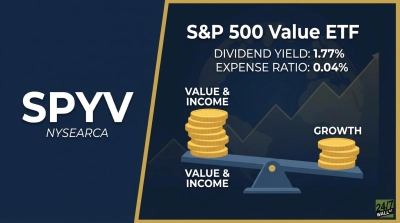
If you want exposure to the S&P 500 but prefer companies trading at reasonable valuations with steady cash flows, SPDR Portfolio S&P 500 Value ETF (NYSEARCA:SPYV) gives you exactly that. This fund filters the S&P 500 for value characteristics like lower price ratios and stronger dividend yields, creating a portfolio that tilts toward financial stability over growth speculation.
A Core Position for Income and Stability
SPYV works best as a foundational holding for investors who want large cap exposure without paying premium multiples. The fund’s 1.77% dividend yield makes it suitable for retirement accounts or taxable portfolios seeking regular income. With an expense ratio of just 0.04%, the fund keeps costs low and minimizes tax drag, which matters significantly for after-tax returns over decades. Companies return capital through dividends and buybacks.
The fund anchors its portfolio in established profit generators. Apple (NASDAQ:AAPL | AAPL Price Prediction) provides technology exposure without speculative valuations, while Walmart (NYSE:WMT) and Exxon Mobil (NYSE:XOM) deliver defensive cash flows during market volatility. This blend of technology (16.7%) and financials (16.2%) creates a portfolio that can weather different economic cycles.
Performance Reality Check
Recent performance shows value holding its own during periods when growth stocks face headwinds. SPYV returned 13.81% over the past year, slightly outpacing the S&P 500’s 11.81% and matching SPDR Portfolio S&P 500 Growth ETF (NYSEARCA:SPYG)’s 12.46%.
But zoom out to five years and the picture shifts dramatically. Value has lagged growth significantly during the tech boom years, with SPYV delivering 233.53% total returns versus SPYG’s 399.44%. That structural headwind matters for long term wealth building. Year to date tells a different story, with SPYV up 3.84% while SPYG is down 3.46%, demonstrating how value can outperform when growth stocks face pressure.
The Tradeoffs You Accept
Owning SPYV means accepting lower long term growth potential in exchange for valuation discipline and income. When technology and innovation drive markets higher, value strategies underperform. You also get meaningful concentration risk despite broad diversification, with the top ten holdings representing roughly 23% of assets.
SPYV works for investors who prioritize stability and dividends over maximum capital appreciation, but you need patience during growth rallies and realistic expectations about total returns relative to the broader market.
Contact [email protected] for any questions or corrections.
I am a long time investor and student of business, and believe finding good companies that can become great investments is the best game on earth. After 20 years of writing and researching the public markets it is clear that individuals have never had more tools and information to take control of their financial lives. From ETFs and $0 commissions to cryptos and prediction markets there has never been a greater democratization of access to investing.
I write to help people understand the investments available to them so they can make the best choice for their portfolio, whether they're starting out or looking for income in retirement.