Should You Run With Deere After Big Beat-and-Raise Quarter?
Deere & Company (NYSE:DE | DE Price Prediction) reported first-quarter fiscal 2026 results yesterday that beat Wall Street expectations for both revenue and earnings even though profits fell from the year before. Equipment operations net sales hit $8 billion, a…

Deere & Company (NYSE:DE | DE Price Prediction) reported first-quarter fiscal 2026 results yesterday that beat Wall Street expectations for both revenue and earnings even though profits fell from the year before. Equipment operations net sales hit $8 billion, a 17.5% jump from last year and well above the consensus range of roughly $7.59 billion to $7.92 billion. Earnings came in at $2.42 per share, down 24% from $3.19 a year earlier but topping analyst forecasts of about $2.02 to $2.11 per share. Overall worldwide net sales and revenues reached $9.6 billion, up 13%.
With the company also raising its full-year net income outlook to $4.5 billion to $5.0 billion — up from the previous range of $4.0 billion to $4.75 billion — and with the stock climbing in morning trading, is now a good time to buy Deere stock?
Divergent Results in Core Businesses
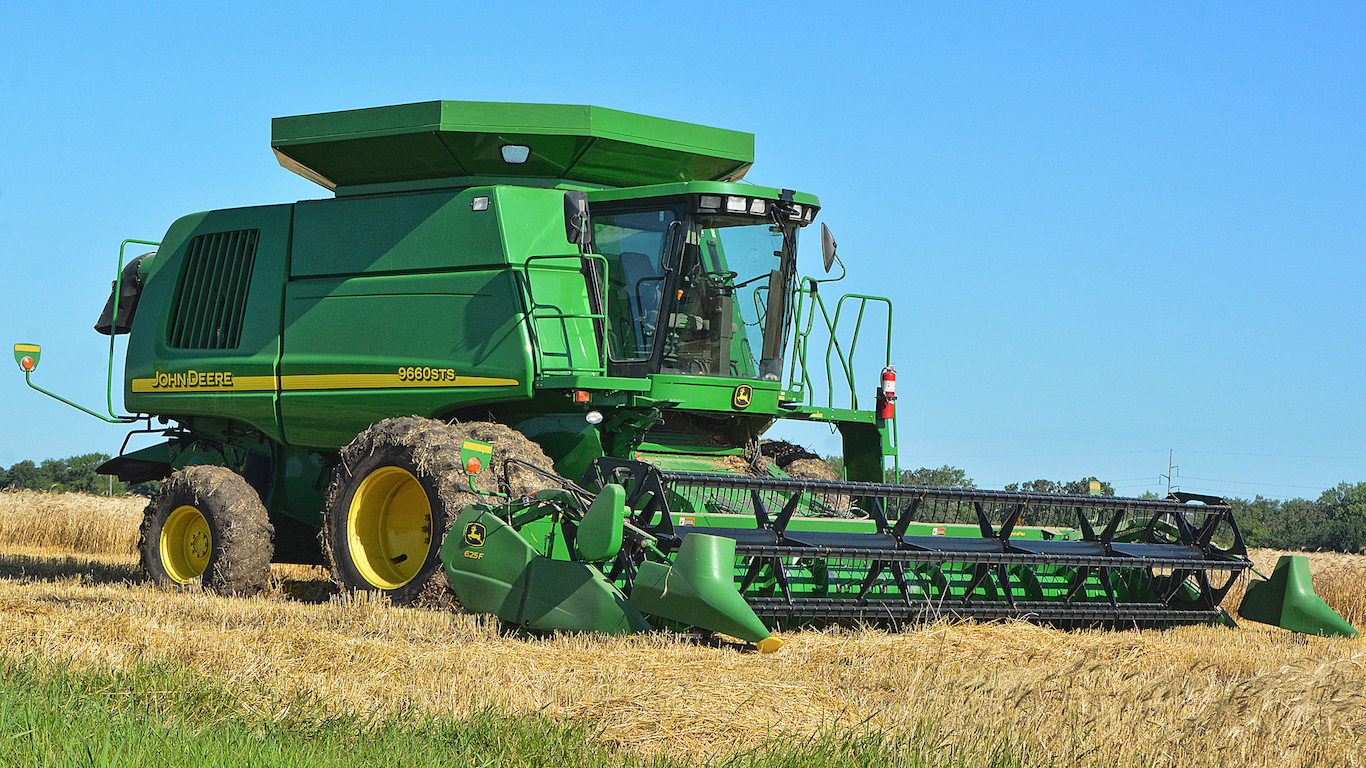
Deere’s latest quarter showed clear differences across its main divisions. The Production & Precision Agriculture segment, which focuses on large-scale farm machinery like big tractors and combines, posted net sales up only 3% to $3.16 billion. Operating profit dropped sharply by 59% to $140 million, with margins shrinking to 4.4%. Factors like higher tariffs, a less favorable product mix, and rising warranty expenses added pressure. This mirrors continued softness in the big agriculture market, where high commodity prices and cautious farmers have kept demand for heavy equipment low.
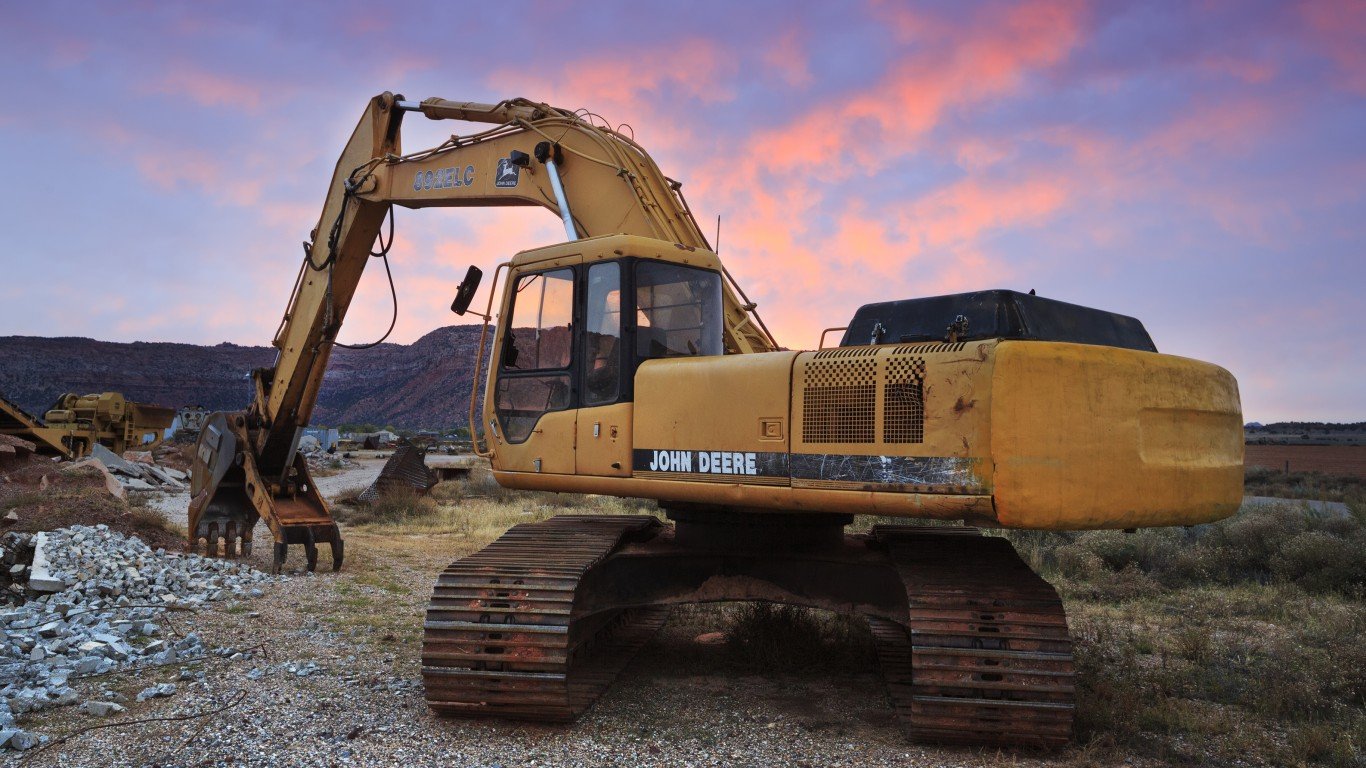
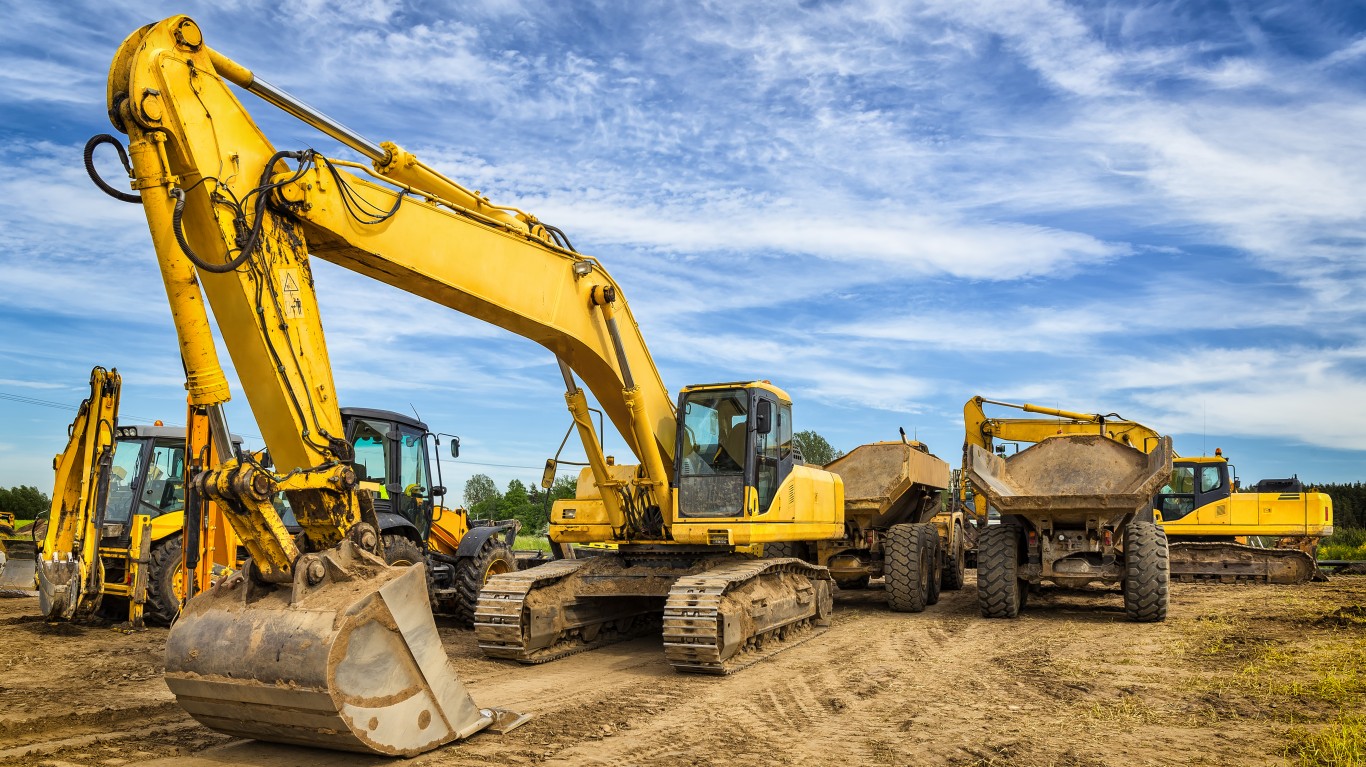
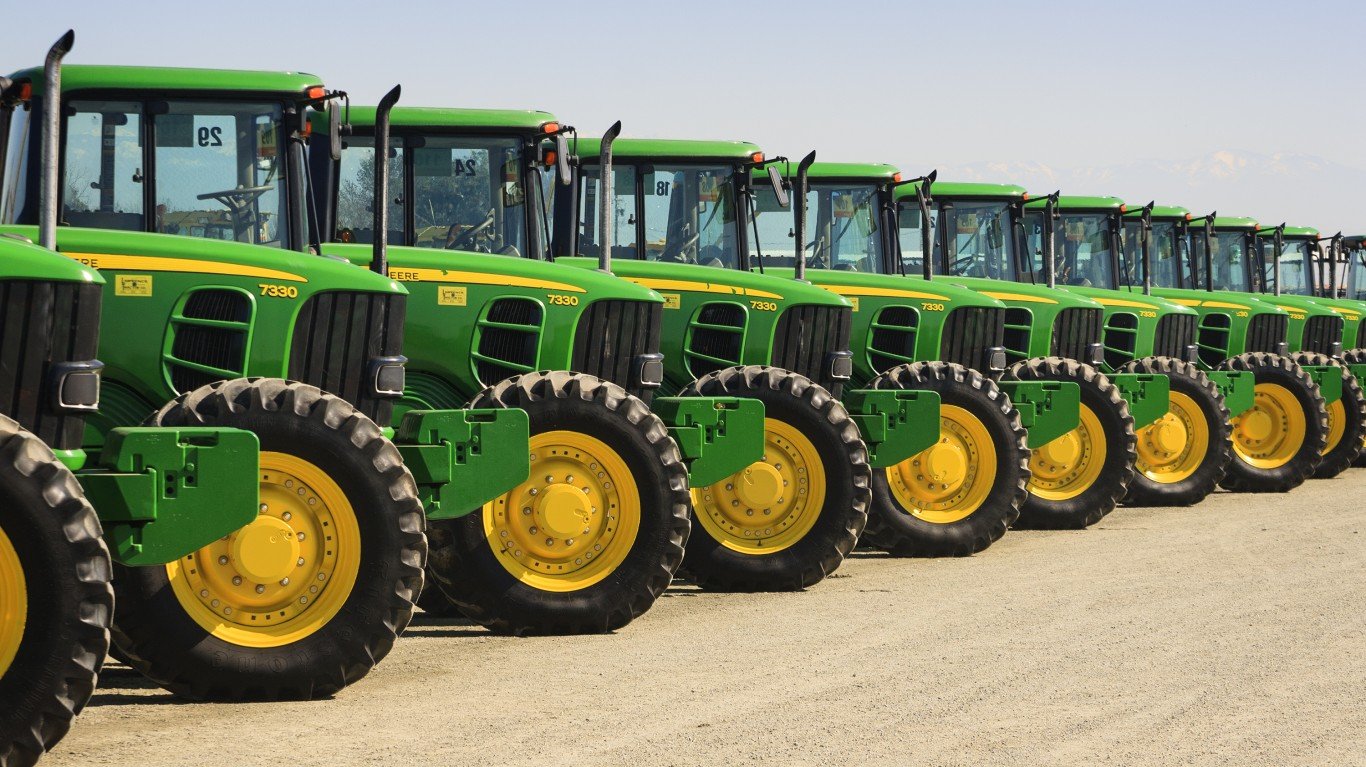
On the brighter side, the Small Agriculture & Turf segment did very well, too, with net sales rising 24% to $2.17 billion and operating profit climbing 58% to $196 million. Growth came from strong demand for compact tractors, mowers, and turf care equipment aimed at smaller farms and homeowners. The Construction & Forestry segment also stood out, with sales up 34% to $2.67 billion and operating profit more than doubling to $137 million. This was fueled by a pickup in infrastructure work and steady need for earthmoving and other construction machines.
Early Signs the Ag Downturn May Be Easing
Deere’s guidance points to the agriculture slump possibly reaching its low point. The company expects Production & Precision Agriculture sales to fall 5% to 10% for the full fiscal 2026 year, but leaders see the large ag sector stabilizing after extended replacement cycles.
CEO John May noted that gains in construction and small agriculture strengthen the view that 2026 marks the cycle bottom and sets up for stronger growth ahead. Continued investment in precision tech — like autonomous equipment and data tools — is paying off and should help as farmer incomes improve.
Small agriculture and turf sales are now projected to grow around 15%, better than the earlier 10% forecast, thanks to a more diverse customer base. This area could act as a cushion while the bigger ag recovery gains steam into 2027. Management pointed to improving order books and broader demand recovery outside large equipment, reinforcing the idea of a cyclical low in 2026.
Construction Strength Fuels Confidence
The Construction & Forestry division is also delivering strong results, with full-year sales now expected to rise about 15%, up from prior guidance. This reflects higher infrastructure spending and a rebound in non-residential building.
Deere’s shift toward more non-ag revenue — now roughly 40% from construction — adds stability, as shown by the segment’s solid Q1 margins of 5.1%. Demand for compact construction gear is helping balance challenges in large ag and supports the upgraded full-year profit outlook.
Key Takeaway
Deere stock has gained about 27% year-to-date and is rising in morning trading today following the beat-and-raise results. The heavy equipment manufacturer holds appeal as a cyclical name potentially starting an upturn in small ag and construction.Yet with shares trading 32 times trailing earnings — well above the five-year average of about 19x — and an EV/EBITDA of 18.3 versus a five-year average near 13, the high valuation suggests investors might want to wait for a dip instead of buying at current levels.
Contact [email protected] for any questions or corrections.
After two decades of patrolling the dark corners of suburbia as a police officer, Rich Duprey hung up his badge and gun to begin writing full time about stocks and investing. For the past 20 years, he’s been cruising the markets looking for companies to lock up as long-term holdings in a portfolio while writing extensively on the broad sectors of consumer goods, technology, and industrials. Because his experience isn’t from the typical financial analyst track, Rich is able to break down complex topics into understandable and useful action points for the average investor. His writings have appeared on The Motley Fool, InvestorPlace, Yahoo! Finance, Money Morning, and, of course, 24/7 Wall St. He has been featured in both U.S. and international publications, including MarketWatch, Financial Times, Forbes, Fast Company, and USA Today.