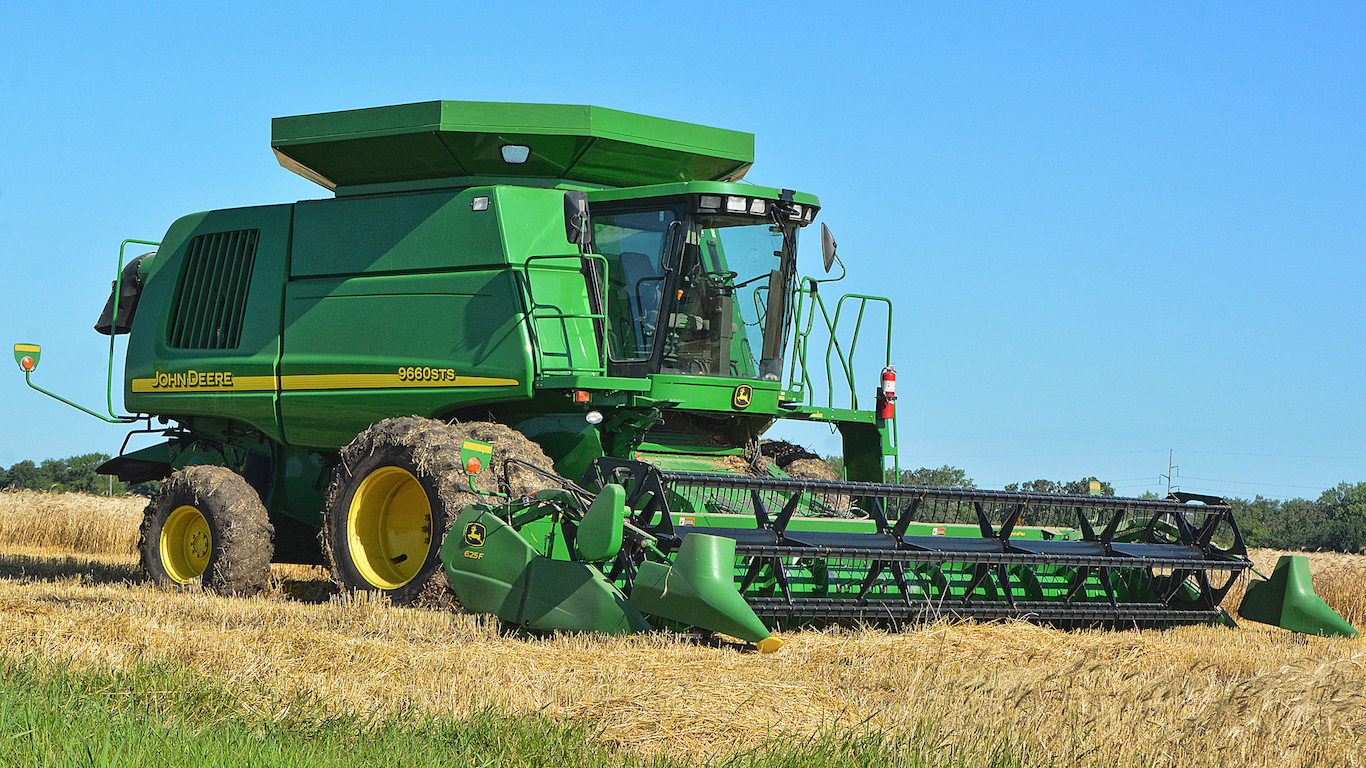
Deere’s Construction Boom Masks Deepening Farm Equipment Slump
The headline looked promising. Deere (NYSE: DE | DE Price Prediction) posted Q2 fiscal 2026 diluted EPS of $6.55, beating consensus estimates of $5.70 to $5.81, on revenue of $13.37 billion, up 5.0% year over year. Management held full-year net…

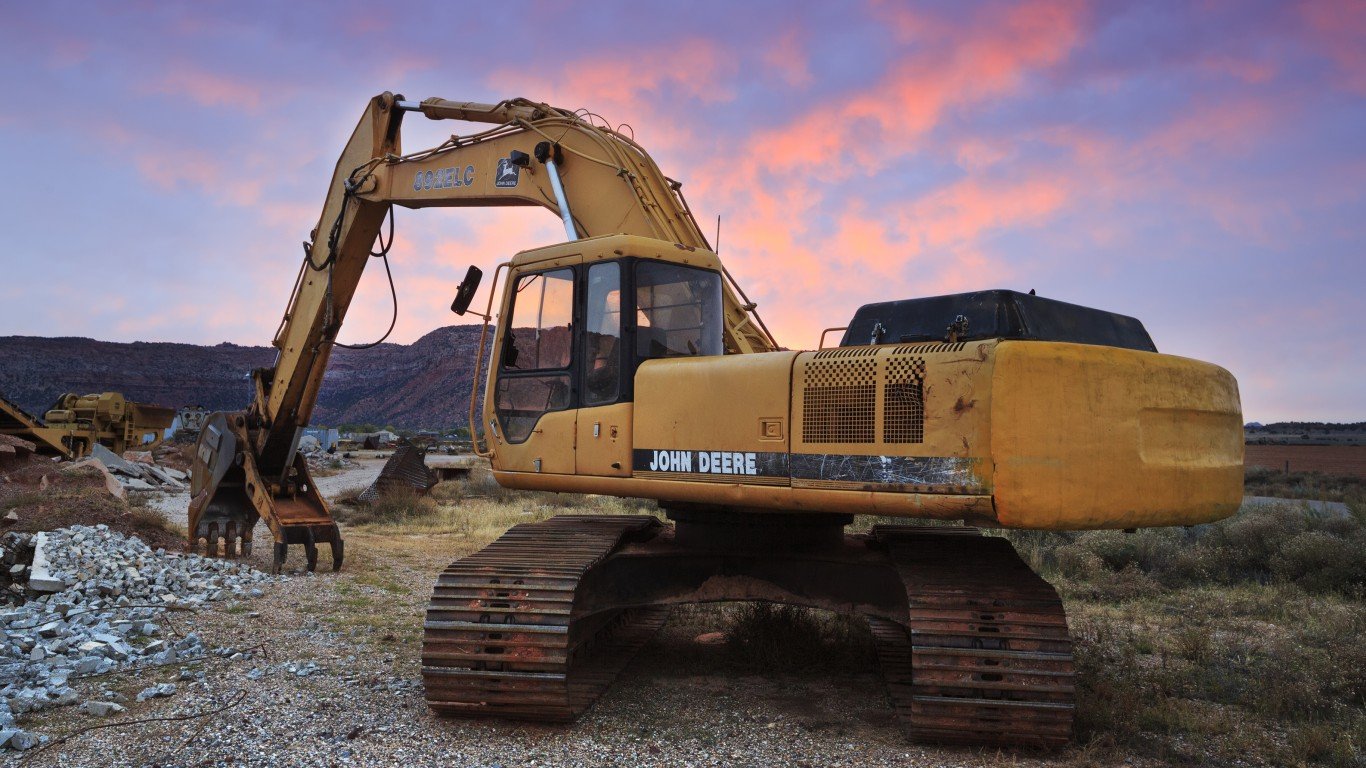
The headline looked promising. Deere (NYSE: DE | DE Price Prediction) posted Q2 fiscal 2026 diluted EPS of $6.55, beating consensus estimates of $5.70 to $5.81, on revenue of $13.37 billion, up 5.0% year over year. Management held full-year net income guidance at $4.5 billion to $5.0 billion. And yet shares fell almost 8% intraday, and closed trading at $531.35, down 5.2% for the day.
The disconnect can be found in the segment mix.

The Quarter Under the Hood
Production and Precision Agriculture has historically been Deere’s flagship margin engine. Yet it posted net sales of $4.50 billion for the quarter, down 14%, with operating margin compressed to 15.7%. Small Agriculture and Turf rose to $3.485 billion, up 16%. Construction and Forestry put up $3.79 billion, up 29%, with operating margin expanding to 14.8%. Financial Services came in at $1.366 billion, down 1%.
The businesses that used to play second fiddle carried the quarter.

A Durable Segment Shift
The full-year segment guidance makes the picture clear. Production and Precision Ag: net sales down 5% to 10%. Small Ag and Turf: up approximately 15%. Construction and Forestry: up approximately 20%, with margins of 10% to 12%. The C&F growth trajectory is durable: up 27% in Q4 FY2025, up 34% in Q1 FY2026, and up 29% this quarter. U.S. housing starts are running at 1.465 million annualized as of April, and Deere’s outlook calls for global roadbuilding up roughly 10%.
The capital allocation supports the story. Deere closed a $439 million acquisition of Tenna, a mixed-fleet construction asset-tracking platform. R&D climbed to $583 million from $549 million a year ago. CEO John May framed the result as evidence of “the strength of our diversified portfolio,” with C&F and Small Ag offsetting agricultural pressure.
Why the Stock Sold Off Anyway
There are two reasons for the pullback. First, a $272 million recovery tied to the Supreme Court’s invalidation of International Emergency Economic Powers Act tariffs flattered production costs and is non-recurring. Second, the report confirmed that U.S. and Canada large ag remains down 15% to 20% and South America ag down roughly 15%. Investors who had priced in an agricultural rebound instead got a construction story. Reuters framed it as profit falling on weak large-equipment demand. The Wall Street Journal noted that construction growth offset agricultural weakness.


The Repricing Question
Deere returned capital steadily, paying a $1.62 quarterly dividend and repurchasing $302 million of stock in the six months ended May 3. The trailing PE is near 30. The question for investors is whether to keep modeling Deere as a farm equipment company waiting on a row-crop cycle, or to assign construction and forestry a materially larger share of intrinsic value. The segment guidance already reflects that shift.
Contact [email protected] for any questions or corrections.
Trey has been an editor and author at 24/7 Wall St. for more than a decade, where he has published thousands of articles analyzing corporate earnings, dividend stocks, short interest, insider buying, private equity, and market trends. His comprehensive coverage spans the full spectrum of financial markets, from blue-chip stalwarts to emerging growth companies.
Beyond 24/7 Wall St., Trey has created and edited financial content for Benzinga and AOL's BloggingStocks, contributing additional hundreds of articles to the investment community.
Trey's editorial expertise extends across multiple publishing environments. He served as production editor at Dearborn Financial Publishing and development editor at Kaplan, where he helped shape financial education materials. Earlier in his career, he worked as a writer-producer at SVE. His freelance editing portfolio includes work for prestigious clients such as Sage Publications, Rand McNally, the Institute for Supply Management, the American Library Association, Eggplant Literary Productions, and Spiegel.
Outside of financial journalism, Trey writes fiction and has been an active member of the writing community for years, moderating workshop sessions at regional conventions.