The XSD Semiconductor ETF Pops 12%, But Has an Intel Problem
SPDR S&P Semiconductor ETF (NYSEARCA:XSD) offers equal-weight exposure to the semiconductor sector, a structure that amplifies both opportunity and risk. The fund has gained 43.15% over the past year as AI infrastructure spending supercharged demand for chips across the supply…

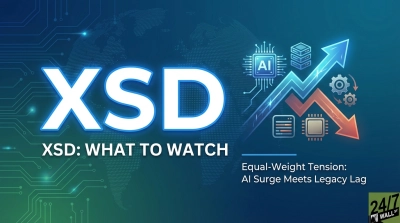
SPDR S&P Semiconductor ETF (NYSEARCA:XSD) offers equal-weight exposure to the semiconductor sector, a structure that amplifies both opportunity and risk. The fund has gained 43.15% over the past year as AI infrastructure spending supercharged demand for chips across the supply chain. The equal-weight structure – which gives smaller names the same influence as giants – has both amplified those gains and introduced drag from legacy players like Intel that have not kept pace with the AI cycle.
At $359.71 per share as of February 18, 2026, the fund is up 11.85% year-to-date. But that performance masks a critical divergence: AI-exposed names like Micron Technology (NASDAQ:MU | MU Price Prediction) are surging while legacy players like Intel (NASDAQ:INTC) struggle. The equal-weight methodology means underperformers drag returns just as much as leaders lift them.
Two factors will determine whether XSD continues its run or stalls: AI infrastructure spending trajectory and the fund’s quarterly rebalancing mechanics.
Macro Factor: AI Infrastructure Spending Momentum
The most important macro driver for XSD is whether hyperscalers sustain their AI infrastructure buildout through 2026. NVIDIA (NASDAQ:NVDA) CEO Jensen Huang said “Blackwell sales are off the charts, and cloud GPUs are sold out” on the Q3 FY2026 earnings call. That demand is translating into explosive growth for memory suppliers.
Micron’s results illustrate just how powerful the AI memory cycle has become. Revenue surged 57% year-over-year to $13.64 billion in Q1 FY26, driven by hyperscaler demand for high-bandwidth memory used in AI training clusters. That demand quality – not just volume – is what pushed Cloud Memory gross margins to 66%, a level that signals pricing power rather than commodity exposure. Retail investors have taken notice, with a post in r/stocks titled ‘$MU, Micron is barely starting to uncoil. Here’s why.’ arguing the HBM cycle is still in early innings and that the market is underpricing the duration of this demand cycle.
The risk is spending plateaus. Watch NVIDIA’s February 25, 2026 earnings for Q4 guidance. If data center revenue growth decelerates or Blackwell demand commentary softens, that signals a cooling cycle. Micron’s prior earnings already set a high bar with $18.70 billion revenue guidance for Q2 FY26. Any miss would ripple through XSD’s memory-heavy holdings.
Geopolitical risk adds another layer. A Reddit post in r/stocks with 4,817 upvotes asked: “With the US hitting Venezuela today, is anyone else terrified China takes Taiwan next?” The post elaborated: “Taiwan makes over 90% of the world’s advanced chips. If China moves, it’s not just a geopolitical crisis — it’s an immediate, multi-year freeze on the entire global semiconductor supply chain. Every tech company on earth would be scrambling.” The concern is real: Taiwan produces over 90% of advanced chips, and any disruption would freeze supply chains for years.
Micro Factor: Quarterly Rebalancing and Composition Drift
XSD rebalances quarterly, and that matters more than most investors realize. XSD holds 43 semiconductor stocks at equal weight, which creates a structural tension when sector leaders and laggards diverge sharply. Right now that divergence is stark — Intel has fallen nearly 6% in just the past week while Micron has continued to climb 2.59%, a gap that quietly erodes returns between rebalances. Equal-weight discipline means the fund cannot simply let winners run; it must periodically sell strength and buy weakness.
The next rebalance will reset weights, forcing the fund to sell outperformers and buy laggards. If AI momentum continues, that means trimming winners like Micron to add exposure to struggling names. Watch the fund’s holdings file after each quarterly rebalance to see whether underperformers like Intel are reduced or if equal-weight discipline forces continued exposure.
Contact [email protected] for any questions or corrections.
I am a long time investor and student of business, and believe finding good companies that can become great investments is the best game on earth. After 20 years of writing and researching the public markets it is clear that individuals have never had more tools and information to take control of their financial lives. From ETFs and $0 commissions to cryptos and prediction markets there has never been a greater democratization of access to investing.
I write to help people understand the investments available to them so they can make the best choice for their portfolio, whether they're starting out or looking for income in retirement.