Why Enterprise Products Partners Is a Shadow Dividend King Not to Overlook
Enterprise Products Partners (NYSE: EPD | EPD Price Prediction) is one of North America’s largest midstream energy operators, moving natural gas, NGLs, crude oil, and petrochemicals across 50,000+ miles of pipelines. Co-CEO A.J. Teague declared that “Enterprise completed 2025 with…

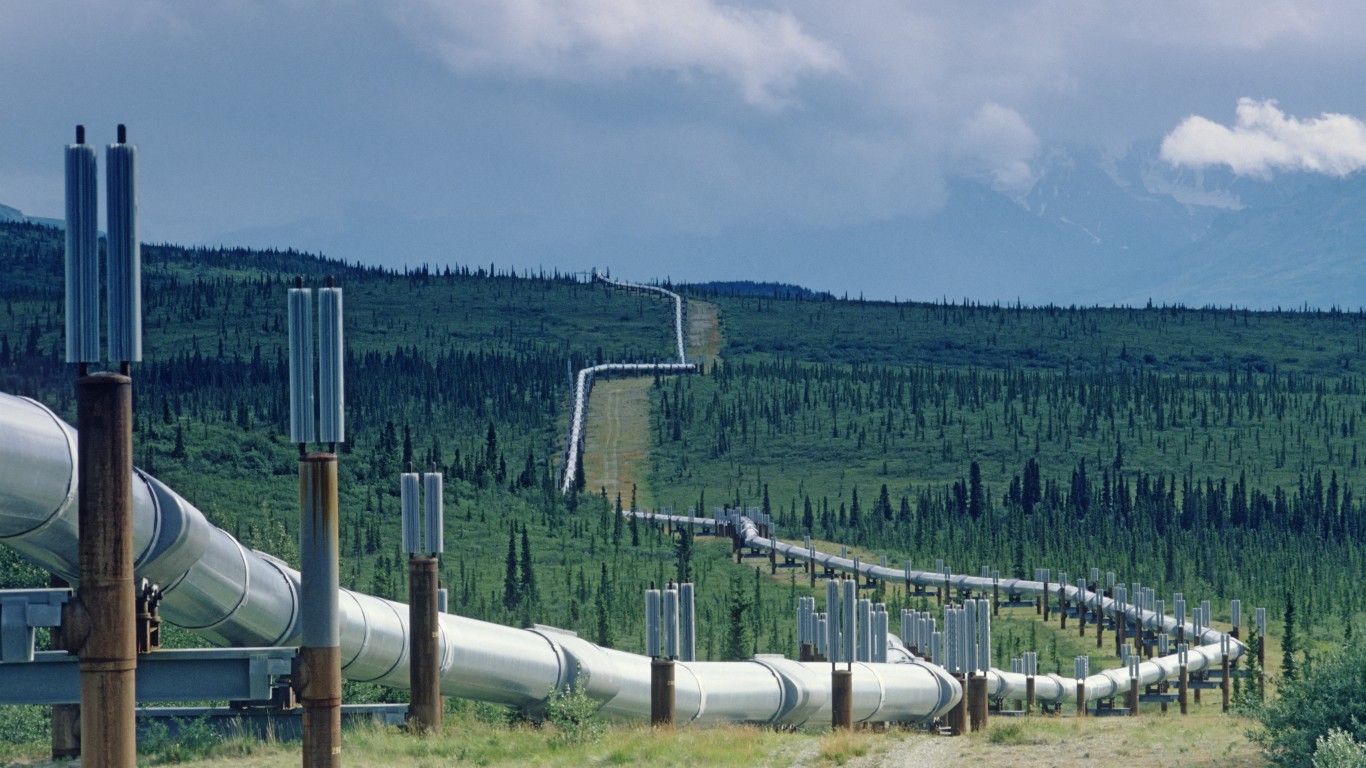
Enterprise Products Partners (NYSE: EPD | EPD Price Prediction) is one of North America’s largest midstream energy operators, moving natural gas, NGLs, crude oil, and petrochemicals across 50,000+ miles of pipelines. Co-CEO A.J. Teague declared that “Enterprise completed 2025 with a record fourth quarter.” The distribution yields roughly 6% at an annualized $2.20 per unit. The central question for income investors is whether that payout is safe.
| Metric | Value |
|---|---|
| Annual Distribution | $2.20/unit |
| Distribution Yield | ~6% |
| Consecutive Years of Increases | 26+ years |
| Most Recent Increase | +3.8% YoY (Q1 2026) |
| Dividend Aristocrat/King Status | No (due to MLP structure) |
DCF Coverage Is the Right Lens, and Q4 2025 Looks Healthy
EPD is a master limited partnership (MLP), so distributable cash flow (DCF) coverage matters more than GAAP payout ratios. In Q4 2025, EPD generated $2.16 billion in operational DCF, producing a coverage ratio of 1.8x, a comfortable cushion. The earnings payout ratio using annualized Q4 EPS of $0.75 runs roughly 73%, which is elevated but not alarming for a capital-intensive infrastructure partnership.
| Metric | Value | Assessment |
|---|---|---|
| Earnings Payout Ratio (annualized Q4) | ~73% | Elevated but manageable |
| DCF Coverage Ratio (Q4 2025) | 1.8x | Healthy |
| Full-Year 2025 Adjusted Cash Flow From Ops | $8.7B (record) | Strong |
| Payout Ratio (% of adjusted cash flow) | 58% | Healthy |
Full-year 2024 FCF coverage came in at just 0.79x as capital expenditures surged. That is below 1.0x, but context matters. EPD was investing through a heavy capex cycle into projects like the Bahia NGL Pipeline and Permian processing expansion. Management expects 2026 discretionary free cash flow to reach approximately $1 billion, a significant improvement from 2025.
Leverage Is Elevated but Intentionally So
| Metric | Value | Assessment |
|---|---|---|
| Total Debt Principal (12/31/2025) | $34.7B | Elevated |
| Net Debt-to-EBITDA (adjusted) | 3.3x | Above target, manageable |
| Weighted Avg Cost of Debt | 4.7% | Reasonable |
| Fixed Rate Debt | ~98% | Strong insulation from rate moves |
| Consolidated Liquidity | $5.2B | Solid buffer |
Co-CEO Randy Fowler addressed leverage directly: “Our leverage will return to within our target range by 2026 when we have a full year of adjusted EBITDA from some of these projects.” The target is 3.0x, plus or minus 0.25x. With ~98% fixed-rate debt at a weighted average cost of 4.7%, EPD is largely insulated from near-term rate volatility.
26 Years of Consecutive Increases: A Shadow Dividend King
| Year | Annual Distribution | YoY Change |
|---|---|---|
| 2026 (run rate) | $2.20 | +~2% |
| 2025 | $2.16 | +~3.8% |
| 2024 | $2.08 | +~5.1% |
| 2023 | $1.98 | +~5.3% |
| 2022 | $1.88 | +~4.4% |
| 2021 | $1.80 | +~1.1% |
EPD cannot officially claim Dividend King status as a partnership rather than a C-corporation. But 26+ consecutive years of distribution increases (including through the 2020 pandemic when distributions held at $0.445 per quarter) speaks for itself. The five-year distribution CAGR sits at roughly 3.5% to 4%: not explosive, but dependable.
This Distribution Is Safe, With One Eye on CapEx Normalization
Dividend Safety Rating: Safe
The 1.8x DCF coverage in Q4 2025, record full-year adjusted cash flow of $8.7 billion, and a 26-year unbroken streak make EPD’s distribution credible. Fowler noted that 2027 is expected to deliver double-digit growth in adjusted EBITDA and cash flow versus 2026 as completed projects reach full utilization. The primary risk is capex staying elevated longer than expected, keeping free cash flow coverage below 1.0x as it was in 2024. Watch for rising capex guidance or softening natural gas volumes as the key warning signs.
Contact [email protected] for any questions or corrections.
Trey has been an editor and author at 24/7 Wall St. for more than a decade, where he has published thousands of articles analyzing corporate earnings, dividend stocks, short interest, insider buying, private equity, and market trends. His comprehensive coverage spans the full spectrum of financial markets, from blue-chip stalwarts to emerging growth companies.
Beyond 24/7 Wall St., Trey has created and edited financial content for Benzinga and AOL's BloggingStocks, contributing additional hundreds of articles to the investment community.
Trey's editorial expertise extends across multiple publishing environments. He served as production editor at Dearborn Financial Publishing and development editor at Kaplan, where he helped shape financial education materials. Earlier in his career, he worked as a writer-producer at SVE. His freelance editing portfolio includes work for prestigious clients such as Sage Publications, Rand McNally, the Institute for Supply Management, the American Library Association, Eggplant Literary Productions, and Spiegel.
Outside of financial journalism, Trey writes fiction and has been an active member of the writing community for years, moderating workshop sessions at regional conventions.