Why Jim Cramer Says Artists Like Taylor Swift Control What You Pay for Tickets
Jim Cramer made a pointed claim on air as Live Nation’s stock surged on news of a tentative DOJ antitrust settlement: “It’s not like when you go to a Taylor Swift concert, if it weren’t for Ticketmaster, I would have…

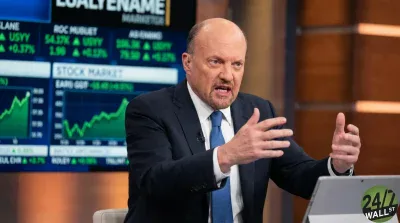
Jim Cramer made a pointed claim on air as Live Nation’s stock surged on news of a tentative DOJ antitrust settlement: “It’s not like when you go to a Taylor Swift concert, if it weren’t for Ticketmaster, I would have to pay less. She can command what she wants to command, and a lot of these artists can command what they want to command.” He called the opposite view “fanciful.” The data largely backs him up, and understanding why matters for anyone investing in live entertainment or trying to make sense of where concert ticket dollars actually go.
Why Artist Economics, Not Ticketmaster Fees, Drive Concert Prices
The DOJ spent years arguing that Live Nation’s ownership of Ticketmaster inflated ticket prices and broke the concert market. The settlement announced today allows Live Nation to keep Ticketmaster while accepting structural reforms, including opening the platform to competing ticketing companies and divesting 13 amphitheaters. LYV stock surged on the news because Wall Street had priced in the risk of a forced breakup.
But the core pricing question was always separate from the antitrust structure debate. And on that question, the revenue breakdown tells the story clearly. In Q4 2025, Ticketmaster generated $846.2 million in revenue while the Concerts segment generated $5.15 billion. The ticketing platform that supposedly drives prices sky-high accounts for a fraction of the company’s total economics. The concerts themselves, where artists negotiate fees and set pricing structures, are where the money flows.
The pricing mechanics confirm this further. Dynamic and market-based pricing, which is what fans experience when they see a $400 floor seat for a stadium show, is set by artists and their management teams in contracts with promoters. Live Nation’s own filings noted that secondary market GTV declined mid-single digits in Q2 2025 due to “increased market-based pricing” on the primary side. When artists capture more value upfront through higher face-value prices, scalpers have less room to profit. That is an artist-driven decision, not a Ticketmaster one.
What Ticketmaster Actually Does (and Doesn’t Do)
Ticketmaster’s primary function is processing transactions and collecting service fees, which are negotiated in contracts with venues and artists. The platform processed 346 million fee-bearing tickets annually with a gross transaction value exceeding $26 billion for concerts alone. Those fees are a pass-through cost baked into the ticket price at checkout, not a separate pricing decision made by the platform itself.
The actual cost of attending a show is driven by what artists charge to perform. Live Nation invested $15 billion in artist events globally in 2025, and rising artist production costs are explicitly listed as a business risk in their filings. The Concerts segment’s margin tells the same story: despite Concerts AOI surging 30% to $687.10 million, the best-ever margin was just 3.3%. Promoters are running on thin margins precisely because artists command the bulk of the economics.
The 75% figure is also worth holding onto. 75% of all U.S. tickets were available for under $100, with get-in prices holding flat to 2024. The high-price experiences that dominate headlines are real, but they reflect demand for specific artists, not a systematic pricing scheme by a ticketing company.
Where Cramer’s Argument Has Limits
Cramer’s framing is accurate on pricing power, but it sidesteps the legitimate antitrust concern, which is not primarily about ticket prices. The DOJ’s case centered on whether Live Nation used its market position to punish venues that switched ticketing providers. The former CEO of Barclays Center testified that the arena experienced a significant drop in Live Nation-promoted shows after switching from Ticketmaster to SeatGeek in 2021, suggesting a form of market retaliation that has nothing to do with Taylor Swift’s asking price.
The question of who controls ticket prices and the question of whether Live Nation competes fairly are distinct issues. Cramer answers the first one correctly. The second one is what the settlement is actually designed to address, and multiple states including New York and Texas have not agreed to the settlement terms, meaning the legal picture is not fully resolved.
What This Means for Investors in LYV and SPOT
For investors, the settlement outcome is the more immediate signal. The market’s reaction reflects relief that a forced Ticketmaster divestiture is off the table. Analysts currently have a Moderate Buy consensus on LYV with an average price target of $182.19, and the company’s own outlook points toward a record 2026. Approximately 67 million tickets are already sold and over 80% of large venue shows are booked for the year ahead.
The structural growth story is intact. Full-year 2025 revenue reached $25.20 billion, up 8.83% year-over-year, and the operating leverage in the business is becoming more visible as the company scales. International markets are now a meaningful part of that story — fan attendance outside the U.S. exceeded domestic attendance for the first time, a milestone that signals Live Nation is no longer a U.S.-centric business. That geographic diversification reduces exposure to any single artist cycle or regulatory environment.
Spotify sits inside this same ecosystem as a demand-generation engine for live events, not a competitor to them. Spotify paid out over $11 billion to the music industry in 2025, the largest annual payment in the platform’s history, and helped artists generate over $1 billion in ticket sales through ticketing partners. These figures reflect Spotify’s growing role as infrastructure for the live music economy — streaming discovery translating directly into ticket revenue at scale.
SPOT shares have gained roughly 31% over the past month, reflecting broader confidence in the company’s profitability trajectory after full-year 2025 net income nearly doubled year-over-year to $2.21 billion.
The One Thing to Take Away
If you are trying to understand why concert tickets are expensive, the answer lives in the economics of artist demand, not in the mechanics of the platform you buy them on. Cramer’s point is financially accurate: artists with the leverage of Taylor Swift, BTS, or Harry Styles set the market. Harry Styles generated 11.5 million pre-sale registrations for a single tour. That kind of demand commands a price regardless of which ticketing system processes the transaction.
For investors, the practical takeaway is that Live Nation’s durable competitive advantage comes from its ability to sign artists and control venue infrastructure at scale. The ticketing platform processes transactions, but the contracts with artists and the physical venues are what competitors cannot easily replicate. The settlement removes the tail risk of a breakup. What remains is a business that runs on the same scarcity that makes a sold-out stadium show worth whatever an artist decides to charge.
Contact [email protected] for any questions or corrections.
Austin Smith is a financial publisher with over two decades of experience as an investor, analyst, and advisor. He covers stocks, ETFs, Artificial intelligence and personal finance for 24/7 Wall St. Previously, he spent over a decade at The Motley Fool as a senior editor for Fool.com, portfolio advisor for Millionacres, and launched The Ascent to help reader take control of their personal finances.
His work has been featured on Fool.com, NPR, CNBC, USA Today, Yahoo Finance, MSN, AOL, Marketwatch, and many other publications. He is as an advisor to private companies, and co-hosts The AI Investor Podcast with Eric Bleeker.
When not looking for investment opportunities, he can be found skiing, running, or playing soccer with his children. Learn more about Austin's investment approach here.