Dave Ramsey: “You Haven’t Been Paid in 20 Weeks But You Only Recently Discovered That?”
A master electrician called into The Dave Ramsey Show in March 2026 and revealed he was owed $18,000 in unpaid wages after going 20 weeks without receiving full paychecks. He had been receiving only two or three pay periods per…

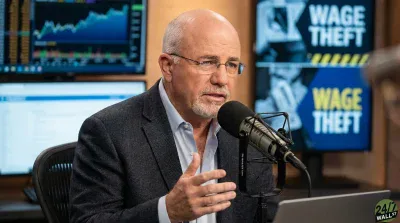
A master electrician called into The Dave Ramsey Show in March 2026 and revealed he was owed $18,000 in unpaid wages after going 20 weeks without receiving full paychecks. He had been receiving only two or three pay periods per month instead of four, with his most recent payment dating back to October. He hadn’t noticed because he was busy building a house, getting married, and having a baby.
Ramsey’s response was blunt: “This guy doesn’t pay people and he lies about it. The best thing you can do with liars and thieves is to distance yourself from them so that you don’t get lied to and stolen from.” When the caller mentioned his employer offered trucks and trailers as partial compensation, Ramsey told him to take them immediately.
The advice is sound. The more important lesson buried in this call, however, isn’t about what to do after you discover wage theft. It’s about why workers let it go this far in the first place, and what the math looks like when they do.
How $900 a Week Disappears Without Anyone Noticing
The caller lost roughly $900 per week for 20 weeks before catching it. That’s not a rounding error on a pay stub. It’s a pattern that built slowly enough to stay invisible while life got loud: a new house, a wedding, a newborn. The employer, himself a master electrician who had been stiffed on a $25,000 job, essentially converted his employee into an interest-free line of credit without disclosure or consent.
This is how wage theft works in small businesses. It rarely starts as outright fraud. It starts as a delayed payment, then another, then a partial check that gets rationalized as a temporary cash flow problem. By the time the employee recognizes the pattern, months of leverage have already shifted to the employer. The worker must then decide whether to confront someone they depend on, walk away from money they’re owed, or accept non-cash settlements like equipment.
If the worker had to put $900 a week on a credit card to float living expenses, the debt penalty alone is staggering. The Federal Reserve’s G.19 Consumer Credit data shows the average APR on credit card accounts assessed interest rose to 22.15% in Q2 2026, up from 21.52% in Q1, and below only the record highs set in late 2024. Alternatively, if that $900 a week had been properly invested in the S&P 500 over those 20 weeks, the lost potential gains represent another invisible tax on the worker’s patience. Wage theft isn’t just missing money. It is forced, uncompensated capital allocation.
The Department of Labor’s Wage and Hour Division recovered more than $259 million in back wages for nearly 177,000 employees in fiscal year 2025, the highest total since 2019. That works out to an average of $1,465 per worker. Those are only the cases that reached formal enforcement. The Workplace Justice Lab reported in 2026 that WHD’s investigator headcount had fallen to 611, the lowest level since at least 1973, meaning the gap between wage theft committed and wage theft recovered is almost certainly far larger than the official numbers suggest. Most workers never file a claim.
The financial backdrop makes this worse. The U.S. personal savings rate stood at 3.6% in March 2026, according to the Bureau of Economic Analysis, then fell to 2.6% in April and hovered near 2.7% by June. Americans are building thinner buffers even as wages grow nominally. A worker with a lean savings cushion who gets shorted on pay for 20 weeks isn’t just losing income. They are potentially falling behind on a mortgage, depleting an emergency fund, or carrying credit card debt at elevated rates to cover the gap. The $18,000 owed to this caller likely cost him much more than $18,000 in real terms.
The Specific Profile Where This Happens Most
Wage theft through payment delays disproportionately hits workers in small trade businesses, where payroll is informal, cash flow is project-dependent, and the employer-employee relationship is personal enough that confrontation feels uncomfortable. The caller’s situation fits a recognizable pattern: skilled worker, small employer, no HR department, no written payroll schedule, and enough personal goodwill to make delayed payments feel like a temporary inconvenience rather than a deliberate one.
In many of these scenarios, wage theft goes hand-in-hand with worker misclassification. Employers often illegally classify workers as 1099 independent contractors to avoid payroll taxes and unemployment insurance, which makes delayed payments feel more “normal” in a contractor relationship. Even so, if the employer dictates your hours, provides your tools, and directs your work, you are legally an employee and protected by wage laws regardless of what form you were handed at hiring.
Consider two workers in the same trade. The first is a journeyman electrician with three years of experience, working for a small residential contractor. He has limited credentials, moderate demand for his skill set, and a relationship with his employer built over years. When payments start running late, he stays quiet because he’s worried about finding comparable work and doesn’t want to damage the relationship.
The second is a master electrician with a license and ten years of experience. Co-host George Kamel noted that master electricians are in massive demand, making replacement employment readily available. The broader labor market supports that view. The national unemployment rate came in at 4.1% in July 2026, according to the Bureau of Labor Statistics, though the economy shed 23,000 nonfarm payroll jobs that month, a sign that conditions are less robust than headline numbers suggest. For a master electrician specifically, credentialed labor remains scarce and contractors are still competing for licensed talent. This caller had leverage he simply wasn’t using.
The journeyman’s reluctance is more understandable. The master electrician’s tolerance is a miscalculation of his own market position. The lesson isn’t the same for both workers, and that distinction matters.
The Legal Threat: Liquidated Damages
When workers discover they have been shorted, they often mistakenly believe they are owed only their back pay. Under the Fair Labor Standards Act (FLSA) and many state laws, workers are frequently entitled to “liquidated damages” (double the owed amount) or “treble damages” (triple the amount) if the theft was willful. An $18,000 debt that could legally become a $36,000 or $54,000 judgment changes the power dynamic entirely and shifts real leverage back to the worker.
Your Skills Are Your Power
Trade workers consistently underestimate their market leverage, and that underestimation is expensive. A master electrician’s license takes years to earn, requires passing state board exams, and qualifies the holder to supervise electrical work and pull permits that journeymen cannot. The credential creates a floor under your market value that a dishonest employer cannot move, regardless of whatever cash flow pressure they’re facing.
If you find yourself in this situation, you need an immediate triage plan:
- Step 1: The Paper Trail: Formally request your unpaid wages via email immediately to create a time-stamped legal record of the debt.
- Step 2: The Stop-Work Boundary: Professionally inform your employer in writing that no further labor will be provided until all accounts are settled.
- Step 3: Asset Recovery: If offered equipment like trucks or trailers as compensation, ensure title transfers are handled through proper legal channels so you don’t accidentally commit theft while trying to recoup lost wages.
For any skilled trade worker with strong market demand, the cost of staying with an employer who doesn’t pay you extends well beyond the unpaid wages. It includes every week of future wages you lose by not leaving sooner, plus the interest on any debt you carry to cover the gap, plus the opportunity cost of not being somewhere that values your credential.
Ramsey’s advice to distance yourself from liars and thieves is correct. The harder version of that advice is this: know your value clearly enough that you never need 20 weeks to notice you’re being stolen from.
Editor’s note: This pass updated the credit card APR figure to 22.15% for accounts accruing interest in Q2 2026 (up from 21.52% in Q1), per the Federal Reserve G.19 data; refreshed the unemployment rate to 4.1% in July 2026 per the Bureau of Labor Statistics, with added context that the economy shed 23,000 jobs that month; extended the personal savings rate timeline to include the April 2026 drop to 2.6% and the June 2026 reading of 2.7%, both per the Bureau of Economic Analysis; and added the Department of Labor’s per-worker average recovery figure of $1,465 from its official FY2025 announcement.
Contact [email protected] for any questions or corrections.
Austin Smith is a financial publisher with over two decades of experience as an investor, analyst, and advisor. He covers stocks, ETFs, Artificial intelligence and personal finance for 24/7 Wall St. Previously, he spent over a decade at The Motley Fool as a senior editor for Fool.com, portfolio advisor for Millionacres, and launched The Ascent to help reader take control of their personal finances.
His work has been featured on Fool.com, NPR, CNBC, USA Today, Yahoo Finance, MSN, AOL, Marketwatch, and many other publications. He is as an advisor to private companies, and co-hosts The AI Investor Podcast with Eric Bleeker.
When not looking for investment opportunities, he can be found skiing, running, or playing soccer with his children. Learn more about Austin's investment approach here.