The AI IPO I’m Most Excited About (And No, It’s Not OpenAI, Anthropic or xAI)
The IPO drought could end with some of the historic AI IPO whales that make a big enough splash such that the S&P 500 experiences a big change. Undoubtedly, the cap-weighted index could look vastly different in three years from…


The IPO drought could end with some of the historic AI IPO whales that make a big enough splash such that the S&P 500 experiences a big change. Undoubtedly, the cap-weighted index could look vastly different in three years from now after the slew of IPOs (many of which could sport valuations at or north of $1 trillion) hit the ground running.
While late-2026 or sometime in 2027 might seem like a long time to wait, especially given the volatility pains that investors have been through so far this year, I do think that it’s worth looking to the massive public market debuts that might be on tap sooner (think in the coming months) and asking oneself if it makes sense to participate or wait until things play out for some months or years after.
Is it worth looking beyond the big-three AI IPOs?
OpenAI, Anthropic, and xAI-SpaceX have to be the AI-driven star IPOs atop investors’ lists. And while I’m sure the big-league IPOs could be a hit right off the bat, they’re not at the number-one spot on my IPO watchlist. Of course, if the IPOs open with weakness in the first couple of weeks and months, I might consider getting in, but until then, it’s worth reading for an IPO boom that could be the greatest in history.
Of course, there’s still no telling what shape the AI trade will be in late-2026 or early-2027. Either way, it might be time to pick an AI IPO you think could be a winner, or just settle for the S&P 500 and Nasdaq 100, which are sure to get a good helping of both companies.
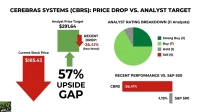
The IPOs that loom are so massive that the Nasdaq 100 might already offer 4-5% exposure to the largest of the AI IPOs. As most investors focus on these big three firms, I’ll be checking in on Cerebras, a smaller, relatively under-the-radar AI chip designer that might have the keys to win the AI race. Of course, the company isn’t at all small by traditional IPO standards, with an expected valuation of around $23-26 billion. Apart from having room to run, Cerebras’ wafer-scale engine 3 (WSE-3) is a unique take on chips.
Bigger chips, bigger performance gains?
The wafer-scale architecture is quite hefty, and with that, it might be a pioneer of sorts, especially as AI data center chips evolve in a way such that the physical size isn’t so much of a concern as speed, efficiency, and simplicity. If it’s in the data center, the physical size really doesn’t matter, as it would if it were to be someone’s household.
Even when it comes to in-house devices, the Apple (NASDAQ:AAPL | AAPL Price Prediction) M-series Max and Ultra chips are larger and more powerful. Turns out bigger is better when it comes to unified memory and bandwidth. While the process might be shrinking, the form factor of chips, especially in the data center, might be best-served by growing.
Either way, Cerebras stands out as one of the most intriguing private AI firms to watch closely in the coming years. With the firm collaborating with Amazon (NASDAQ:AMZN) Web Services (CS-3 systems plus Amazon’s own trainium chips), the two AI chip innovators may very well be able to unlock next-level efficiencies as firms really look above and beyond GPUs.
In any case, Cerebras looks well-positioned as the semi world skates toward inference from training. And for investors looking for an AI chip IPO rather than another model maker, I think it might be worth keeping tabs on the firm as it gears up for an eventual debut this year, perhaps well ahead (maybe spring 2026?) of its much larger AI IPO rivals.
Contact [email protected] for any questions or corrections.
Joey is a 24/7 Wall St. contributor and seasoned investment writer whose work can also be found in publications such as The Motley Fool and TipRanks. Holding a B.A.Sc in Computer Engineering from the University of British Columbia (UBC), Joey has leveraged his technical background to provide insightful stock analyses to readers.
Joey's investment philosophy is heavily influenced by Warren Buffett's value investing principles. As a dedicated Buffett disciple, Joey is committed to unearthing value in the tech sector and beyond.