The Income ETF Built for Bear Markets: Why SPHD Belongs in Every Retirement Portfolio
When markets get choppy and retirement accounts start shrinking, most retirees face the same uncomfortable tension: they need income now, but they can’t afford to watch their portfolio collapse. Invesco S&P 500 High Dividend Low Volatility ETF (NYSEARCA:SPHD) was built…

This post may contain links from our sponsors and affiliates, and Flywheel Publishing may receive compensation for actions taken through them.

When markets get choppy and retirement accounts start shrinking, most retirees face the same uncomfortable tension: they need income now, but they can’t afford to watch their portfolio collapse. Invesco S&P 500 High Dividend Low Volatility ETF (NYSEARCA:SPHD) was built specifically to navigate that tension, and the current market environment is exactly the kind of moment that tests whether it actually works.
What SPHD Is Actually Trying to Do
SPHD tracks the S&P 500 Low Volatility High Dividend Index, which screens the S&P 500 for the 75 highest-yielding stocks and then selects the 50 least volatile among them. The result is a portfolio that prioritizes two things simultaneously: income and stability. That dual filter shapes everything about how the fund behaves.
SPHD generates income from dividends paid by its 51 holdings, concentrated in utilities, REITs, consumer staples, telecom, and energy infrastructure. These are businesses with predictable cash flows, regulated revenue streams, or long-term contracts that sustain high dividend payouts even when the broader economy slows. The low-volatility screen filters out high-yielders that also happen to be high-risk, which is a meaningful distinction when you’re living off the distributions.
The fund pays monthly, which matters more than it might sound for retirees managing cash flow. SPHD has maintained uninterrupted monthly distributions since at least November 2012, covering every market cycle in that span.
The 2025-2026 Dividend Story Is Genuinely Compelling
The income trajectory has been one of the more notable stories in the dividend ETF space. In 2024, monthly distributions ranged from roughly $0.13 to $0.15 per share., a steady but modest baseline. By February 2026, that figure had climbed to the February 2026 distribution came in at $0.20937 per share, the highest in the dataset, reflecting both rising dividend payouts from underlying holdings and the fund’s tilt toward high-yielding sectors that have benefited from the current rate environment.
Zooming out, total distributions for 2025 came in at approximately $1.93 per share, up from roughly $1.65 per share in 2024. For a retiree drawing monthly income, that kind of year-over-year growth in distributions meaningfully offsets inflation and reduces the need to sell shares to cover living expenses.
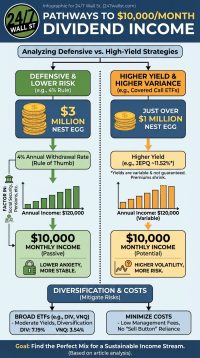
The current annualized yield sits at 4.39%, measured against a 10-year Treasury yield of 4.20%. That gap is narrow, but SPHD offers something Treasuries don’t: equity upside and growing distributions, while cash and money market alternatives are slowly becoming less competitive on yield.
How It Has Held Up When It Matters Most
The low-volatility design is most visible during market stress, and 2026 has provided a real test. With the VIX climbing to 25, a level that places it in the 91st percentile of readings over the past year, defensive positioning has paid off. Year-to-date through mid-March, SPHD is up 3.69%, while SPY is down 3% over the same period. That meaningful divergence illustrates exactly what the fund’s dual screen is designed to deliver in turbulent conditions.
Over five years, SPHD returned SPHD has returned 41.7% on price alone over five years on price while SPY returned SPY returned 69.82% — a gap that widens further over ten years. The underperformance is structural: by filtering out volatile stocks, SPHD also filters out the high-growth technology and consumer discretionary names that powered SPY’s strongest years. That is the core tradeoff — smoother drawdowns in exchange for missing the biggest rallies.
The Honest Tradeoffs
Three constraints are worth understanding before committing capital here. First, the low-volatility filter creates a portfolio heavily tilted toward rate-sensitive sectors like utilities and REITs. When rates rise, these sectors tend to underperform and SPHD’s income advantage over Treasuries shrinks. Second, semi-annual rebalancing means the fund systematically buys yesterday’s low-volatility stocks, which can create lag during sector rotations. Third, this fund will trail the broad market in sustained bull markets. Over ten years, SPHD has returned 100.62% on price, compared to SPY’s 223.63%. The income has been real, but so has the opportunity cost.
SPHD has historically attracted retirees who prioritize monthly income and meaningful equity exposure, and who have accepted slower long-term capital growth in exchange for a smoother ride through volatile markets like the one playing out right now.
Contact [email protected] for any questions or corrections.
Austin Smith is a financial publisher with over two decades of experience as an investor, analyst, and advisor. He covers stocks, ETFs, Artificial intelligence and personal finance for 24/7 Wall St. Previously, he spent over a decade at The Motley Fool as a senior editor for Fool.com, portfolio advisor for Millionacres, and launched The Ascent to help reader take control of their personal finances.
His work has been featured on Fool.com, NPR, CNBC, USA Today, Yahoo Finance, MSN, AOL, Marketwatch, and many other publications. He is as an advisor to private companies, and co-hosts The AI Investor Podcast with Eric Bleeker.
When not looking for investment opportunities, he can be found skiing, running, or playing soccer with his children. Learn more about Austin's investment approach here.