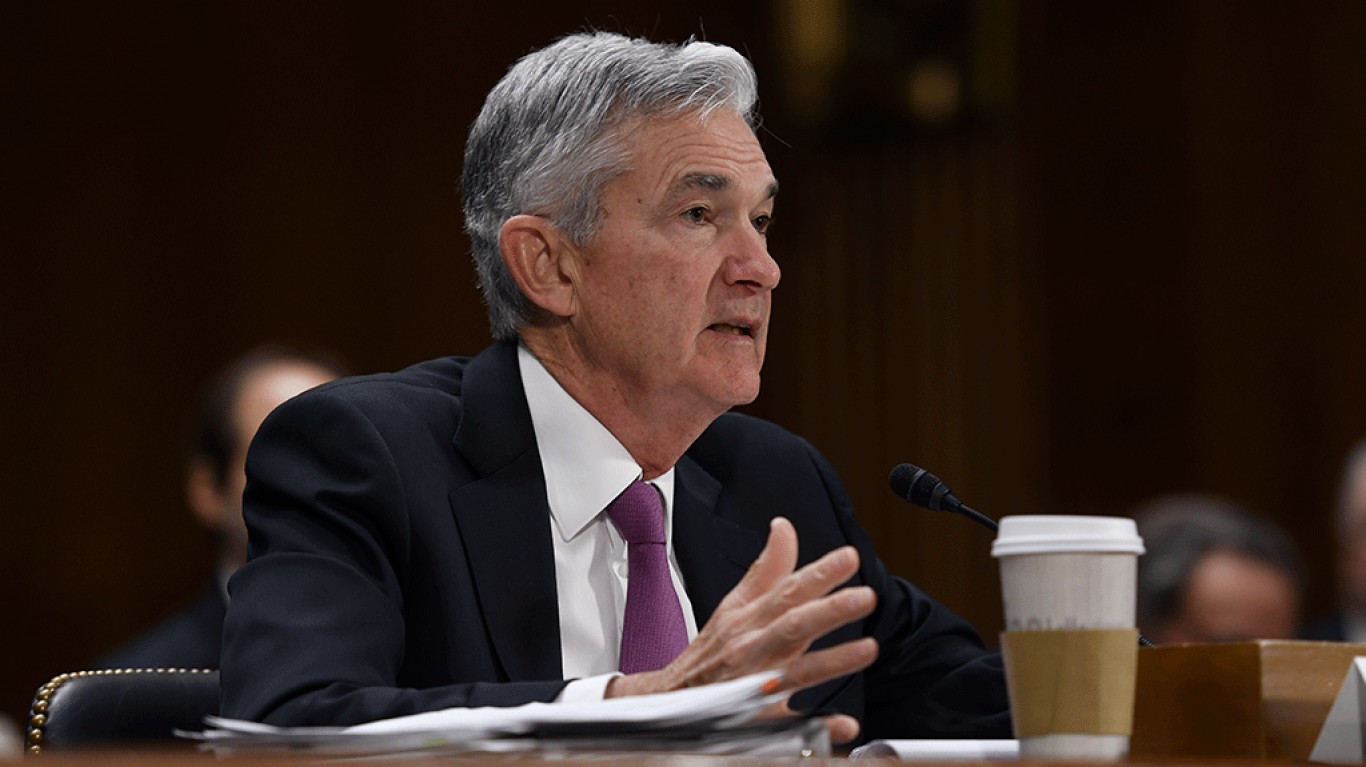
The Fed Just Paused Rates. Here’s How Retirees on Social Security May Be Impacted
There’s been pressure on the Federal Reserve to cut interest rates and ease borrowing costs for cash-strapped consumers since last year. But when the Fed met in mid-March for its policy meeting, it didn’t budge. Rather, it held its benchmark…


There’s been pressure on the Federal Reserve to cut interest rates and ease borrowing costs for cash-strapped consumers since last year. But when the Fed met in mid-March for its policy meeting, it didn’t budge. Rather, it held its benchmark interest rate steady.
You may be wondering how the Fed’s decision impacts Social Security. The reality is that the Fed doesn’t dictate how much Social Security pays or how much of a cost-of-living adjustment (COLA) benefits get.
That said, the Fed’s interest rate decisions could have an indirect effect on COLAs. And they could also have an impact on seniors’ finances.
What paused rates mean for consumers
The Fed is not in charge of setting consumer interest rates. Rather, the Fed oversees the federal funds rate, which is what banks charge each other for short-term borrowing.
When the Fed lowers its benchmark interest rate, it costs banks less to borrow. They’re then able to pass some savings on to consumers in the form of lower interest rates on credit cards, loans, and lines of credit.
The fact that the Fed didn’t lower its benchmark rate in March means consumers won’t get that relief soon. And that could affect seniors on Social Security.
Some seniors rely on borrowing to make ends meet. The less expensive their credit card payments are, the more wiggle room they have.
Also, the Fed’s paused rates could discourage consumers from borrowing and spending. That could lead to a slowdown in inflation, which could result in a smaller Social Security COLA in 2027.
Of course, any pullback in consumer spending, at least in the coming weeks and months, may be offset by higher gas and energy prices — a byproduct of the Iran conflict. So it’s definitely premature to suggest that inflation will slow this year.
Rather, it’s that the Fed’s recent actions don’t encourage consumer spending. That said, paused rates don’t necessarily discourage spending, either.
What to keep an eye on
Seniors on Social Security who are worried about their finances should pay attention to factors like rising prices, as evidenced by what they see in stores and at the pump. Those factors are going to have more of a direct impact than the Fed’s interest rate decisions.
As far as next year’s COLA goes, it’s too soon to predict one. Yes, there are initial projections. But a lot can happen between now and the third quarter of the year, which is what COLAs are based on. And there’s a good chance this recent Fed decision won’t really push that COLA upward or downward in a meaningful way.
Will the Fed lower interest rates at its next meeting?
It’s hard to know. The Fed is expected to make a rate cut this year. But whether it takes action sooner versus later will depend on how economic events unfold. In other words, we’ll have to sit tight and wait and see.
But if you’re on Social Security and are worried about covering your costs, there’s little benefit to tracking the Fed’s every statement in between meetings. A better use of your time and mental energy is to come up with a sustainable budget and find ways to boost your income, whether by getting a part-time job, pursuing gig work, or coming up with another creative solution.
Contact [email protected] for any questions or corrections.
Maurie Backman has more than a decade of experience writing about financial topics, including retirement, investing, Social Security, and real estate. Her work has appeared on sites that include The Motley Fool, USA Today, U.S. News & World Report, and Kiplinger.
Prior to becoming a full-time financial writer, Maurie worked in the financial industry trading distressed debt. She then changed course and spent a few years designing electronic toys. After a stint in content marketing and UX, she shifted back into writing and has since covered everything from the housing market to estate planning to Medicare.
When she's not busy writing, Maurie can be found hiking, walking her dogs, driving her kids to their various sports practices and games, and curling up with a good book. She cooks on occasion and bakes way too often.