Plenty of Retirees Will Price Every Hawaiian Island and Never Move. One Reason Will Come Up Every Time
Retirees who spend months pricing condos and crunching tax numbers on every Hawaiian island tend to get blindsided by one obstacle that no spreadsheet fully captures, and it has nothing to do with housing costs.

This post may contain links from our sponsors and affiliates, and Flywheel Publishing may receive compensation for actions taken through them.
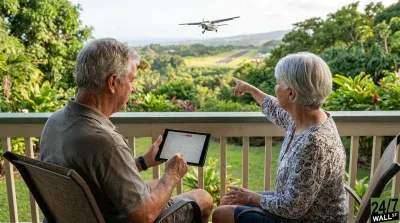
Retirees considering a move to Hawaii usually start by comparing condos on Oahu, single-family homes on Maui, and towns on the Big Island, then factor in their Social Security income and the state’s tax rules. Line up the numbers on cost, taxes, savings targets, and healthcare access, and one factor keeps rising to the top: how easy it is to get to a specialist.
Hawaii’s Price Tag Is Steep but Smaller Than Its Reputation
Start with the overall cost of living. Federal regional price parity figures use 100 as the national average, and they put Hawaii at 109.951. Only California is higher, at 110.72. That’s expensive, but it’s closer to Florida’s 103.414 than the island’s reputation would suggest. The shipping premium is real, though, because nearly everything arrives by boat, and the power bills take the biggest hit. In 2024, Hawaii households paid the highest average electric bill in the country at $213 a month, even though they used the least grid electricity.
Housing is where the islands split apart. Oahu’s single-family median reached $1,210,500 in August, while the Oahu condo median was $510,000. Maui’s single-family median was $1,356,975 in June. We couldn’t find a current islandwide median for the Big Island or Kauai, so the statewide figure is only a rough guide.
Taxes are friendlier than most people expect. Hawaii doesn’t tax Social Security, and it excludes pension and qualified retirement plan income funded by employers. By contrast, IRA and 401(k) withdrawals are taxed as ordinary income. Honolulu’s home exemption, which subtracts a set amount from your assessed value before calculating tax, rises to $180,000 for owners 65 and older.
Running the Numbers for a 65-Year-Old Couple
Take the BLS figure for average annual household spending, $78,535, and scale it by Hawaii’s price index. That gets you about $86,350. Assume an illustrative $10,000 a year for state and federal taxes on IRA withdrawals, plus a medical travel fund, and raise the working budget accordingly. Medicare Part B costs $202.90 per person per month in 2026, or about $4,870 for two. IRMAA surcharges, the income-based add-ons, kick in once joint income goes above $218,000.
Two average Social Security retirement checks of $2,071 a month total $49,704 a year, leaving a $46,646 gap. A 4% withdrawal rate is a common planning benchmark for a 30-year horizon that starts at 65, and at that rate you’d need about $1.17 million. If you’d rather withdraw 3.5% for extra buffer, the target rises to about $1.33 million. Waiting until 70 to claim Social Security gets delayed retirement credits and reduces the gap.
That budget assumes housing costs typical of a mainland household. If you buy outright, the purchase sits on top: roughly $1.68 million all-in with a median Oahu condo, or $2.38 million with a median single-family home.
Why Healthcare Ends More Hawaii Plans Than Money Does
Physician supply also shapes the decision, and it depends heavily on local workforce conditions. University of Hawaii researchers estimate the state is short 29% of the physicians it needs, with rural communities short anywhere from 33% to 53%. On the Big Island, an earlier workforce report found 12 specialty positions with shortage rates of 80% or higher. For context, the state counted 3,599 physicians providing active patient care in 2023.
If you live on a neighboring island, ongoing specialist care often means flying to Honolulu, sometimes repeatedly. Medicare pays for the visit but not the flight. For a healthy 66-year-old, that’s an occasional hassle. For a 78-year-old managing two chronic conditions, it turns into an ongoing cost and a logistics problem that grows every year. Family distance makes it most difficult. Adult children living on the mainland face long, costly flights to reach the islands.
Specialist access tends to become a larger constraint with age, given the shortage rates above.
Making the Move Work, or Renting It First
The numbers above fit retired people with $1.17 million or more invested beyond their home, good health or conditions local doctors can manage, and family willing to travel. Oahu, with Honolulu’s concentration of hospitals, is a very different medical proposition from rural Kauai or the Big Island. Renting long term, or spending winters there first, gives you most of the experience without tying up seven figures in a house.
Taken together, the estimates point to roughly $1.17 million at a 4% withdrawal rate, or $1.33 million at 3.5%, plus the full purchase price if you buy, and Social Security timing that tends toward later claiming. Also factor in your expected annual cost of specialist care from the exact island and town you’re pricing, and project it over the decades you plan to stay. A larger figure shifts the comparison toward Oahu or renting, and a smaller one leaves the rest of the budget as the main factor.
Contact [email protected] for any questions or corrections.
David Beren has been a Flywheel Publishing contributor since 2022. Writing for 24/7 Wall St. since 2023, David loves to write about topics of all shapes and sizes. As a technology expert, David focuses heavily on consumer electronics brands, automobiles, and general technology. He has previously written for LifeWire, formerly About.com. As a part-time freelance writer, David’s “day job” has been working on and leading social media for multiple Fortune 100 brands. David loves the flexibility of this field and its ability to reach customers exactly where they like to spend their time. Additionally, David previously published his own blog, TmoNews.com, which reached 3 million readers in its first year. In addition to freelance and social media work, David loves to spend time with his family and children and relive the glory days of video game consoles by playing any retro game console he can get his hands on.