RAMageddon Arrives: AI’s Endless Appetite Just Killed the PC Comeback
The global PC market has clawed its way back from a brutal slump in 2022 and 2023, when shipments cratered amid post-pandemic oversupply, with 2024 delivering modest growth as businesses and consumers began refreshing aging fleets. By 2025, the rebound…


The global PC market has clawed its way back from a brutal slump in 2022 and 2023, when shipments cratered amid post-pandemic oversupply, with 2024 delivering modest growth as businesses and consumers began refreshing aging fleets. By 2025, the rebound appeared to be accelerating sharply — shipments rose 9.3% year-over-year, fueled by commercial upgrades to Windows 11 machines and personal buyers chasing better performance and AI-ready features.
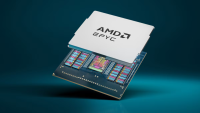
Yet just as the party was hitting its stride, Advanced Micro Devices (NASDAQ:AMD | AMD Price Prediction) and Intel (NASDAQ:INTC) have effectively declared it over. Both chipmakers hiked CPU prices yet again in March, pushing year-to-date increases to roughly 15%. As prices surge, demand will once more collapse, but strangely, neither company seems worried.
AI’s Insatiable Hunger Creates a Global CPU Shortage
The real culprit is artificial intelligence. Hyperscalers like Microsoft (NASDAQ:MSFT), Google, Meta Platforms (NASDAQ:META), and their peers are vacuuming up processors in volumes that dwarf traditional consumer and enterprise PC demand. Every new data-center rack, every training cluster, every inference farm needs chips, and they need them now. The result is a straightforward supply squeeze: fewer wafers left for the rest of the world, and the ones that remain command premium prices.
Most advanced silicon is still produced by a tiny handful of fabs, led by Taiwan Semiconductor Manufacturing (NYSE:TSM). These plants are already running at full throttle. Expanding capacity is not a matter of flipping a switch; it takes years and billions of dollars. Chipmakers have responded rationally: AI chips deliver dramatically higher margins than legacy PC parts. Why ship a consumer GPU for around $500 when you can sell a $30,000+ AI accelerator to a cloud services provider? Production lines are therefore being allocated first to data-center customers while consumer and commercial PC orders wait in line.
Compounding the problem is the memory bottleneck. Cutting-edge AI chips require high-bandwidth memory (HBM), a specialized DRAM variant that is in critically short global supply. Without HBM, even the most powerful processors cannot ship. The resulting “RAMageddon” has sent memory prices soaring across the entire stack, from server-grade DIMMs to the DRAM embedded in mainstream CPUs. Those exploding costs are now flowing straight through to CPU pricing itself.
AMD and Intel Navigate the AI Supply War
Both AMD and Intel sit squarely in the middle of this storm. AMD’s Ryzen and EPYC lines, along with Intel’s Core and Xeon families, remain the workhorses of PCs and servers. Yet the same fabs and the same memory ecosystem that feed their AI accelerators (AMD’s Instinct MI series and Intel’s Gaudi chips) are also the lifeblood of their traditional CPU business.
When AI demand surges, the economics become brutally clear: diverting capacity to the highest-margin segment makes perfect financial sense. Price hikes on mainstream CPUs are simply the market’s way of rationing scarce supply. AMD and Intel are not being greedy; they are allocating finite resources to the customers willing to pay the most.
PC and Server Makers Feel the Pain
The impact ripples far beyond the chipmakers. PC giants HP (NYSE:HPQ) and Dell Technologies (NYSE:DELL) will face sharply higher bill-of-materials costs at the worst possible moment. They can either absorb the increases and watch margins shrink, or pass them on to buyers and risk killing the very demand rebound they had counted on. Either path is painful.
The server market will be hit even harder. Dell, Hewlett-Packard Enterprise (NYSE:HPE), Foxconn, and Super Micro Computer (NASDAQ:SMCI) build the very racks that hyperscalers crave, yet they too must pay the new CPU prices. Their customers — enterprises that still run traditional on-premises workloads — will see server quotes climb 10% to 15% almost overnight. The irony is thick: the AI boom that was supposed to lift all boats is instead crowding out the very infrastructure that once powered steady PC and server growth.
Key Takeaway
AMD and Intel are not exploiting inflation, nor are they suddenly greedy. This is a classic supply-war dynamic. AI demand is effectively infinite; supply is fixed and cannot be scaled quickly. In any bidding contest between Big Tech treasuries and ordinary PC buyers, the hyperscalers win every time.
The modest recovery the PC industry enjoyed in 2024 and 2025 has just been snuffed out by forces far larger than any single company or sector. For the foreseeable future, consumers and commercial buyers will pay more for less choice, while the real profits flow to the data-center crowd. The PC rebound is over before it ever really began.
Contact [email protected] for any questions or corrections.
After two decades of patrolling the dark corners of suburbia as a police officer, Rich Duprey hung up his badge and gun to begin writing full time about stocks and investing. For the past 20 years he’s been cruising the markets looking for companies to lock up as long-term holdings in a portfolio while writing extensively on the broad sectors of consumer goods, technology, and industrials. Because his experience isn’t from the typical financial analyst track, Rich is able to break down complex topics into understandable and useful action points for the average investor. His writings have appeared on The Motley Fool, InvestorPlace, Yahoo! Finance, and Money Morning. He has been featured in both U.S. and international publications, including MarketWatch, Financial Times, Forbes, Fast Company, and USA Today.