




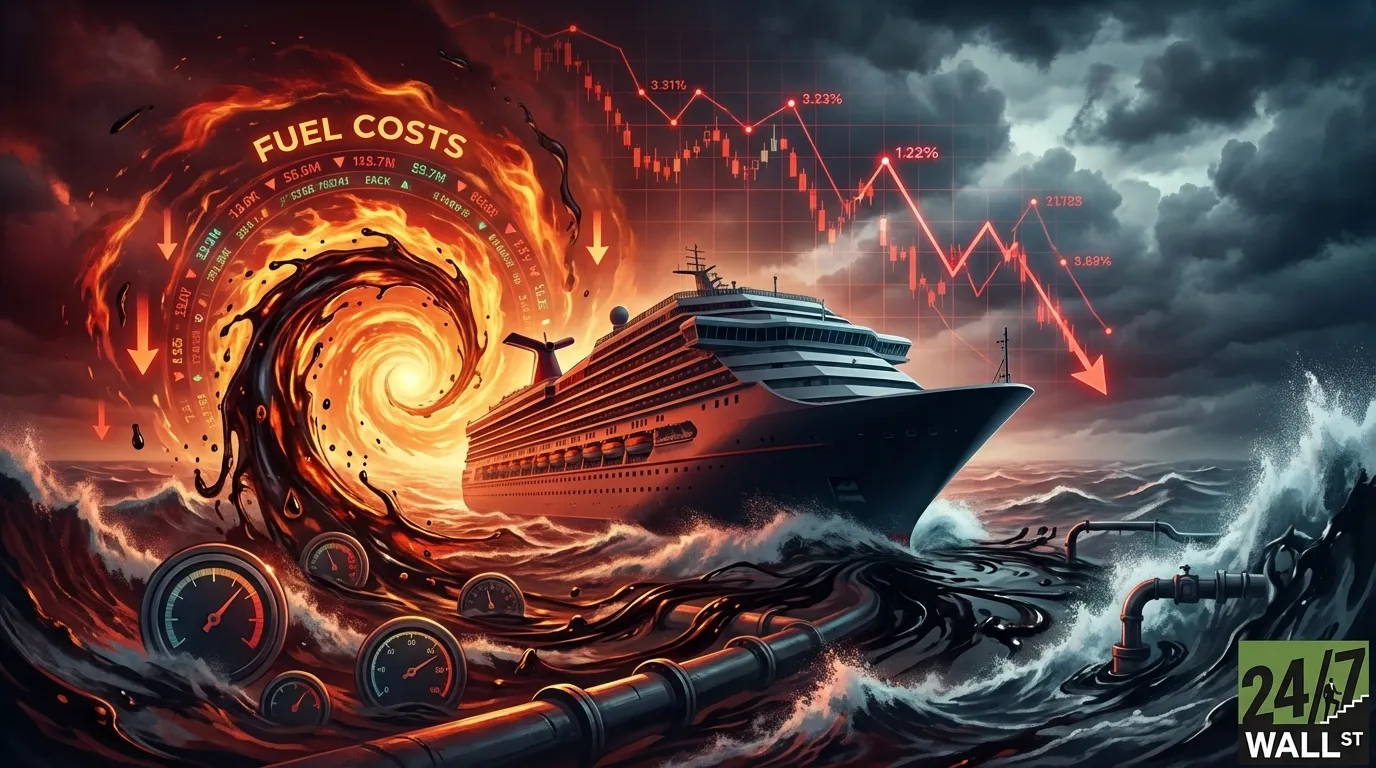
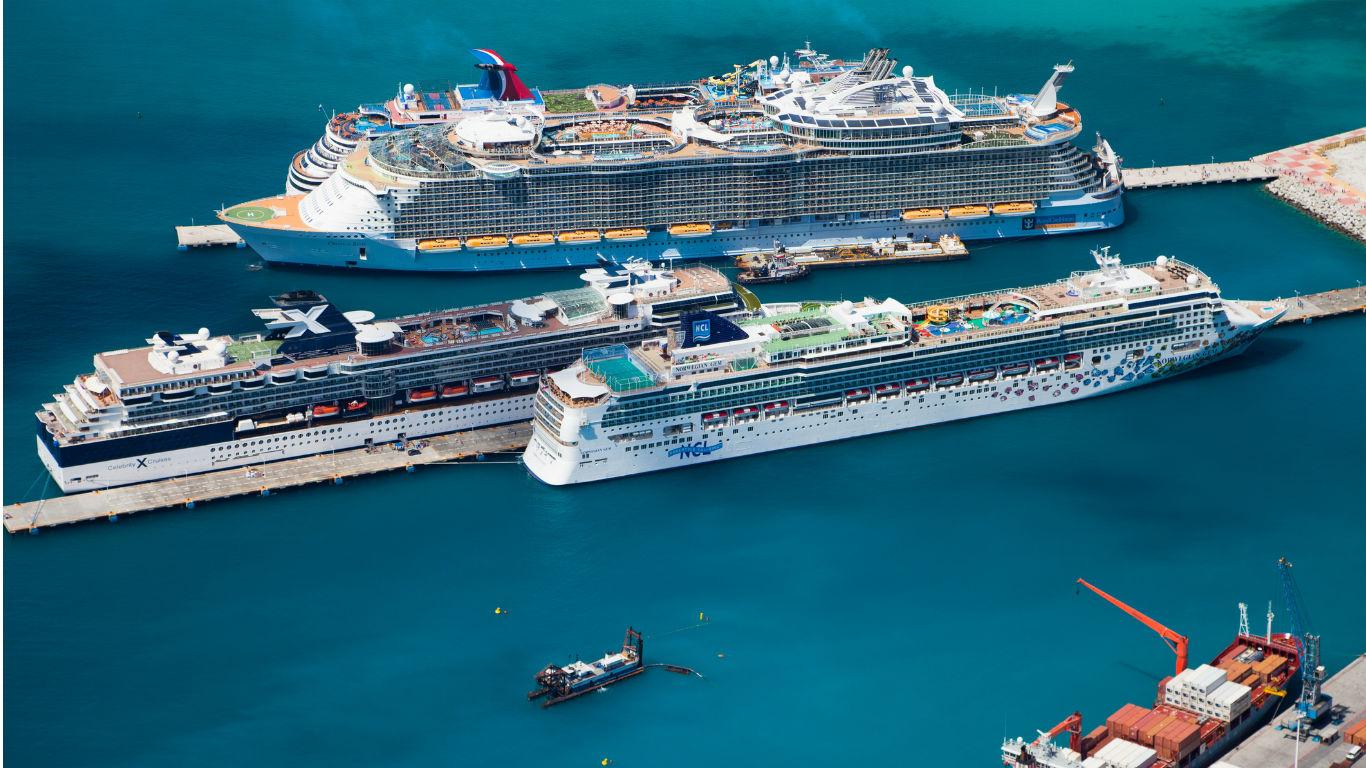
Carnival Corporation (NYSE:CCL) stock retreated 4% in Thursday’s session, trading below $26 after opening at $26.58. Meanwhile, Norwegian Cruise Line (NYSE:NCLH) stock also sank 4%, changing hands at less than $19. Both moves come on the last trading session before Good Friday, when the markets close for the holiday.
The selling pressure reflects a sector-wide reckoning: cruise demand has rarely looked stronger, yet fuel costs are overwhelming the positive booking story in the near term. Today’s declines extend a rough stretch for both names, with both CCL and NCLH shares down 16% year-to-date. Pre-holiday position rebalancing appears to be amplifying the move.
WTI crude oil rose above $111 per barrel today, surging from $71.13 on March 2. That kind of spike in a month’s time creates an immediate earnings problem for cruise operators, particularly those without hedging programs in place.
Fuel Costs Override a Record Booking Story
Carnival’s most recent quarter showed the tension in sharp relief. The company reported adjusted EPS of $0.20 against a consensus estimate of $0.1836, a solid beat, and nearly 85% of 2026 capacity is already booked at historically high constant-currency prices. Customer deposits reached nearly $8 billion, up roughly 10% year-over-year. The demand picture is genuinely exceptional.
Yet, Carnival cut its full-year adjusted EPS guidance to $2.21, absorbing more than $500 million in adverse fuel price impacts versus prior assumptions. The core problem is structural: Carnival doesn’t hedge fuel costs, leaving it fully exposed to commodity swings. CEO Josh Weinstein acknowledged the dynamic directly, stating, “This performance supported an increase to our full year operational outlook of nearly $150 million, helping to mitigate the impact of higher fuel prices.”
Carnival is responding with efficiency measures rather than consumer surcharges. Fuel consumption per available lower berth day fell 4.7%, and the company is adjusting itineraries by visiting fewer but closer ports while developing private destinations like Celebration Key. These are smart long-term moves, but they don’t fully offset a $500 million-plus headwind in the near term. You can go here to read more about the pressures weighing on cruise stocks.
Norwegian Cruise Line Faces a Separate Set of Headwinds
Norwegian Cruise Line’s decline today is part of a steeper trend. NCLH shares are down 15% over the past month and have lost 4% over the past year, a stark contrast to Carnival’s 28% one-year gain. Certainly, Norwegian is dealing with problems that go beyond fuel prices.
New CEO John Chidsey, who took the helm in February 2026, has been candid about Norwegian Cruise Line’s execution gaps. In his first earnings commentary, he stated “execution and cross-functional alignment have fallen short” and pointed to Caribbean deployment missteps that are pressuring early 2026 bookings. Norwegian Cruise Line expanded Caribbean capacity by 40% year-over-year, and that supply isn’t being absorbed at the prices management originally anticipated.
The company guided for flat net yields in constant currency for 2026, with Q1 net yields expected to decline 1.6%. Norwegian Cruise Line’s full-year adjusted EPS guidance stands at $2.38, but analysts have lowered their estimates, reflecting skepticism about the recovery timeline. Activist investor Elliott Investment Management’s involvement adds governance pressure to an already complex turnaround story.
Royal Caribbean Holds a Competitive Advantage
Royal Caribbean (NYSE:RCL | RCL Price Prediction) stock is down 2% today but has held up well overall, having gained 30% over the past 12 months. A contributing factor, no doubt, is that Royal Caribbean has hedged around 60% of its fuel needs for 2026, insulating its margins from the crude oil spike that is hammering Carnival and Norwegian Cruise Line.
Royal Caribbean also reported roughly two-thirds of 2026 capacity already booked at record rates and guided for full-year adjusted EPS of $17.70 to $18.10. That combination of hedged fuel costs and record bookings gives it a meaningful buffer that neither Carnival nor Norwegian currently enjoys.
What to Watch
Watch for whether Carnival shares can hold above the $25 level into today’s close, the last session before the four-day holiday weekend. Any further deterioration in WTI crude oil prices heading into next week would likely keep pressure on cruise stocks when the markets reopen next week.
For Norwegian Cruise Line shares, the more important near-term signal will be Q1 2026 results, where management’s acknowledgment of execution missteps will face its first real data test. Carnival’s $2.5 billion share buyback program, which commences after its April 17 shareholder meetings, could provide a technical floor for CCL shares if oil stabilizes.











 Top Gaining Stocks
 Top Losing Stocks