




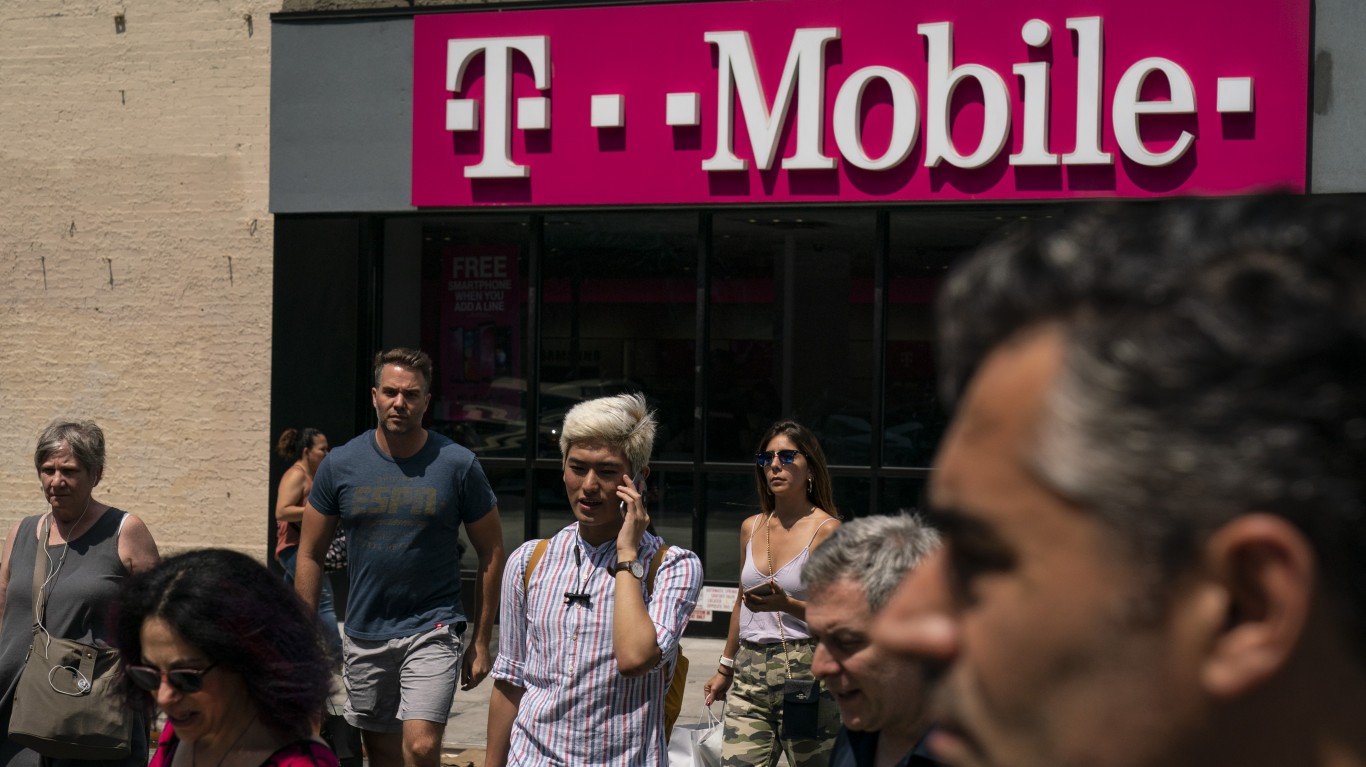
T-Mobile (NASDAQ:TMUS | TMUS Price Prediction) stock is sliding in early Monday trading, down 1% to $193, even as KeyBanc analyst Brandon Nispel issued a notable upgrade this morning. The call is turning heads on Wall Street, and for good reason.
That implies meaningful upside from current levels, with a projected 33% gain from recent prices. The broader market’s turbulence may be muting the initial reaction, but the thesis here deserves a closer look.
KeyBanc Upgrade Targets Network Edge and Valuation Gap
Nispel’s core argument centers on accelerating organic EBITDA growth, with what he describes as “upside levers” still available to management. He also highlights T-Mobile’s “advantageous” network position as a competitive driver, particularly in the fixed wireless access market. That distinction matters significantly in today’s telecom landscape.
KeyBanc views T-Mobile’s balance sheet as offering “optimal optionality,” and sees the stock’s valuation as “compressed” relative to its own history. The firm also believes T-Mobile’s Q1 2026 results will serve as a near-term catalyst, with management potentially raising full-year projections when they report. That earnings date is circled on April 23.
The valuation compression argument has real data behind it. T-Mobile shares have pulled back from a 52-week high of $263.46 to current levels near $193. Meanwhile, the stock trades at a forward P/E ratio of 18x, which looks modest given the growth profile underneath.
The Fundamentals KeyBanc Is Betting On
The EBITDA growth thesis isn’t speculative. T-Mobile guided for Core Adjusted EBITDA of $37.0 billion to $37.5 billion in 2026, representing roughly 10% year-over-year growth at the midpoint. Free cash flow guidance comes in at $18.0 billion to $18.7 billion, following a full-year 2025 figure of $17.995 billion, which itself grew 80% year over year.
On the network side, T-Mobile’s credentials are hard to argue with. The company achieved a first-ever J.D. Power network quality sweep across five of six U.S. regions, earned Ookla’s Best Mobile Network award back-to-back, and claimed Opensignal’s Best Overall Experience for four consecutive years. That kind of recognition doesn’t happen by accident, and it’s exactly the competitive moat KeyBanc is pointing to.
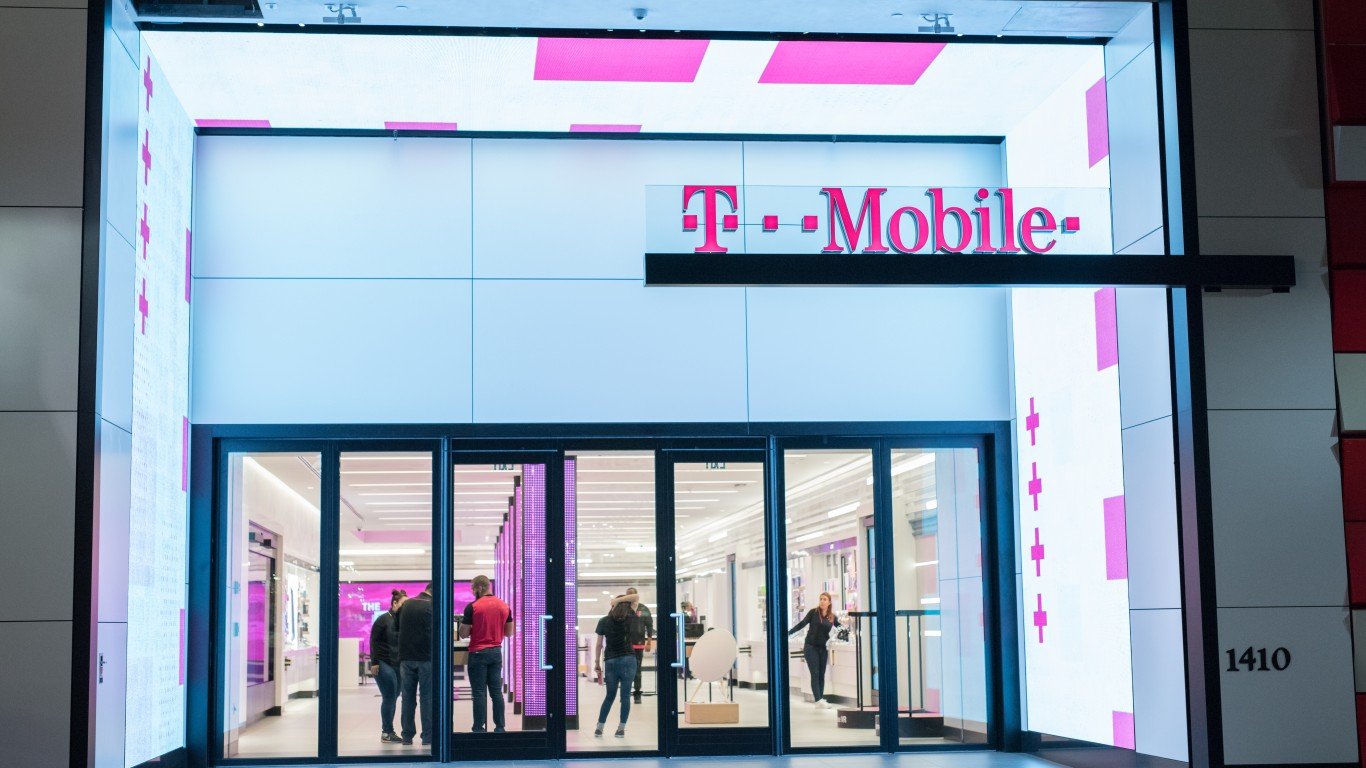
Fixed wireless access is where the growth story gets particularly interesting. T-Mobile now counts 9.4 million total broadband customers, with 8.5 million on 5G broadband. The recently launched Mint Mobile bundle, priced at $45 per month with a five-year price guarantee, takes direct aim at cable providers and signals how aggressively T-Mobile is pushing into the home connectivity market.
How T-Mobile Stacks Up Against Peers
The relative performance comparison is striking. While T-Mobile shares are down 3% year to date, Verizon (NYSE:VZ) stock has gained 17% year to date, and AT&T (NYSE:T) stock is up 9% year to date. That divergence is precisely what KeyBanc’s “compressed valuation” language is getting at.
Interestingly, a separate MoffettNathanson upgrade issued April 8 also moved T-Mobile stock to Buy with a $254 price target, citing industry-best postpaid phone net additions and surging free cash flow. The analyst consensus now sits at 22 Buy ratings, 7 Hold ratings, and zero Sells, with an average price target of $268.68. That’s a wide gap from where the stock is trading today.
New T-Mobile CEO Srini Gopalan set the tone on the Q4 earnings call, stating:
“In 2025, more new postpaid customers chose the Un-carrier than ever before, driven by outstanding momentum across all categories. As we look to 2026, we’re even more confident that the future is brighter than ever before.”
That confidence is now being echoed by multiple Wall Street desks.
What to Watch Next
The prediction market on Polymarket currently puts the odds of T-Mobile beating its upcoming quarterly earnings at 51% Yes versus 49% No, reflecting genuine uncertainty heading into the print. KeyBanc is clearly in the “beat and raise” camp, and the Q1 report on April 23 will be the moment of truth for that thesis.
Watch for whether management raises full-year EBITDA and free cash flow guidance on that call. If they do, and T-Mobile stock remains near its current levels, the valuation gap KeyBanc is flagging could become even harder to ignore.












 Top Gaining Stocks
 Top Losing Stocks