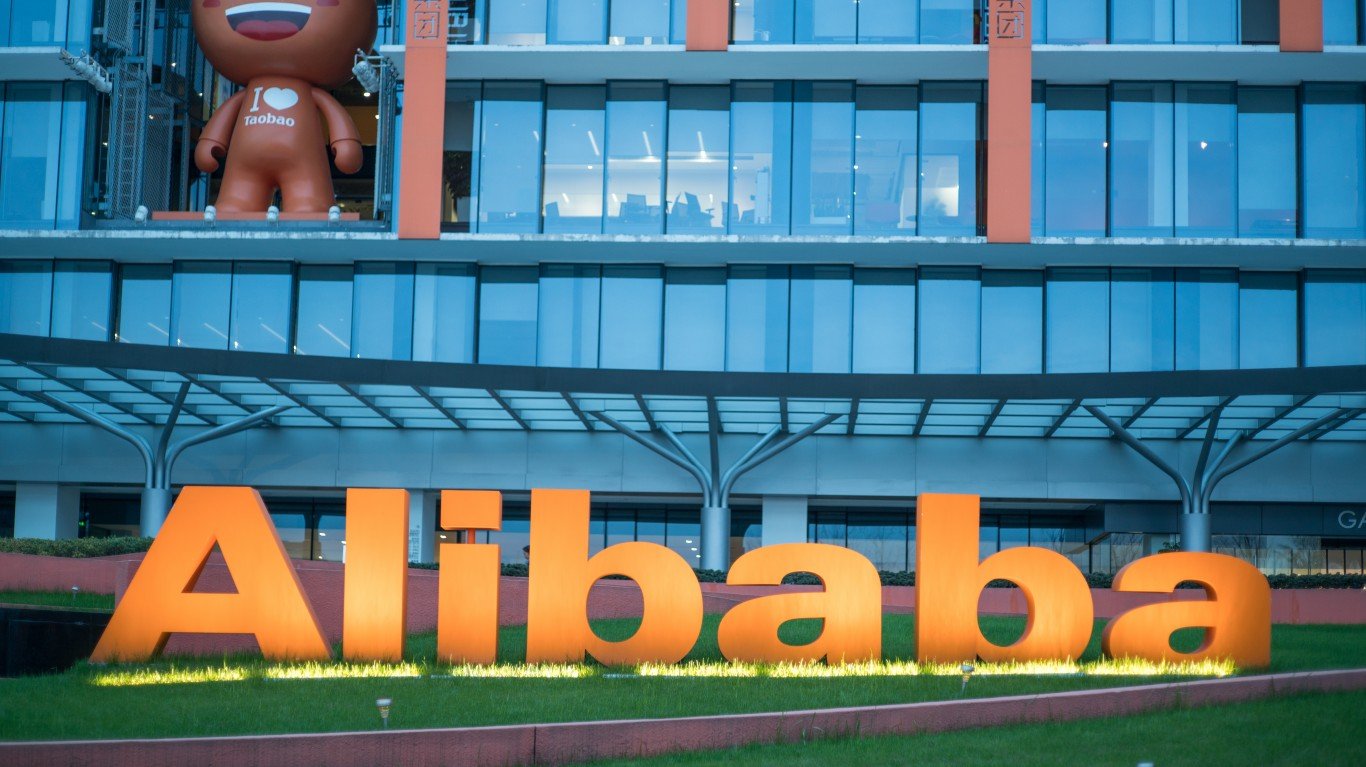
Barclays Stays Bullish on Alibaba as AI Investment Ramps Up: Is This the Comeback Story of 2026?
Alibaba (NYSE:BABA | BABA Price Prediction) stock is drawing renewed Wall Street attention after Barclays trimmed its price target to $186 from $190 while maintaining an Overweight rating on the shares. The target cut reflects a disciplined reassessment rather than…


Alibaba (NYSE:BABA | BABA Price Prediction) stock is drawing renewed Wall Street attention after Barclays trimmed its price target to $186 from $190 while maintaining an Overweight rating on the shares. The target cut reflects a disciplined reassessment rather than a change in conviction. Barclays believes Alibaba’s stepped-up investments are necessary “in its race to reach and maintain dominance in AI.”
BABA stock trades at $130 and change, well below both its 52-week high of $192.67 and the consensus analyst target of $188.58. With 38 buy or strong buy ratings versus just one strong sell among covering analysts, Barclays is hardly alone in its bullish stance.
| Ticker | Company | Firm | Action | Old Rating | New Rating | Old Target | New Target |
|---|---|---|---|---|---|---|---|
| BABA | Alibaba | Barclays | Price Target Cut | Overweight | Overweight | $190 | $186 |

The Analyst’s Case
Barclays frames the price target reduction as recognition that Alibaba is in an aggressive investment phase. The firm sees the spending acceleration as a strategic necessity to secure and extend Alibaba’s position in the AI race.
The numbers support that narrative. Alibaba’s Cloud Intelligence Group revenue grew 36% year over year in the most recent quarter, with AI-related product revenue delivering triple-digit growth for the tenth consecutive quarter. That’s consistent acceleration, not a one-quarter spike.
CEO Eddie Wu reinforced the long-term ambition on the earnings call, stating, “Over the next 5 years, our goal is to surpass USD 100 billion in combined cloud and AI external revenue, including MaaS.” Barclays views that target as credible given the trajectory.
Company Snapshot
Alibaba is China’s largest e-commerce and cloud computing conglomerate, operating Taobao, Tmall, AliExpress, and Alibaba Cloud. Its Qwen AI model has surpassed 300 million monthly active users and logged over 1 billion cumulative downloads on Hugging Face.
The company carries a market cap of approximately $306 billion and a trailing P/E ratio of 23x forward P/E ratio of 17x, notably below its trailing P/E ratio of 23x, signaling that earnings are expected to expand as the investment cycle matures, based on the forward P/E compression. Alibaba holds a net cash position of $42.5 billion as of December 31, 2025, providing substantial runway to fund its buildout.
Why the Move Matters Now
Profitability is intentionally compressed. Non-GAAP net income declined 67% year over year to $2.39 billion last quarter, and free cash flow fell 71% year over year to $1.62 billion as capital expenditures surged. Investors willing to look through that near-term pressure may find the valuation compelling relative to the cloud growth rate.
BABA stock is down 12% year to date, trading well below its 200-day moving average of $146.58. For context on how other large-cap tech names navigate similar valuation questions amid macro uncertainty, the gap between Microsoft’s stock price and Wall Street’s target offers a useful parallel.
What It Means for Your Portfolio
Barclays’ maintained Overweight signals that the price target trim is a calibration, not a retreat. The firm’s thesis hinges on Alibaba emerging from this investment cycle with durable AI and cloud leadership, a bet that requires patience.
Retirement-focused investors should weigh the cloud acceleration against near-term margin compression. If Alibaba’s AI infrastructure spending delivers on the $100 billion revenue target, today’s price could look attractive in hindsight. If the investment cycle extends longer than expected, the path back to profitability gets bumpier.
Contact [email protected] for any questions or corrections.
David Moadel is financial writer specializing in stocks, ETFs, options, precious metals, and Bitcoin. David has written well over 1,000 articles for leading online publications, helping investors understand markets, income strategies, and risk.His work has appeared in The Motley Fool, InvestorPlace, U.S. News & World Report, TipRanks, ValueWalk, Benzinga, Market Realist, TalkMarkets, Finmasters, 24/7 Wall St., and others.With a master’s degree in education, David has taught at the elementary, high school, and college levels. That teaching background shapes his writing style: clear, educational, and practical. David has also built a loyal social-media audience by providing trustworthy financial content on YouTube, X/Twitter, and StockTwits.