AbbVie vs. Pfizer: One Pharma Dividend Has a Moat — The Other Is Praying for a Pipeline Hit
AbbVie (NYSE:ABBV | ABBV Price Prediction) and Pfizer (NYSE:PFE) both reported fourth quarter earnings in early February. AbbVie posted record net sales with revenue up 10% year over year, powered by a post-Humira immunology rebuild that is now clearly working.…

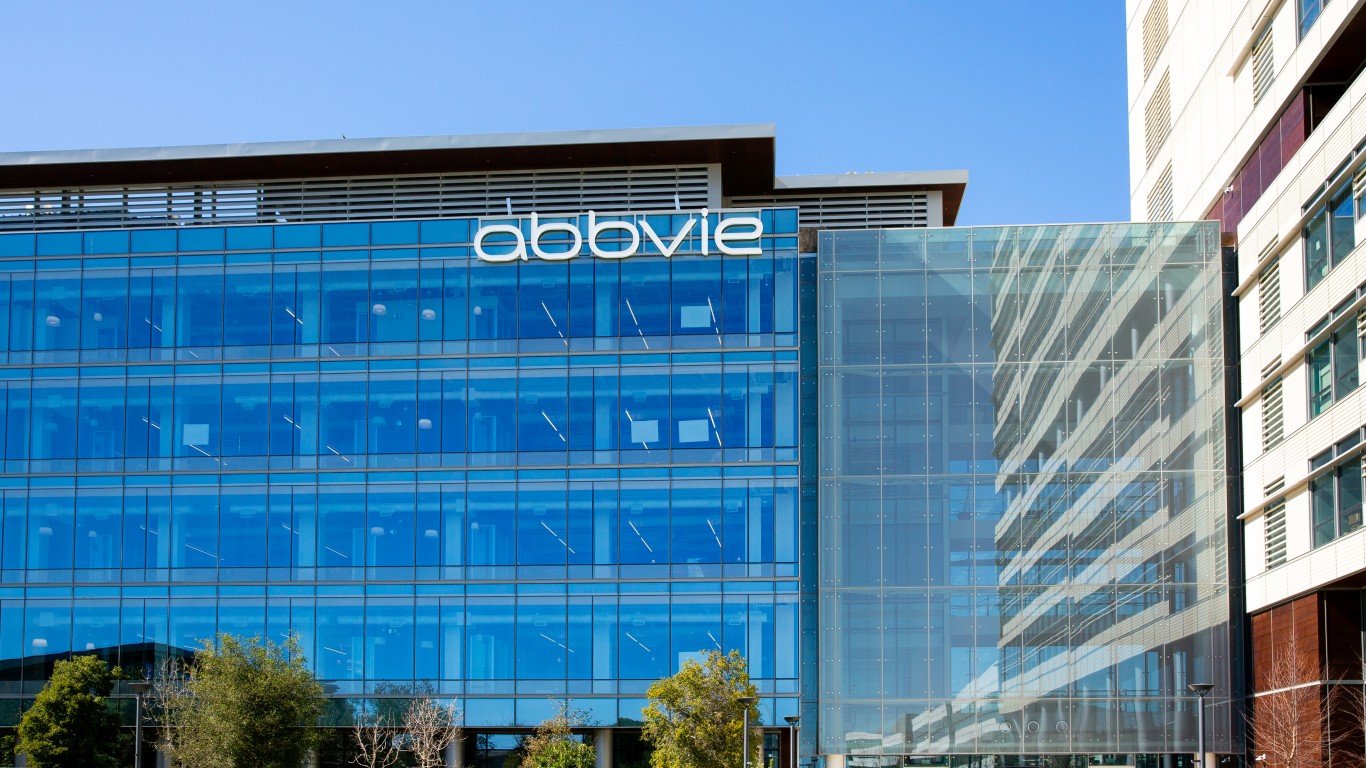
AbbVie (NYSE:ABBV | ABBV Price Prediction) and Pfizer (NYSE:PFE) both reported fourth quarter earnings in early February. AbbVie posted record net sales with revenue up 10% year over year, powered by a post-Humira immunology rebuild that is now clearly working.
Pfizer posted a slight revenue decline of 1.16% while absorbing a massive COVID hangover and betting billions on obesity drugs it does not yet own commercially.


Skyrizi Carries AbbVie. COVID Drags Pfizer.
AbbVie’s quarter was defined by two drugs offsetting Humira’s erosion. Skyrizi generated $5 billion in Q4 revenue, up 32.5% year over year, making it AbbVie’s largest product. Rinvoq added $2.37 billion, up 29.5%. Together, they more than offset Humira’s decline of 25.9% in Q4 and 49.5% for the full year.
CEO Robert Michael called it “another outstanding year for AbbVie” and pointed to “record net sales in just the second full year following the U.S. Humira loss of exclusivity.” Neuroscience grew 17.9% to $2.96 billion, led by Vraylar and Botox Therapeutic.
| Business Driver | AbbVie | Pfizer |
|---|---|---|
| Primary Growth Engine | Skyrizi/Rinvoq immunology | Vyndaqel, Eliquis, oncology |
| Biggest Drag | Humira biosimilar erosion | COVID revenue cliff |
| Q4 Revenue Growth | +10.0% YoY | -1.2% YoY |
| 2026 Adj. EPS Guide | $14.37–$14.57 | $2.80–$3.00 |
Pfizer’s non-COVID portfolio grew 9% operationally in Q4, with Vyndaqel at $1.688 billion (+9%), Eliquis at $2.020 billion (+10%), and oncology biosimilars surging 77%. But Paxlovid collapsed 70% and Comirnaty dropped 33%, dragging Primary Care revenue down 11%. A $4.4 billion non-cash impairment charge pushed Pfizer to a GAAP net loss of $1.648 billion.
AbbVie Has a Proven Replacement. Pfizer Is Building Toward One.
AbbVie’s strategic advantage is that it already executed its post-Humira transition. Skyrizi and Rinvoq are approved, scaling, and expanding into new indications. AbbVie filed Rinvoq for non-segmental vitiligo, which could become the first systemic treatment for the condition.
The company also entered obesity through a partnership with Gubra and acquired Capstan Therapeutics for its in vivo CAR-T platform. AbbVie also made a voluntary commitment of $100 billion in U.S. R&D and capital investments over the next decade, securing tariff and pricing exemptions for three years.
Pfizer’s path depends on future events. CEO Albert Bourla described 2026 as “an important year rich in key catalysts, including our expectation for approximately 20 key pivotal study starts.” The centerpiece is the $7 billion Metsera acquisition, which brings 10 ultra-long-acting obesity assets.
Pfizer in-licensed an oral GLP-1 from YaoPharma for $150 million upfront and a PD-1/VEGF bispecific from 3SBio for $1.35 billion. The obesity pivot is ambitious, but commercial payoff sits years out. Pfizer faces a $1.5 billion loss-of-exclusivity headwind in 2026 and no share buybacks planned.
| Lens | AbbVie | Pfizer |
|---|---|---|
| Core Bet | Immunology expansion in proven drugs | Obesity pipeline, oncology build |
| Dividend (quarterly) | $1.73 | $0.43 |
| Key Vulnerability | Post-2028 pipeline cliff | COVID cliff + LOE headwinds |
| Cost Discipline | IPR&D charges masking EPS | ~$7.2B net savings target by end 2027 |
The Dividend Gap Will Decide a Lot of This
AbbVie’s dividend has grown every year since its 2013 spin-off from Abbott. The current quarterly payment of $1.73 per share compares to Pfizer’s $0.43. AbbVie’s stock is down 7.03% year to date as of April 16, 2026, while Pfizer has gained 11.15% year to date.
Pfizer’s pipeline optimism appears to be lifting its stock even as its underlying earnings power remains modest. Watch whether Pfizer’s 20 pivotal trial starts in 2026 translate into meaningful commercial signals before year-end, or whether the obesity bet proves too early to price in.
AbbVie vs. Pfizer: Income Stability Against Pipeline Potential
AbbVie’s Q4 EPS of $2.71 fell short of the $3.35 estimate, missing expectations, but that miss was driven entirely by $0.71 per share in acquired IPR&D charges, not operational weakness. The 2026 adjusted EPS guidance of $14.37 to $14.57 reflects a business that has already rebuilt itself.
Pfizer’s 2026 adjusted EPS guidance of $2.80 to $3 is modest and still embeds $5 billion in COVID revenue that will continue shrinking.
AbbVie’s dividend history and growing immunology franchise present a track record of income generation. Pfizer’s pipeline, if obesity assets deliver, could look very different by 2028 or 2029. Both carry real risks. AbbVie’s competitive moat rests on two approved, scaling drugs with expanding indications. Pfizer’s equivalent depends on pipeline execution over the next several years.
Contact [email protected] for any questions or corrections.
Vandita Jadeja is a financial publisher with over a decade of experience writing about financial topics, including investment, savings, retirement, insurance and banking. Vandita is a Chartered Accountant who loves to debunk financial concepts for readers.
Her work has appeared on sites that include The Motley Fool, InvestorPlace, and Benzinga. She covers investing and focuses on stock picks and price prediction for 24/7 Wall St.
When not looking for the next stock investment opportunity, she can be found traveling, reading, chasing sunsets and enjoying her iced latte.