This Dividend Pharma Giant Yielding 2.9% Just Got a Big Vote of Confidence
Healthcare stocks have lagged the broader market for the past three years, weighed down by post-COVID earnings volatility, policy uncertainties around drug pricing, and a surge in tech-driven gains from the AI boom. The sector’s relative earnings growth averaged just…

This post may contain links from our sponsors and affiliates, and Flywheel Publishing may receive compensation for actions taken through them.

Healthcare stocks have lagged the broader market for the past three years, weighed down by post-COVID earnings volatility, policy uncertainties around drug pricing, and a surge in tech-driven gains from the AI boom. The sector’s relative earnings growth averaged just 6% annually over that stretch, trailing the S&P 500‘s 15%, but signs of stabilization emerged in the third quarter, with healthcare posting the strongest quarterly return at over 7% versus the index’s 1% gain.
JPMorgan recently flipped to favoring the sector, citing three drivers that signal healthcare’s potential rebound as AI enthusiasm cools:
- Easing policy risks after deals like Pfizer‘s (NYSE:PFE | PFE Price Prediction) most-favored-nation pricing agreement reduced uncertainty.
- Earnings clarity, as life sciences and managed care firms beat estimates by 13% and held 2026 guidance steady.
- M&A pickup, with biotech deals averaging one per week amid $150 billion in looming patent expirations. .
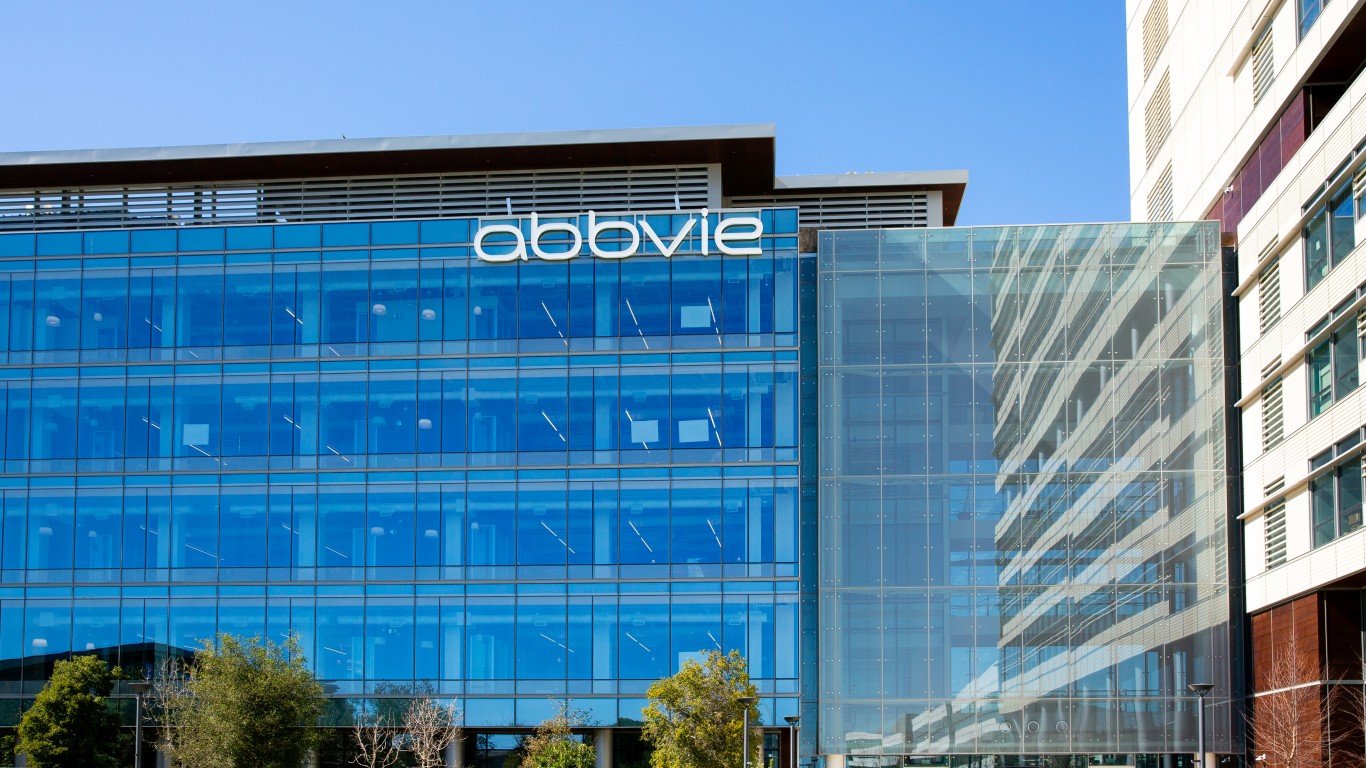
Biopharma AbbVie (NYSE:ABBV) exemplifies this pivot. Its shares are up 25% year-to-date outpacing the S&P 500’s roughly 12% gain by a 2-to-1 margin. Yet over three years, AbbVie has trailed the index, as AI-fueled rallies in tech names overshadowed defensive plays like healthcare. The stock sits 9% below its October high and trades at the same level it did in September, creating a potential entry point. Wall Street’s fresh upgrade underscores why this dividend powerhouse could shine now.
Steady Growth from Humble Roots
Launched as a spin-off from Abbott Laboratories (NYSE:ABT) in 2013, AbbVie inherited a research-focused portfolio heavy on immunology drugs. From day one, it committed to shareholder returns, starting with a quarterly dividend of $0.40 per share,. It was a bold move that set the tone for a dividend-first strategy, leveraging cash flows from blockbusters like Humira, the world’s top-selling drug at the time.
Since then, AbbVie has hiked its payout annually, achieving a 13% compound annual growth rate (CAGR) over the past 10 years while growing free cash flow at an impressive 20% annually. The current quarterly rate stands at $1.73, for an annual $6.92 per share — yielding 2.9% at recent prices. This track record earned it the title of Dividend King due to its Abbott Labs lineage.
While dividend increases have slowed to an 8% CAGR over the past five years, reflecting the patent cliff AbbVie faced with Humira, it never faltered. Payouts remain covered 2.1 times by earnings, with free cash flow providing a buffer. This discipline has rewarded long-term holders: A $1,000 investment at the time of the spin-off, with dividends reinvested, would be worth over $10,700 today.
Humira’s Shadow and Aesthetic Woes
AbbVie’s stock stalled in late 2025 after a strong run, dipping from its October peak amid broader market rotation and company-specific drags. Humira, once generating over 50% of revenue, lost U.S. exclusivity in January 2023, sparking biosimilar erosion. Sales plummeted from $21 billion peaks to under $4 billion projected for 2025, pressuring margins and sparking fears of prolonged revenue gaps.
Investors worried successors like Skyrizi and Rinvoq — poised for $25 billion combined sales this year — might not fully offset the void, especially with Q3 guidance indicating softer profitability.
However, HSBC just issued an upgrade for AbbVie to Buy from Hold, hiking its price target to $265 from $225 per share, implying 19% upside from current levels. Analyst Rajesh Kumar cited “solid growth momentum and execution,” positioning AbbVie as a top 2026 pharma pick alongside Johnson & Johnson (NYSE:JNJ) and AstraZeneca (NYSE:AZN).
Among the key tailwinds pushing AbbVie along is a 7.4% five-year revenue CAGR forecast, minimal near-term “LOE” (loss of exclusivity) risks after Humira, and 12 recent upward earnings revisions. Competition to Skyrizi from Johnson & Johnson’s Tremfya is “unlikely a meaningful risk,” the analyst said.
At a 16x forward P/E and 15.4x EV/EBITDA, AbbVie trades below sector averages, offering value in a multiple-expanding environment. As rates ease, quality growth names like this could outperform defensive stocks.
Key Takeaways
AbbVie’s long-term trajectory looks robust, anchored by multi-billion-dollar immunology stars Skyrizi and Rinvoq, which eye $31 billion in 2027 sales, plus neuroscience gains from Ubrelvy and a budding oncology pipeline via ImmunoGen’s Elahere. Acquisitions and five new Rinvoq indications are expected to fuel mid-teens EPS growth by 2026.
Its dividend trajectory also stays intact, with 13 straight annual hikes and a safe 2.1x coverage ratio. Management’s cash discipline signals more increases ahead — its FCF payout ratio is just 61% — appealing to income seekers.
Investors should consider buying now. Trading below its all-time high, the 2.9% yield and upgrade provide a margin of safety in a cooling AI market, with healthcare’s tailwinds amplifying its upside.
Contact [email protected] for any questions or corrections.
After two decades of patrolling the dark corners of suburbia as a police officer, Rich Duprey hung up his badge and gun to begin writing full time about stocks and investing. For the past 20 years, he’s been cruising the markets looking for companies to lock up as long-term holdings in a portfolio while writing extensively on the broad sectors of consumer goods, technology, and industrials. Because his experience isn’t from the typical financial analyst track, Rich is able to break down complex topics into understandable and useful action points for the average investor. His writings have appeared on The Motley Fool, InvestorPlace, Yahoo! Finance, Money Morning, and, of course, 24/7 Wall St. He has been featured in both U.S. and international publications, including MarketWatch, Financial Times, Forbes, Fast Company, and USA Today.