Wall Street Is Punishing Netflix on Guidance, but Price Hikes Reveal the Real Story
Streaming has become a household necessity, with families carving out budgets even as economic headlines stay mixed. Major players reported this week, and while Disney (NYSE:DIS | DIS Price Prediction) wrestled with parks softness and studio costs, Netflix (NASDAQ:NFLX) delivered…

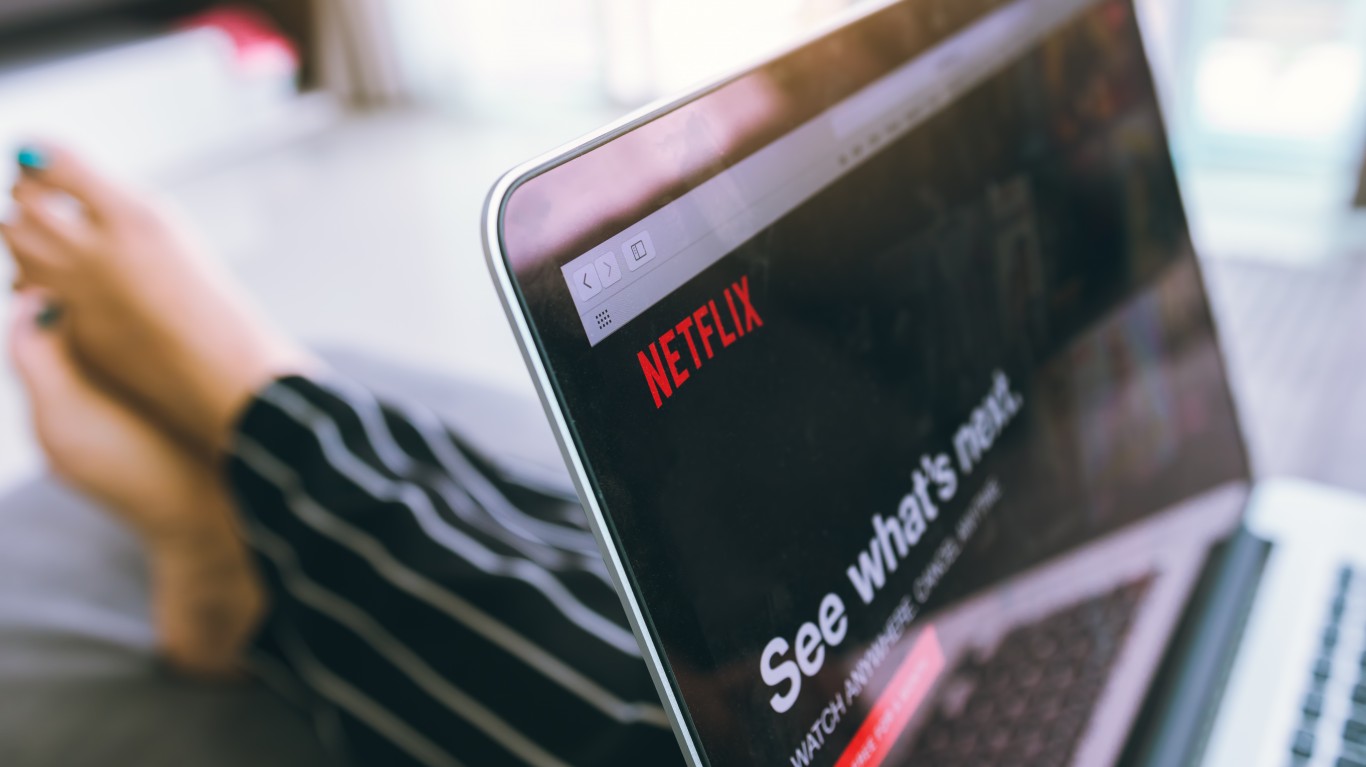
Streaming has become a household necessity, with families carving out budgets even as economic headlines stay mixed. Major players reported this week, and while Disney (NYSE:DIS | DIS Price Prediction) wrestled with parks softness and studio costs, Netflix (NASDAQ:NFLX) delivered numbers that once again proved its model works.
The streaming company posted first-quarter revenue of $12.25 billion after the market’s close yesterday, topping Wall Street expectations of $12.18 billion and rising 16.2% from $10.54 billion a year earlier. Adjusted earnings reached $1.23 per share, handily beating prior guidance. Yet shares are dropping more than 10% in premarket trading today, as second-quarter guidance missed estimates and co-founder Reed Hastings announced he would leave the board in June.
Smart investors should see the sell-off as an overreaction.
Earnings Beat Expectations, but Wall Street Focused Elsewhere
Let’s start with what actually happened. Netflix revenue climbed for the January-to-March period while operating income jumped 18%. A $2.8 billion breakup fee tied to the collapsed Warner Bros. Discovery (NASDAQ:WBD) deal helped EPS, yet even without it, the core business held up. Subscriber trends stayed healthy, and ad revenue continued its ramp higher.
These results arrived just months after Netflix walked away from a potential $83 billion acquisition of Warner Bros. that caused investor consternation over massive debt and the culture clash between a lean streamer and a traditional movie studio. Netflix shares plunged roughly 30% at the height of those talks.
Once the deal fell through in late February, the stock reversed sharply, rising 44% from its lows. This quarter, though, was supposed to showcase the company’s standalone growth path, but the modest guidance miss overshadowed the beat.
Risks Were Already Priced In
Netflix guided second-quarter revenue at $12.57 billion, below the $12.64 billion consensus. EPS guidance came in at $0.78 versus $0.84 expected, and operating income at $4.11 billion against the $4.34 billion forecast. The full-year outlook stayed unchanged at $50.7 billion to $51.7 billion in revenue, or 12% to 14% growth.
That said, the market reacted as if the sky had fallen. Add in Reed Hastings’ planned board exit, and doubts multiplied. Yet the departure comes after he stepped back as co-CEO in 2023, and the company has run smoothly under current leadership. The Warner Bros. episode had already tested investor nerves; walking away freed Netflix from integration headaches and left it with a $2.8 billion cash infusion instead. Shares have soared precisely because management avoided that distraction.
The guidance miss, while real, reflects nothing more than typical quarterly variability in a business built on content timing and pricing. Netflix still projects healthy growth for 2026, and the stock now trades at a forward P/E around 31 times — higher than Disney’s 14.5 times but backed by faster revenue expansion and pure-play streaming margins.
Price Hikes Signal Confidence in the Roadmap
Here is the detail that matters most. In March, Netflix raised U.S. prices across every tier: the ad-supported plan was increased by $1 to $8.99 per month, the standard plan by $2 to $19.99, and the premium plan by $2 to $26.99. That move locks in higher revenue per user without relying on massive subscriber additions. Management could have waited; instead, it acted early, betting that members value the service enough to pay more.
Ad revenue is on track to roughly double in 2026, and engagement remains solid. Compare that to peers: Disney bundles multiple services and still posts slower top-line growth in its direct-to-consumer segment. Netflix’s focused approach — content, pricing, ads — delivers clearer leverage. Granted, higher prices can test churn in a competitive market, but the company has executed multiple rounds of increases before with minimal fallout.
Key Takeaway
When all is said and done, the tumble on guidance hands long-term investors a better entry point. Netflix beat on the metrics that count — revenue, earnings, and pricing power — while sidestepping a debt-heavy merger that would have changed its culture. The business generates strong free cash flow, grows faster than most entertainment peers, and now operates without the Warner Bros. overhang.
Shares may stay volatile in the near term, but the data shows a company executing its plan. For retail investors seeking exposure to streaming’s winner, this dip is your signal to buy.
Contact [email protected] for any questions or corrections.
After two decades of patrolling the dark corners of suburbia as a police officer, Rich Duprey hung up his badge and gun to begin writing full time about stocks and investing. For the past 20 years, he’s been cruising the markets looking for companies to lock up as long-term holdings in a portfolio while writing extensively on the broad sectors of consumer goods, technology, and industrials. Because his experience isn’t from the typical financial analyst track, Rich is able to break down complex topics into understandable and useful action points for the average investor. His writings have appeared on The Motley Fool, InvestorPlace, Yahoo! Finance, Money Morning, and, of course, 24/7 Wall St. He has been featured in both U.S. and international publications, including MarketWatch, Financial Times, Forbes, Fast Company, and USA Today.