This Dividend ETF Is up 30% in 6 Months With a 3.7% Dividend Yield
Most energy ETFs are a way to play oil prices. The VanEck Energy Income ETF (NYSEARCA:EINC) is something more boring and arguably more useful. EINC has a basket of pipeline operators. These operators are paid by the barrel regardless of…

Most energy ETFs are a way to play oil prices. The VanEck Energy Income ETF (NYSEARCA:EINC) is something more boring and arguably more useful. EINC has a basket of pipeline operators. These operators are paid by the barrel regardless of what crude does. The pitch is fee-based cash flows, the kind of economics that deliver steady distributions while you do something else with your life.
Then crude went from $60.89 a barrel in October 2025 to over $100, and the boring pipeline ETF returned 30% over six months. Which is a nice problem to have, and also a useful moment to ask what role this fund is actually playing in your portfolio.
What EINC Is Trying to Do
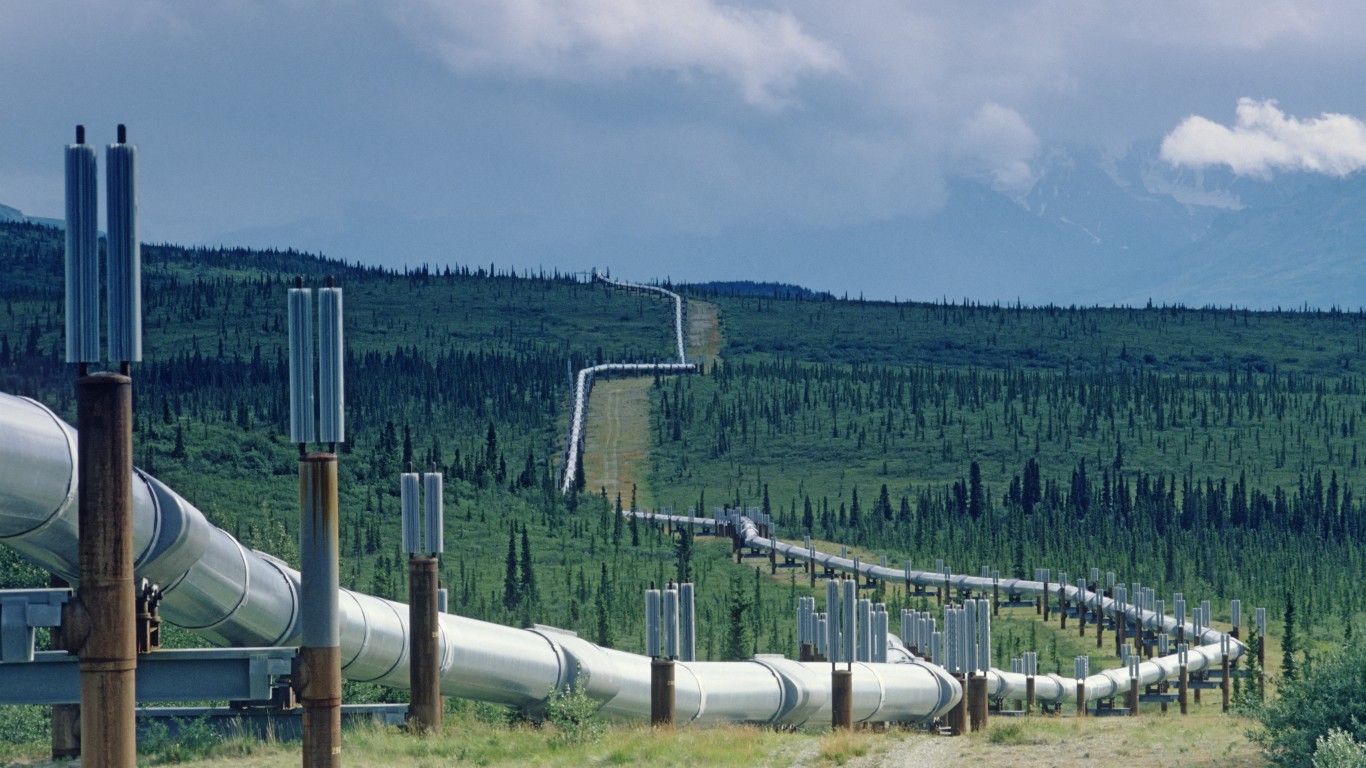
EINC holds North American midstream energy infrastructure. It essentially holds the pipelines and processing plants that move oil and gas from where it comes out of the ground to where it gets used. The marquee names you would recognize are Williams Companies (NYSE:WMB | WMB Price Prediction), Enbridge (NYSE:ENB), TC Energy (NYSE:TRP), Kinder Morgan (NYSE:KMI), and ONEOK (NYSE:OKE), with the fund running roughly 68% U.S. and 32% Canada.
The return engine here is conceptually simple. Pipelines charge tolls. Producers pay those tolls under multi-year contracts, often with inflation escalators, regardless of whether oil is at $50 or $100. The pipeline operator collects a spread, distributes most of it to shareholders, and the ETF passes that through to you. The expense ratio is 0.46%, which is reasonable for an actively curated energy income strategy.
You get exposure to energy demand without the full whiplash of commodity prices, in theory. The dividend, currently around 3.6% trailing, should be the headline reason you own this. Capital appreciation is just a bonus.
The Six-Month Reality Check
The bonus has been doing most of the work. EINC is up 28% over the past year and 23% year-to-date in 2026, with the fund trading at about $121. Over five years, total return sits at 184%.
That is a real number, and it is also a number you should interrogate. Midstream stocks tend to track crude prices more than their fee-based marketing suggests, because higher oil prices encourage more drilling, which fills more pipelines, which raises throughput volumes and renegotiated contract rates. The BEA shows the mining sector (which captures upstream oil and gas extraction) contracting 2.2% in Q4 2025 even as utilities held steady. Midstream sits between those two worlds, which is why EINC behaves like a hybrid commodity-and-income vehicle rather than a pure utility.
The fund’s primary benefit has been capital growth rather than a stable, high-income stream. If you bought EINC in late 2025 expecting boring monthly tollbooth checks, what you actually got was a six-month rip due to oil reverting higher.
The Tradeoffs Worth Naming
- The yield trails Treasuries. A 3.6% yield is roughly in line with or below short-dated risk-free rates, which means you are taking equity risk and energy concentration risk for income you could get from a T-bill. The capital appreciation has more than compensated recently. That is not a guarantee about the next six months.
- Distributions are lumpy. Quarterly payouts are variable, with the most recent being $0.6845 per share on November 3, 2025. Retirees expecting a smooth monthly check from this fund will find the actual cash flow pattern bumpier than the headline yield suggests.
- Concentration is real. EINC is 100% energy sector, dominated by a handful of large midstream operators. When the energy trade works, like it has, the fund flies. When sentiment sours and the mining sector contracts, as it did through most of 2024 and 2025, midstream moves in tandem despite the fee-based story.
EINC fits as a 5-10% energy infrastructure sleeve for investors who want pipeline cash flows alongside meaningful upside when crude rallies, with the understanding that the recent 30% return was largely an oil-price gift rather than a yield story you can extrapolate forward.
Contact [email protected] for any questions or corrections.
Omor Ibne Ehsan is a writer at 24/7 Wall St. He is a self-taught investor with a focus on growth, cyclical, and dividend equities that have strong fundamentals, value, and long-term potential. He also has an interest in high-risk, high-reward investments such as penny stocks.