BOAT is soaring over the Strait of Hormuz blockade, but will it last?
The SonicShares Global Shipping ETF (NYSEARCA:BOAT) has become the cleanest way for income investors to play the Strait of Hormuz blockade, and the tape shows it. BOAT closed near $43, up about 37% year to date and roughly 75% over…

This post may contain links from our sponsors and affiliates, and Flywheel Publishing may receive compensation for actions taken through them.
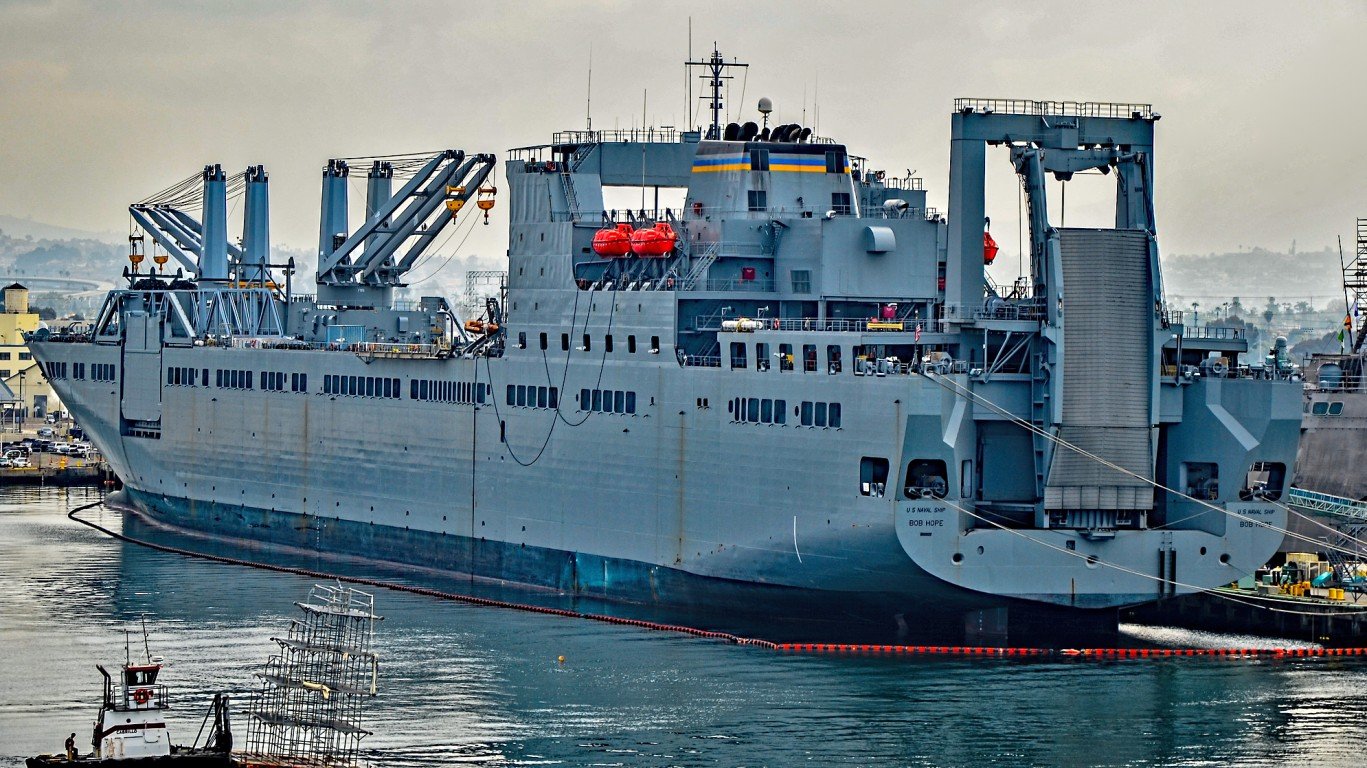
The SonicShares Global Shipping ETF (NYSEARCA:BOAT) has become the cleanest way for income investors to play the Strait of Hormuz blockade, and the tape shows it. BOAT closed near $43, up about 37% year to date and roughly 75% over the past year, while throwing off a trailing yield in the 6.3% range. The question for anyone buying BOAT for income is whether those checks keep arriving once the chokepoint reopens.
How BOAT actually generates its yield
BOAT is a passive fund tracking the Solactive Global Shipping Index, holding 52 maritime shipping companies including Frontline, Mitsui O.S.K. Lines, and Matson. It charges a 0.69% expense ratio and manages a slim $78.6 million in assets. The distribution is a pass-through of whatever cash its underlying tanker, dry-bulk, and container operators pay out each quarter. There is no options overlay and no leverage. When freight rates rip, the holdings earn outsized cash and most distribute it. When rates fall, the payout falls with them.
That is the entire mechanism, and it is why BOAT’s distributions read like a seismograph rather than a metronome.
The variable distribution problem
BOAT’s payment history makes the income risk obvious. The latest quarterly distribution was $0.42834 on March 27, 2026, well below the prior quarter’s $0.85116 paid in December 2025. Go back further and you see a $2.42 special-sized payment in December 2024 and a $2.447 payment in June 2023. The baseline regular payment has lived in the $0.31 to $0.77 range. A holder cannot budget around this. The headline yield reflects a trailing twelve months that captured one outsized quarter, well above any reasonable forward run rate.
The underlying drivers are also moving against the operators. WTI crude sits near $110 per barrel, in the 98th percentile of the past year and well above the $69 trailing average. Bunker fuel is the single largest variable cost for these companies. The same blockade fattening tanker day rates is simultaneously inflating the fuel bill that eats into net cash available for distribution.
The risks under the elevated yield
The custom risk map for this fund is specific and worth naming:
- Freight-rate cyclicality. A Sahm Capital report flagged that freight rates have tripled and VLCCs are earning up to $135,700 per day. Rates that triple can also halve.
- Fuel volatility. WTI has swung from $55 to $115 in twelve months, a range that swallows entire quarters of operating margin.
- Piracy and smuggling enforcement. The seizure of an Iranian cargo ship in April showed sanctions risk and route disruption cut both ways for carriers.
- Port congestion and stevedore disputes. Labor actions and dockside backlogs sideline vessels and idle the cash flow that funds the next distribution.
- Single-sector concentration. 24/7 Wall St. noted BOAT’s “single-sector focus means it lacks diversification during trade downturns, and its variable dividends can shrink”.
Total return reality and the verdict
Price appreciation, rather than income, is doing the heavy lifting here. BOAT’s 69% one-year return against the S&P 500’s 17% reflects capital appreciation on freight-rate optimism. The distribution is a byproduct, and it will compress the moment Hormuz clears or rates normalize.
The honest read: BOAT’s dividend behaves like a variable share of cyclical cash flow that happens to be running hot, very different from a utility’s steady payout. Investors who understand they are buying a freight-rate proxy with a yield attached are using the fund as designed. For anyone who needs a predictable quarterly check, the December-to-March drop from $0.85 to $0.43 is the warning that already arrived.
Contact [email protected] for any questions or corrections.
After 15 years on Wall Street with 7 of them as Director of Corporate and Municipal Bond Trading for a NYSE member firm, I started my own project and corporate finance consultancy. Much of the work involves writing business plans, presentations, white papers and marketing materials for companies seeking budgetary allocations for spinoffs and new initiatives or for raising capital for expansion or startup companies and entrepreneurs. On financial topics, I have been published under my own byline at The Motley Fool, 247wallst.com, DealFlow Events’ Healthcare Services Investment Newsletter and The Microcap Newsletter, among others. Additionally, I have done freelance ghostwriting writing and editing for several financial websites, such as Seeking Alpha and Shmoop Financial. I have also written and been published on a variety of other topics from music, audiophile sound and film to musical instrument history, martial arts, and current events. Publications include Copper Magazine, Fidelity (Germany), Blasting News, Inside Kung-Fu, and other periodicals.