Everyone’s Talking About Micron. Smart Money Is Watching This Stock Instead
Micron Technology (NASDAQ:MU | MU Price Prediction) is the ticker dominating every memory-cycle headline right now, with traders piling into the assumption that DRAM and NAND pricing will ride the AI buildout straight up. But here’s what you should actually…

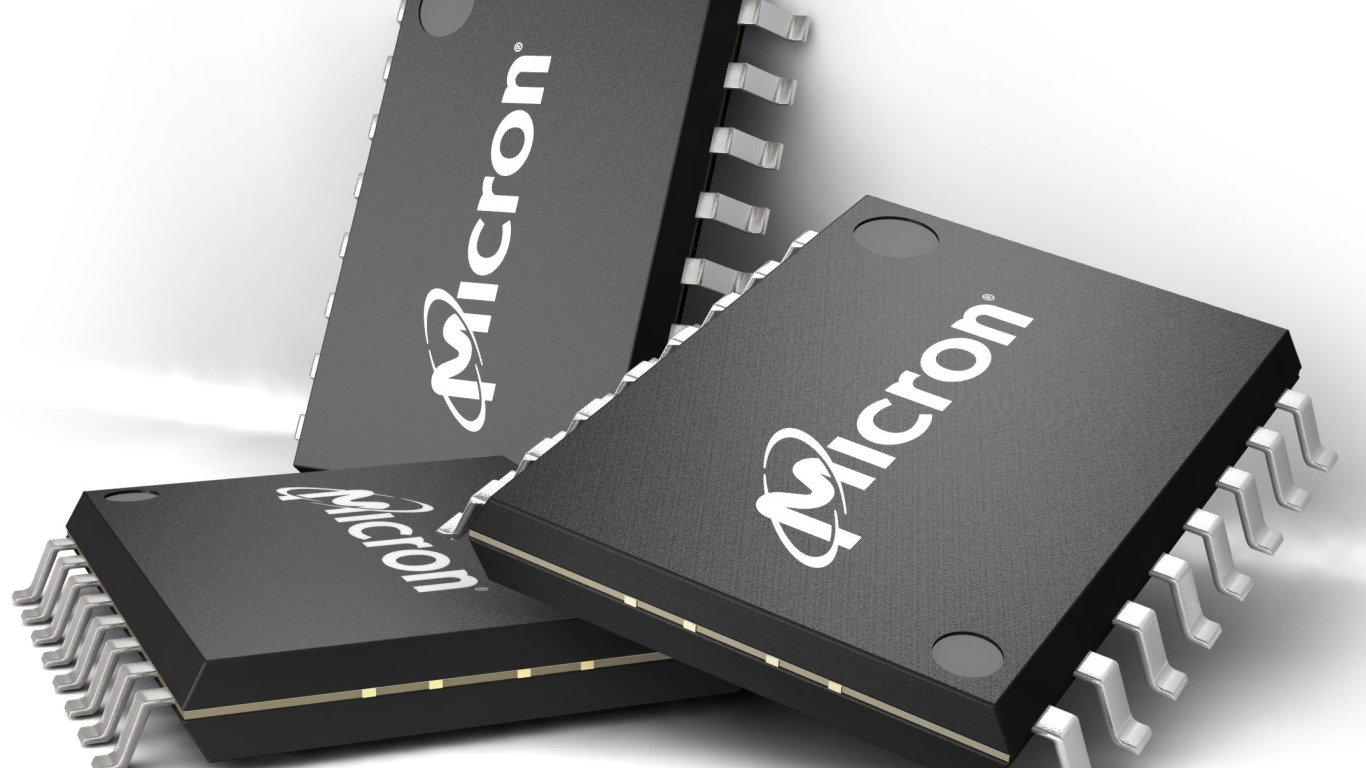
Micron Technology (NASDAQ:MU | MU Price Prediction) is the ticker dominating every memory-cycle headline right now, with traders piling into the assumption that DRAM and NAND pricing will ride the AI buildout straight up.
But here’s what you should actually be watching.
Memory is, and always has been, a commodity. DRAM and NAND pricing is set by global supply, capital intensity is brutal, and the cycle is historically boom and bust. Every memory boom in the last 25 years has handed back its gains when capacity caught up with demand. Retirement-focused investors who lived through prior air pockets already know how this movie ends. Paying up for the crowded trade at the top of a pricing cycle is the textbook way to underperform.
The smarter redirect is the silicon that routes, switches, and interconnects AI workloads inside hyperscaler data centers: Marvell Technology (NASDAQ:MRVL). Marvell sits in custom AI silicon and optical interconnect, the picks-and-shovels layer that gets paid whether memory pricing rises or falls. Three reasons it deserves your attention over the memory headline trade.
1. Direct AI infrastructure exposure. In Q3 FY2026, Marvell posted record revenue of $2.074 billion, up 37% YoY, with data center revenue of $1.518 billion, or 73% of the total, growing 38% YoY. Carrier infrastructure rose 98% YoY and enterprise networking 57% YoY. This is hyperscaler buildout revenue tied to custom ASIC programs and optical interconnect, separate from spot DRAM pricing.
2. Guidance is accelerating. Management guided Q4 FY2026 revenue to $2.200 billion at the midpoint with non-GAAP EPS of $0.79, full-year FY2026 growth above 40%, and crucially raised its FY2027 data center outlook above prior expectations. Upward revisions on a forward year are rare. CEO Matt Murphy put it plainly: “we see demand for our products continuing to accelerate, and as a result, our data center revenue growth forecast for next year is now higher than prior expectations.”
3. Portfolio sharpening and aggressive capital return. Marvell closed the $2.50 billion sale of its Automotive Ethernet business to Infineon in August 2025, booking a $1.80 billion pre-tax gain, then redeployed capital by acquiring Celestial AI to scale its optical interconnect roadmap. The company repurchased $1.3 billion of stock in Q3 alone. That is portfolio discipline you do not get from a single-product memory house.
The analyst tape backs the redirect. Stifel raised its target to $140 from $120 and Oppenheimer raised to $170 from $150 in late April, both citing accelerating DCAI networking and ASIC growth. Google is reportedly developing two custom AI chips with Marvell, alongside existing programs for AWS and Microsoft.
Risks are real and worth naming. Data center is 73% of revenue, customer concentration is high, and Chinese trade restrictions and hyperscaler vertical-integration risk are live issues. Forward P/E sits near 43x, which is rich, and recent insider activity has skewed toward selling, although much of the April 15 activity was vesting-driven.
None of that changes the structural setup. Memory is a pricing trade. Marvell is an architecture trade. Shares are already up 163.28% over the past year and 92.82% year-to-date, yet the FY2027 data center revision suggests the operating story is still in front of the multiple, while memory peers ride a pricing curve that has rolled over many times before.
Put Marvell on your research list today and let the memory crowd keep arguing about contract pricing.
Contact [email protected] for any questions or corrections.
Alex Sirois is a financial writer with experience spanning both retail and institutional investing. He has written for InvestorPlace and held roles at BNY Mellon and Bernstein, giving him a perspective that bridges Main Street portfolios and Wall Street analysis.
Alex holds an MBA from George Washington University and has built his career across multiple industries, including e-commerce, education, and translation — a breadth of experience that informs how he breaks down complex financial topics for everyday investors. His writing is conversational, actionable, and grounded in long-term, buy-and-hold investing principles.
At 247 Wall St., Alex focuses on delivering analysis that is both accessible and useful, with a clear emphasis on helping readers make more informed decisions with their money.