Forget UnitedHealth: Two Stocks To Buy Now
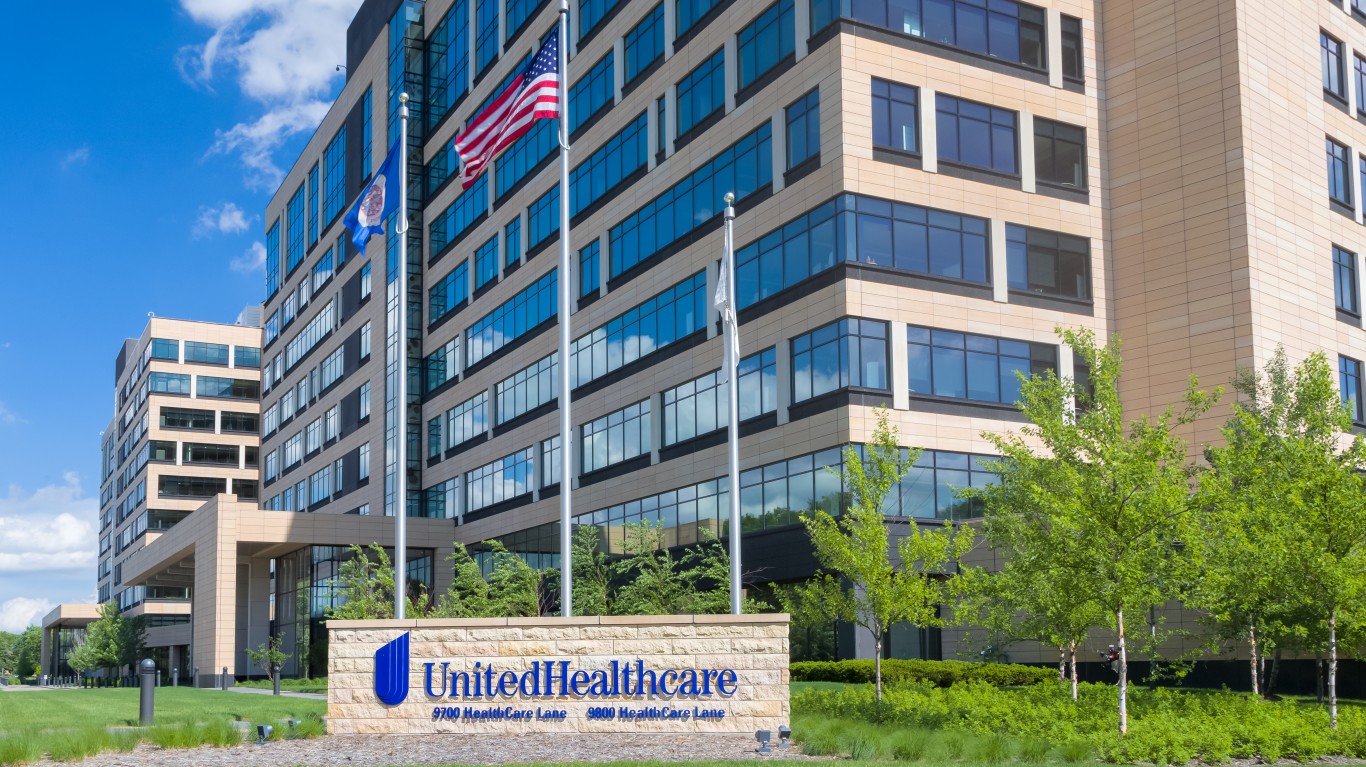
UnitedHealth Group (NYSE:UNH | UNH Price Prediction) is back in every headline, riding a 31.24% one-month bounce off a 9.38% Q1 EPS beat that had Reddit cheering a “UnitedHealth +7% premarket” rally on April 21. But here’s what you should…


UnitedHealth Group (NYSE:UNH | UNH Price Prediction) is back in every headline, riding a 31.24% one-month bounce off a 9.38% Q1 EPS beat that had Reddit cheering a “UnitedHealth +7% premarket” rally on April 21.
But here’s what you should actually be watching.
Why The UNH Bounce Looks Like a Trap
One quarter does not undo the damage. Full-year 2025 operating income collapsed 41.26% and net income fell 16.31%. Management’s own 2026 guidance calls for revenue of greater than $439 billion, a planned decline tied to the strategic exit of 1.3 to 1.4 million Medicare Advantage members. UnitedHealth lost 965,000 Medicare Advantage members in Q1 alone, while CMS rate-flat proposals for 2027 threaten to lock the most profitable line of business in neutral just as medical cost trends keep running hot.
Layer on the DOJ legal actions on Medicare program participation, residual $799 million cyberattack costs, and an Optum Health business with revenue down 3% on structurally unprofitable contracts. At a forward P/E near 20, you are paying for a turnaround in a business where Washington holds the pricing pen. Retirees do not need that fight.
Procter & Gamble: 136 Years of Boring Cash
Procter & Gamble (NYSE:PG) is a cash machine you can set your watch to. Three reasons it deserves the capital UNH holders are tempted to leave parked.
First, the dividend record is verifiable and durable. PG just declared its 70th consecutive annual increase, lifting the quarterly payout to $1.0885 with a May 15 payment date. The company has paid a dividend every year since 1890, and management plans to return roughly $10 billion in dividends and $5 billion in buybacks in fiscal 2026. That is contractual-feeling income; UNH’s 2.4% yield sits next to a shrinking top line.
Second, the operating results are accelerating. Q3 FY2026 delivered core EPS of $1.59, revenue of $21.24 billion (+7.38% YoY), and a fourth consecutive top- and bottom-line beat. Organic growth was broad-based across all five segments, with Beauty, Grooming, Health Care, and Fabric & Home each up 7%. No segment carrying the rest. No regulatory cliff in 2027.
Third, the cash conversion is real. PG generated $4.05 billion in operating cash flow and $3.03 billion in free cash flow in Q3, more than enough to fund the entire $15 billion capital return program with room to spare. Management reaffirmed full-year core EPS guidance of $6.83 to $7.09 despite a $400 million after-tax tariff hit. That is what pricing power looks like.
And If You Want a Second Anchor, Use Costco
Costco Wholesale (NASDAQ:COST) runs the same playbook with a different engine. Q2 FY2026 membership fee income jumped 13.6% to $1.35 billion on 82.1 million paid memberships and an 89.7% worldwide renewal rate. Q1 operating cash flow surged 43.8% to $4.69 billion, and cash on the balance sheet sits at $17.38 billion. COST is up 18.2% year-to-date doing exactly nothing dramatic.
For retirement-oriented portfolios, the contrast between UNH’s regulatory overhang and PG’s predictable cash returns is the central question, with COST offering a similar cash-flow profile through a different business model.
Contact [email protected] for any questions or corrections.
Alex Sirois is a financial writer with experience spanning both retail and institutional investing. He has written for InvestorPlace and held roles at BNY Mellon and Bernstein, giving him a perspective that bridges Main Street portfolios and Wall Street analysis.
Alex holds an MBA from George Washington University and has built his career across multiple industries, including e-commerce, education, and translation — a breadth of experience that informs how he breaks down complex financial topics for everyday investors. His writing is conversational, actionable, and grounded in long-term, buy-and-hold investing principles.
At 247 Wall St., Alex focuses on delivering analysis that is both accessible and useful, with a clear emphasis on helping readers make more informed decisions with their money.