You’re Going to Regret Not Buying This ETF Before SpaceX’s IPO
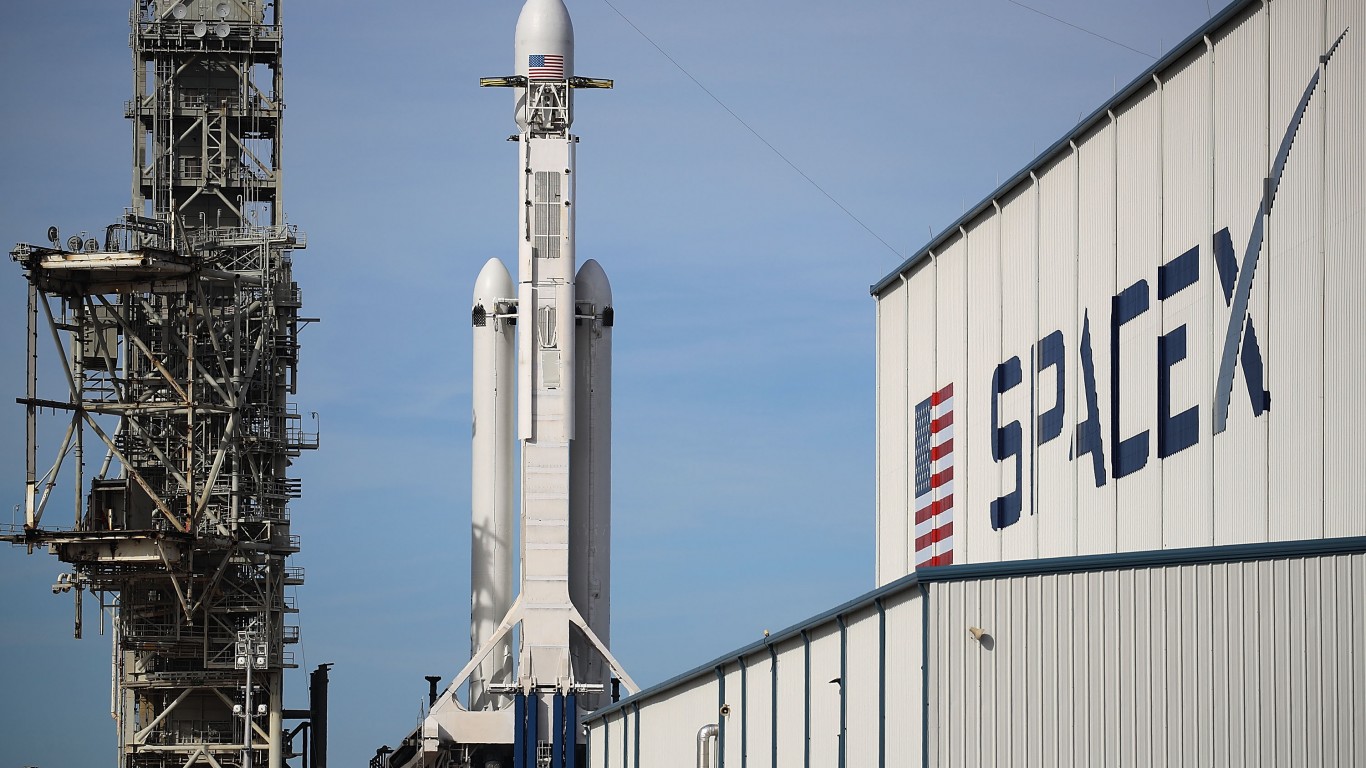
Prediction market traders on Polymarket now assign a 92% probability that SpaceX completes its IPO by June 30, 2026, with a $1.5 trillion-plus valuation in play. That puts the Procure Space ETF (NYSEARCA:UFO) in an unusual spot for a $749…


Prediction market traders on Polymarket now assign a 92% probability that SpaceX completes its IPO by June 30, 2026, with a $1.5 trillion-plus valuation in play. That puts the Procure Space ETF (NYSEARCA:UFO) in an unusual spot for a $749 million niche fund. UFO is the cleanest publicly listed expression of the space economy that does not stuff large defense primes into the basket to dilute the pure plays, and the market has noticed. Shares are up 130% over the trailing year and 45% year-to-date.
The thesis is straightforward. SpaceX functions as the sector anchor the way leading AI chipmakers did for AI infrastructure. When the benchmark name prints a public valuation, the comparables get repriced whether they deserve it or not.
The fund and what it owns
UFO tracks the S-Network Space Index and concentrates at least 80% of weight in companies that derive most of their revenue from space-related industries. Top positions include Planet Labs (NYSE:PL) at 6.16%, Viasat (NASDAQ:VSAT) at 5.9%, and Globalstar (NASDAQ:GSAT) at 5.28%. Satellite communications, GPS, and connectivity providers round out the top ten. Space stocks in the “Industrials” sector constitute 47% of the fund, with 34.6% in the “Communication” sector. UFO has 71% US exposure and meaningful slices in Japan, Canada, and Luxembourg. The structure was a little different by the end of last year, but what matters is that UFO is as pure-play as it gets to a space startup ETF.
The defense conglomerate ballast is missing here. Most thematic space funds smuggle in large aerospace primes, which dampens upside if a SpaceX listing ignites the pure plays. UFO leaves that exposure out, which is the entire reason to own it over a generic aerospace fund.
Does it deliver
Recent performance argues yes. But step back and the picture is less flattering. The five-year return is 117%, which trails the S&P 500 over the same window before you account for dividends. So for most of its existence, UFO was a worse way to own the market than just owning the market. The story changed in the past twelve months when SpaceX IPO speculation actually became actionable, with the company filing its confidential S-1 in early April 2026.
Retail sentiment confirms the rotation. One top holding’s Reddit sentiment score sits at 70.20, with an r/wallstreetbets post titled “Up 1.2 million. Still holding. Still buying. $RKLB” drawing nearly 800 upvotes. Another satellite-connectivity name’s FCC commercial approval for its 248-satellite constellation kept sentiment in the bullish range for weeks.
The tradeoffs
- Expense drag. The 0.94% expense ratio is steep for a thematic fund. Broad sector ETFs run a fraction of that, and you pay UFO‘s fee on holdings that already trade at growth multiples. But again, the growth this ETF gives you outweighs that drag massively. I’d be comfortable paying a near-1% expense ratio if it meant that I didn’t have to juggle dozens of AI holdings.
- Volatility you have to stomach. Several top holdings have logged five 40-55% drawdowns since January 2025 by the community’s own count. UFO’s small AUM means liquidity thins out in panic windows.
- The catalyst is partly priced in. Polymarket gives near-certain odds of a SpaceX listing by year-end, and UFO has already moved 50% this year on that anticipation. Buying for an event the crowd has identified is buying after the easier money.
Who this fits
UFO fits investors who want concentrated exposure to small and mid-cap space operators going into the SpaceX listing and accept this is a thematic vehicle, not a core holding. A 3-5% sleeve makes sense if you buy the argument that a SpaceX benchmark valuation drags the fund’s pure-play holdings higher with it. Investors who want diversified aerospace with defense ballast should look at a broad aerospace and defense ETF. And anyone counting on the catalyst firing on a specific date should remember the prediction markets are already there, which means the easy 142% has been claimed. Shares are $57 today. The next leg depends on whether a publicly traded SpaceX really does rerate the comparables, or whether retail has already done that work for them.
Contact [email protected] for any questions or corrections.
Omor Ibne Ehsan is a writer at 24/7 Wall St. He is a self-taught investor with a focus on growth, cyclical, and dividend equities that have strong fundamentals, value, and long-term potential. He also has an interest in high-risk, high-reward investments such as penny stocks.