Tesla vs. BYD: Which Stock Will Outperform The Market In 2026
Tesla (NASDAQ: TSLA | TSLA Price Prediction) and BYD (OTC: BYDDF) sit on opposite sides of the global EV map. Tesla just posted a Q1 2026 beat with $0.41 EPS versus $0.35 expected, snapping a rough 2025. BYD continues to…

This post may contain links from our sponsors and affiliates, and Flywheel Publishing may receive compensation for actions taken through them.
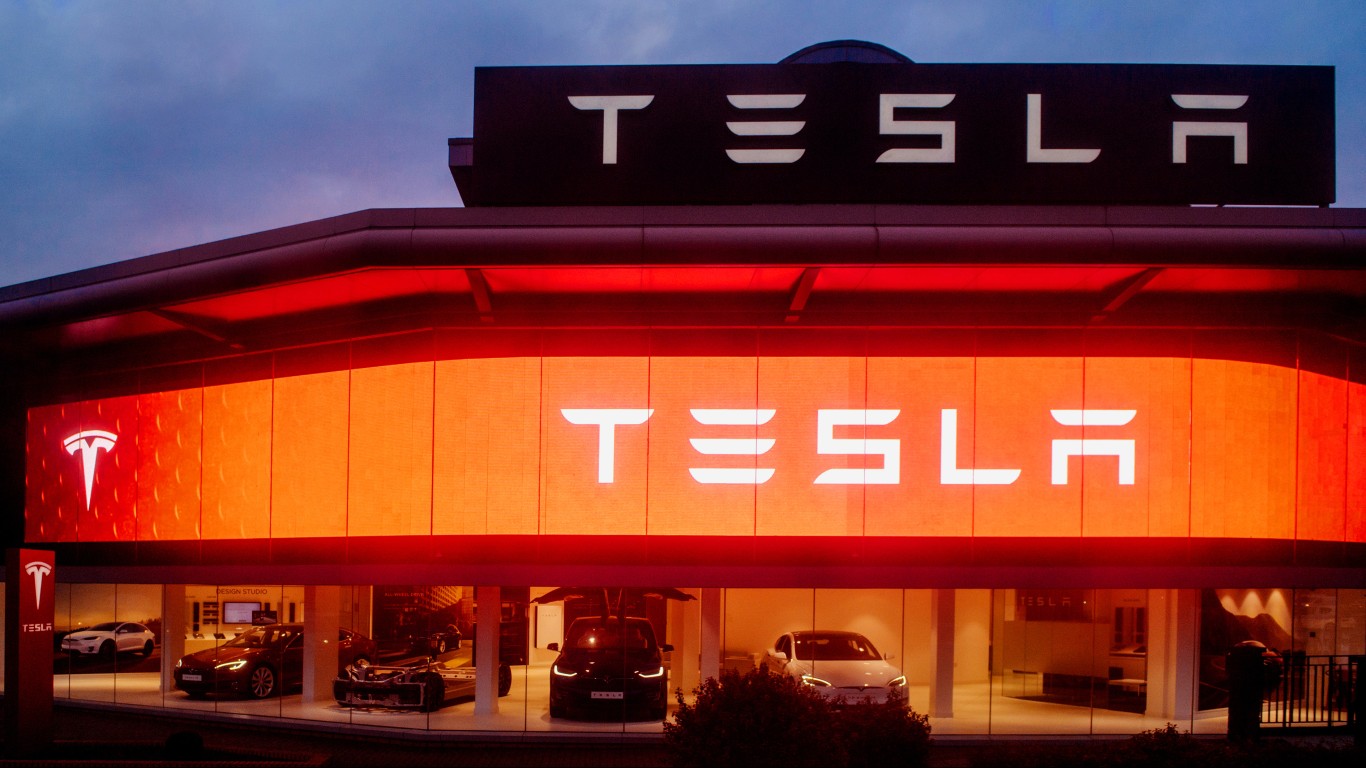
Tesla (NASDAQ: TSLA | TSLA Price Prediction) and BYD (OTC: BYDDF) sit on opposite sides of the global EV map. Tesla just posted a Q1 2026 beat with $0.41 EPS versus $0.35 expected, snapping a rough 2025. BYD continues to print record monthly EV and PHEV volumes out of China. Both have reported, and the contrast is loud.
Tesla Found Its Footing. BYD Kept Stacking Volume.
Tesla’s quarter looked like a reset. Revenue hit $22.39B, up 15.8% year over year, and automotive gross margin expanded to 21.1% from 16.2% on better mix and lower material costs.
Services and Other jumped 42% to $3.75B, helped by 1.28M active FSD subscriptions, up 51%. Free cash flow more than doubled to $1.44B. That said, Energy storage revenue slipped 12%.
| Business Driver | Tesla | BYD |
| Main Growth Engine | FSD, robotaxi, energy | Mass-market EV and PHEV volume |
| Margin Lever | Software attach and ASPs | Vertical integration on batteries |
| Geographic Strength | U.S., Europe | China, Southeast Asia, LatAm |
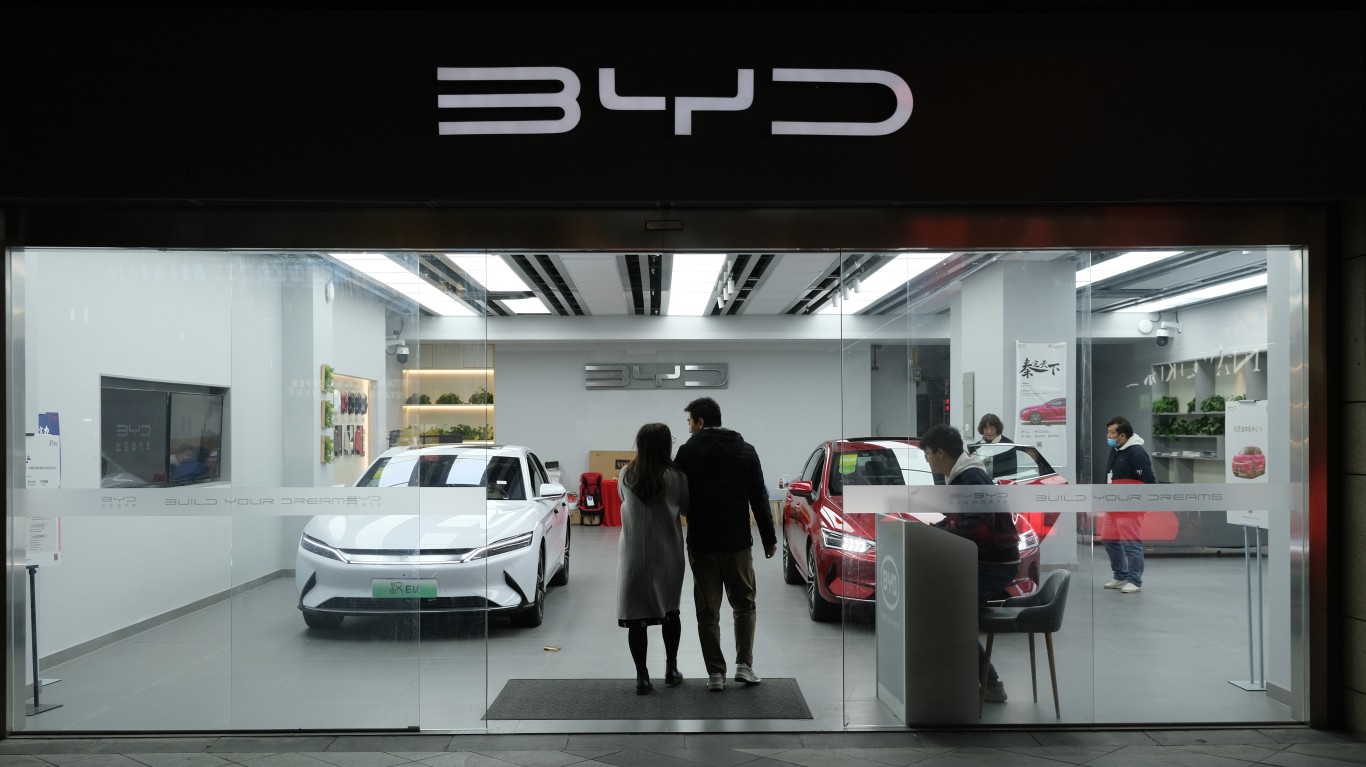
BYD’s story is volume and vertical integration. Blade Battery cells, FinDreams electronics, and a lineup spanning Dolphin, Seal, Han, Tang, and the Yangwang U8 give it a price ladder Tesla simply cannot match in China. Tesla had to introduce affordable financing in China to counter domestic sales dips, a tell that BYD’s pricing pressure is biting.
Software Bet Versus Steel and Cells
Tesla is doubling down on autonomy. Unsupervised Robotaxi rides launched in Dallas and Houston, FSD got Supervised approval in the Netherlands, and R&D rose to $1.95B to feed AI5, Dojo 3, and Optimus. CEO Elon Musk is essentially betting Tesla’s next leg on inference silicon and humanoid robots alongside its core auto business.
| Lens | Tesla | BYD |
| Core Bet | Autonomy and AI monetization | Global EV/PHEV market share |
| Key Vulnerability | FSD execution, China demand | Tariffs, slim per-unit margins |
BYD’s bet is industrial. It owns the battery, the power electronics, and increasingly the chips, then ships cars at price points Western OEMs struggle to clear. Where Tesla wants software margin, BYD wants share. Both can work. They just appeal to different patience levels.
The Cybercab Ramp Will Decide a Lot
I will be watching whether Cybercab volume production and Tesla Semi ramps land on schedule in 2026, and whether Optimus lines at Fremont actually progress toward 1M-robot capacity. On the BYD side, the key is export momentum and whether European tariffs blunt the price advantage. Tesla’s $418.57 share price is up 22.36% over one year but down 4.45% YTD, and analysts hold a $412.25 target. The setup looks balanced.
Why I Lean Toward BYD for 2026 Outperformance
Honestly, I think BYD has the cleaner 2026 setup. Tesla trades at a trailing P/E of 384 and forward P/E of 208, which prices in robotaxi and Optimus success that is still unproven. The Q1 beat was real, but Chinese regulators are investigating range claims and North American EV demand is softening.
BYD’s growth engine is mundane by comparison: build cheaper cars, sell more of them, control the battery. Tesla still owns the autonomy optionality story, while BYD offers 2026 exposure grounded in units shipped and margin discipline. I would change my view fast if Cybercab hits volume cleanly and FSD subscriptions cross 2M.
Contact [email protected] for any questions or corrections.
Vandita Jadeja is a financial publisher with over a decade of experience writing about financial topics, including investment, savings, retirement, insurance and banking. Vandita is a Chartered Accountant who loves to debunk financial concepts for readers.
Her work has appeared on sites that include The Motley Fool, InvestorPlace, and Benzinga. She covers investing and focuses on stock picks and price prediction for 24/7 Wall St.
When not looking for the next stock investment opportunity, she can be found traveling, reading, chasing sunsets and enjoying her iced latte.