




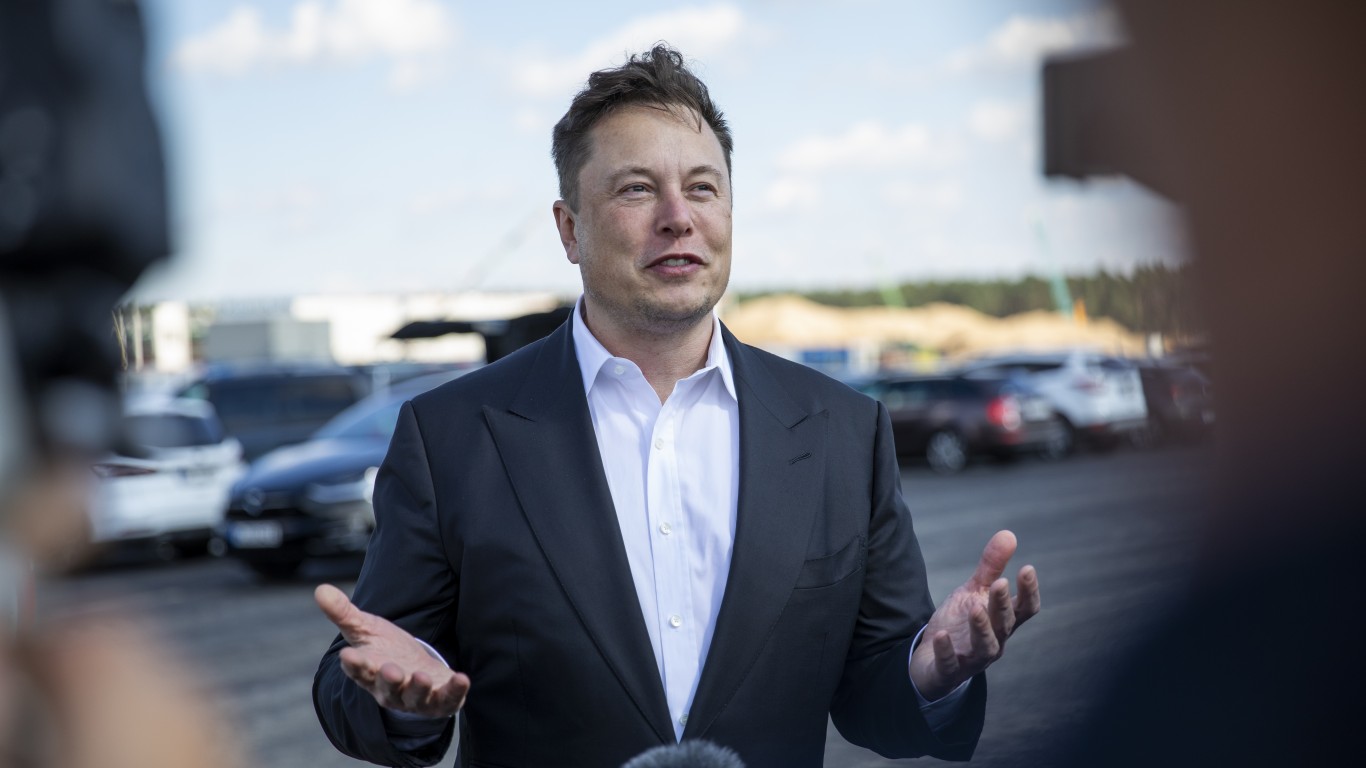
Elon Musk’s visionary projects have been sparking some huge conversations in the AI world in recent months. Whether it’s the orbital AI data centers, which were given a massive vote of confidence following the recent Google (whose parent company is Alphabet (NASDAQ:GOOGL | GOOGL Price Prediction)) deal with SpaceX, as well as Nvidia (NASDAQ:NVDA) after it announced its space computing platform, the conversion of Tesla (NASDAQ:TSLA) facilities into Optimus robot manufacturing sites, or the unexpected but still exciting and incredibly ambitious Terafab project to help Musk’s firms gain chip independence, there’s certainly no shortage of exciting, frontier-level innovation coming from Musk and company in the lead up to the big SpaceX IPO.
It’s not cheap to get into fabs, but it might be necessary
Like with the concept of space-based AI data centers or the rise of humanoid robots, I’m sure many are skeptical of Musk’s move into the complex world of semiconductor fabrication. With a helping hand from Intel (NASDAQ:INTC), which has also emerged as a big winner in the fab, though, I think the critics have a good chance of being silenced in a few years’ time, despite the sky-high execution risks.
Indeed, Elon Musk’s companies certainly have the capital to make that fab. And while there’s been mounting concern over rising AI-related CapEx, I do think that if the AI revolution is real, the move into fabs just makes sense. And it might cause other big firms with ample cash to consider following in its footsteps, as the bandwidth of Taiwan Semiconductor (NYSE:TSM) looks to stay maxed out for a while longer. Of course, it’s going to cost a fortune to build one’s own fab.
But, then again, if you’re spending big money on frontier-level AI model innovation as well as designing custom silicon, you might as well take it a step further by taking control of the fab process as well. It’s a massive step forward. But I do think that ambitious undertakings like the Terafab will become big topics of discussion among other cash-heavy players within the Mag Seven and beyond.
Risks exist, but the potential rewards could far exceed them
Given the execution risks and the unknowns surrounding whether frontier-level AI model development, I’d argue that getting into the fab scene might be a natural next step for firms as semis continue to be a chokepoint in the AI revolution, while the concept of “physical AI” looks to act as a major moat source that smaller firms can’t keep up with.
To start, the Terafab facility in Texas is going to cost $55 billion. But it’s not going to stop there. At the end of the day, the shift to fabs might end up costing something closer to $119 billion. Is it an unprecedented rolling of the dice? Or is it a genius high-stakes move that will be met with high rewards?
Time will tell, but I think the odds favor the Terafab bills being money that’s well spent, especially when you envision a world where full self-driving (FSD) vehicles are everywhere on the roads, while humanoid robots (like Optimus) are also commonplace, and, of course, let’s not forget about the space-based AI data centers. Just having big money to throw at ambitious projects, like the Terafab, is no guarantee of success.
But given that Elon Musk is a man who can attract top talent across the tech scene, I’d argue that there’s no reason the fab project can’t be a success. Like Starlink, perhaps doubters will continue to doubt until the project proves profitable and other firms look to scramble in an effort to catch up as they wake up to the actual economic opportunity to be had.
The bottom line
In my view, the Terafab just cranks up the risk/reward on Elon Musk’s companies, which are already quite well-known for the high-risk/high-reward proposition. For Musk’s ambitious vision of the future and the growth paths of his companies, I’d argue that Terafab is the move that just makes the most logical sense.
I’d argue that Intel’s successful move into fabs is a sign that the rewards seem to outweigh the risks.
Contact [email protected] for any questions or corrections.





 Top Gaining Stocks
 Top Losing Stocks