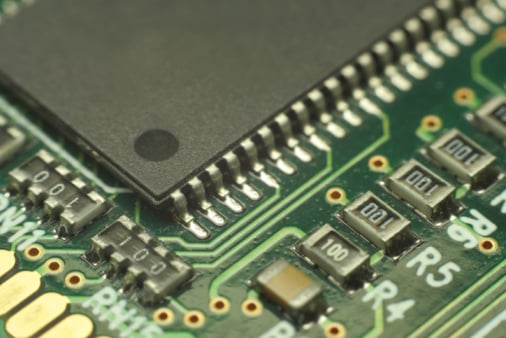
Elon Musk’s $119 Billion Gambit: The Real Reason He’s Building the World’s Largest Chip Plant
On March 21, 2026, at the Seaholm Power Plant in Austin, Elon Musk unveiled "the most epic chip-building exercise in history": Terafab, a joint venture between Tesla (NASDAQ:TSLA | TSLA Price Prediction), SpaceX, and xAI, with Intel (NASDAQ:INTC) as foundational…

This post may contain links from our sponsors and affiliates, and Flywheel Publishing may receive compensation for actions taken through them.
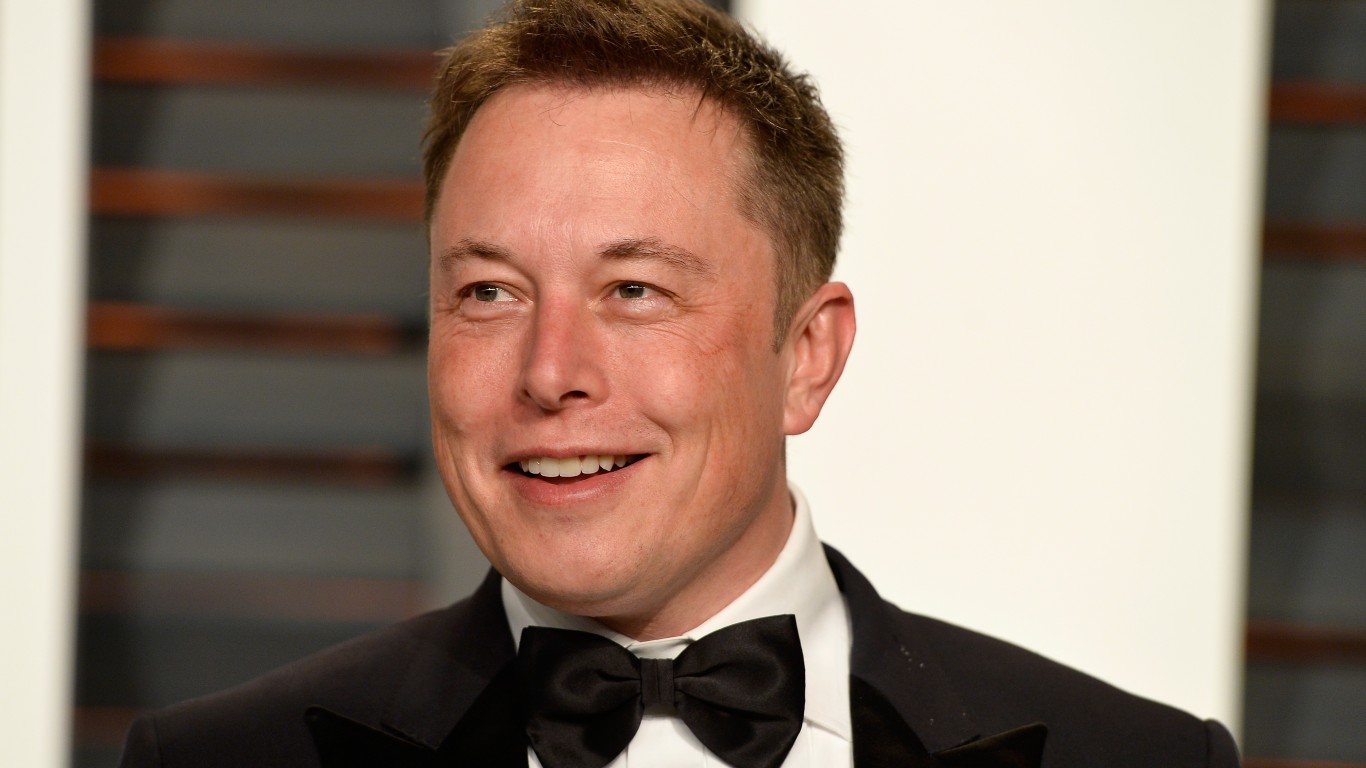
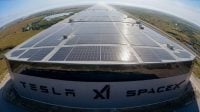
On March 21, 2026, at the Seaholm Power Plant in Austin, Elon Musk unveiled what he called “the most epic chip-building exercise in history”: Terafab, a joint venture between Tesla (NASDAQ:TSLA | TSLA Price Prediction | TSLA Price Prediction), SpaceX, and xAI, with Intel (NASDAQ:INTC) as foundational manufacturing partner. The stated goal is one terawatt of AI compute capacity per year, a target that Tesla says would exceed the combined output of every chip manufacturer in the world today, and even by 2030.
The Real Reason: Compute Sovereignty
Musk’s core thesis is that current global fabrication meets only about 2% of the eventual demand his enterprises require. The clearest signal is Optimus. Musk anticipates producing between 1 billion and 10 billion humanoid robots annually, an output that would require 100 billion to 200 billion chips. Layer in SpaceX’s orbital data center ambitions, which Musk says will absorb roughly 80% of Terafab’s projected output, and TSMC’s capacity simply cannot meet that math. This is vertical integration conceived not as cost optimization but as survival strategy.
Terafab will produce two distinct chip families. The first is an edge-inference processor, the AI5, which Tesla claims delivers a 50x performance improvement over the current AI4, designed for Full Self-Driving, Optimus robots, and Cybercab. The second is a radiation-hardened variant for SpaceX’s planned constellation of orbital AI satellites. Consolidating chip design, fabrication, memory production, advanced packaging, and testing under one roof is central to the project’s ambition, forming what Musk describes as “an incredibly fast recursive loop for improving chip design.”
Tesla: Bearing the CapEx Burden
The financing math is formidable. Tesla’s 2026 capital expenditure plan has already climbed to $25 billion as the company ramps AI, autonomy, and manufacturing, and that figure did not initially include Terafab. Grimes County, Texas, filings put the first phase of the buildout at $55 billion, with the full project reaching up to $119 billion. Bernstein analyst Stacy Rasgon separately estimates that fulfilling the one-terawatt ambition could ultimately require $5 trillion to $13 trillion in cumulative capital, a figure that underscores the staggering difference between Terafab’s initial scope and its full vision.
Tesla enters this commitment from a position of relative financial strength. The company held $44.74 billion in cash and short-term investments at the end of Q1 2026, while operating cash flow for the quarter reached $3.937 billion. Revenue grew 16% year-over-year to $22.387 billion, with non-GAAP EPS of $0.41 beating the Wall Street consensus of $0.36. Gross margin recovered to 21.1%. That Q1 performance, detailed in the company’s SEC filing, provides the cash generation needed to fund early-phase Terafab commitments. The multi-year capital requirement, however, dwarfs anything Tesla has previously attempted. Adding to the backdrop, Tesla reported Q2 2026 deliveries of 480,126 vehicles, a 25% year-over-year gain that beat Wall Street forecasts by 74,000 units, with full financial results due July 22.
Intel: The Sovereign AI Anchor Tenant
For Intel, Terafab represents the credibility test its foundry pivot urgently needed. CEO Lip-Bu Tan secured the partnership as the company’s 14A process node, the generation after 18A, entered customer evaluation. Tesla and SpaceX committing to 14A is the first major external signal that the node is a production-credible target, giving Intel Foundry its premier anchor tenant at exactly the moment it needed one. The Intel foundry operating loss narrowed to $2.4 billion in Q1, improving $72 million quarter-over-quarter as yields across the Intel 3, 4, and 18A nodes trended upward. Design commitments from external customers are expected to begin arriving in the second half of 2026.
Intel’s Q1 2026 results reinforced the turnaround narrative. Total revenue reached $13.6 billion, up 7% year-over-year and roughly $1.4 billion above the midpoint of the company’s own guidance. Data Center and AI revenue grew 22% to $5.1 billion, while Intel Foundry revenue rose 16% to $5.4 billion. Non-GAAP EPS of $0.29 shattered the Wall Street consensus of $0.01. Tan captured the strategic moment clearly: “The next wave of AI will bring intelligence closer to the end user, moving from foundational models to inference to agentic.” In a further sign of foundry momentum, the Wall Street Journal reported in May 2026 that Intel had reached a preliminary agreement to manufacture chips for Apple, sending Intel shares up roughly 14%. The precise scope of that arrangement, including which process nodes and volumes are involved, has not been confirmed by either company.
The Bear Case Is Real
Morgan Stanley’s Andrew Percoco labeled Terafab a “Herculean task” and pegged the full cost at $35 billion to $45 billion, projecting that initial chip output would not arrive before mid-2028 at the earliest. That timeline gap matters because it sits years after Tesla’s Optimus production ramp is supposed to accelerate, creating a window where chip supply could constrain the robotics program the entire project is designed to serve.
Market skepticism is visible elsewhere. Polymarket assigned only 14.5% probability to an Optimus consumer release by year-end 2026 and 13.5% to a California robotaxi launch by June 30. Regulatory pressure adds its own friction: SpaceX’s planned million-satellite constellation would release an estimated 360 metric tons of aluminum oxide per year, roughly 646% above natural atmospheric levels. On the permitting front, what was once organized local opposition in Grimes County has since given way to a formal resolution. County commissioners voted 4-1 on June 3, 2026, to approve a full 100% property tax abatement for the project, and SpaceX CFO Bret Johnsen officially signed the agreement on June 22. Under its terms, SpaceX is committed to invest at least $5 billion by 2030 and create 1,800 jobs by 2035, though it may exit with just 30 days’ written notice and a maximum $60 million penalty. Wedbush’s Daniel Ives takes the long view, calling Terafab “the first step to ultimately what will be Tesla and SpaceX combining forces in a merger likely in 2027,” reiterating a $600 price target on Tesla.
SpaceX’s IPO Adds Another Layer
The capital and strategic picture grew considerably more complex when SpaceX filed its public S-1 on May 20, 2026, targeting a $1.75 trillion valuation and a $75 billion raise under the Nasdaq ticker SPCX. That filing, which followed a confidential submission to the SEC in April, came weeks after SpaceX completed its all-stock merger with xAI at a combined valuation of $1.25 trillion. The S-1 revealed that SpaceX directed around 60% of its 2025 capital spending to its AI division, approximately $20 billion, while the AI segment posted a $6.4 billion operating loss for the year. Starlink, which generated more than $11 billion in revenue in 2025, remains the financial anchor of the offering. If the IPO prices near the top of its targeted range, SpaceX would rank among the most valuable publicly traded companies in the world, making Terafab’s capital commitments a key line item in the prospectus scrutiny.
What to Watch
Intel’s role in Terafab is the cleaner near-term story: the partnership immediately monetizes idle foundry capacity and validates 14A at a pivotal stage in its development. Tesla carries the higher-conviction, higher-risk position, where the AI and robotics thesis must outrun a multi-year CapEx wave against an automotive backdrop that, while improving on deliveries in Q2, still faces margin pressure heading into the July 22 earnings report. The critical signposts are Q2 capital guidance from both companies, AI5 tape-out progress on Intel’s 14A process, SpaceX’s IPO pricing and investor reception, and whether Blue Origin’s Project Sunrise or Google’s Project Suncatcher meaningfully reshapes the orbital compute race before SpaceX can establish a lead.
Editor’s note: This pass adds several post-publication developments: Grimes County commissioners voted 4-1 on June 3, 2026, to approve a full 100% property tax abatement for Terafab, and SpaceX CFO Bret Johnsen officially signed the agreement on June 22; SpaceX’s public S-1, filed May 20, 2026, targets a $1.75 trillion valuation under the Nasdaq ticker SPCX and disclosed that the AI division absorbed roughly 60% of 2025 capex; Tesla’s Q2 2026 deliveries of 480,126 vehicles beat forecasts by 74,000 units; and the scope of Intel’s preliminary Apple foundry agreement remains unconfirmed by either company regarding process nodes and volumes.
Contact [email protected] for any questions or corrections.
Don Lair writes about options income, dividend strategy, and the kind of boring-but-durable investing that actually funds retirement. He's the founder of FITools.com, an independent contributor to 24/7 Wall St., and a former writer for The Motley Fool.