Why XRP ETFs Are Pulling in More Money Than Solana ETFs Despite the Price Lag
XRP (CRYPTO: XRP) spot ETFs have pulled in $1.39 billion since launching in November 2025, while Solana (CRYPTO: SOL) spot ETFs have attracted $1.12 billion since their October 2025 debut. That gap in ETF funding between the two cryptos has…

This post may contain links from our sponsors and affiliates, and Flywheel Publishing may receive compensation for actions taken through them.

XRP (CRYPTO: XRP) spot ETFs have pulled in $1.39 billion since launching in November 2025, while Solana (CRYPTO: SOL) spot ETFs have attracted $1.12 billion since their October 2025 debut.
That gap in ETF funding between the two cryptos has held even though XRP is down 39% from its July 2025 peak. Solana has also outperformed XRP on price for the most of this year. We looked at how institutional capital moves into both assets’ ETFs and what that means for the rest of the year.
Why XRP ETFs Are Dominating Solana ETFs
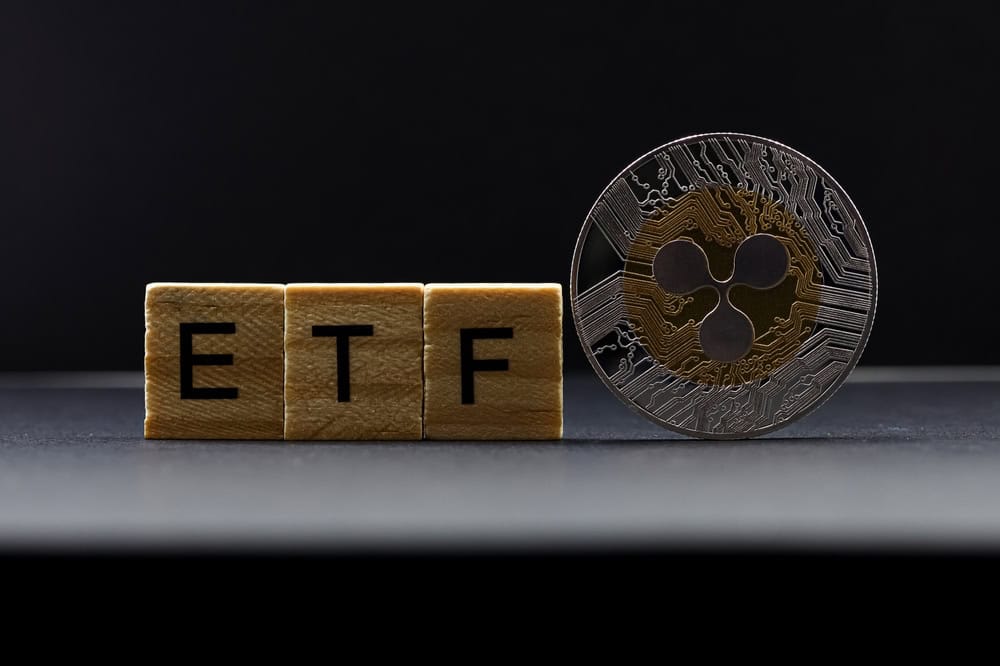
XRP ETFs have pulled in $1.39 billion in cumulative inflows since November 2025, against Solana’s $1.12 billion, which is a $270 million gap. XRP ETFs’ dominance has been fueled by these factors.
Sop XRP ETFs Inflow Streak Has Been More Consistent
XRP ETFs ran a 13-day stretch of positive net flows in early December 2025, surpassing Solana’s $618.59 million cumulative inflow total in just 13 trading days. That early momentum established a pattern that has held into 2026..
XRP posted $81.6 million in April inflows along with a 14-day inflow streak, bringing year-to-date inflows to roughly $124 million by the end of April.
Solana added $38.69 million in April, less than half of XRP’s monthly figure. Solana’s monthly inflows dropped from $419 million in November 2025 to that $38.69 million April figure. But the trend is reversing in May as Solana has posted over $99 million after 19 trading days while XRP follows closely at $95 million.
Solana ETF Inflows Are Concentrated in One Fund—Bitwise’s BSOL
Solana’s ETF inflows are heavily concentrated in a single product. In its strongest recent week, Bitwise’s BSOL accounted for $36 million of the category’s $39.23 million in total inflows—roughly 92%.
That concentration creates risk. If sentiment around BSOL weakens or Bitwise loses its fee advantage, Solana ETFs as a category could see extended outflows.
XRP’s setup looks different because inflows spread across five funds—Canary Capital’s XRPC, Grayscale’s GXRP, Franklin Templeton’s XRPZ, Bitwise’s XRP, and 21Shares’ TOXR—reducing the risk of any single product dominating or pulling the entire funds down.
XRP Has a Catalyst Solana Doesn’t
The CLARITY Act is the structural difference the price charts don’t show. A full Senate vote would create a defined legal framework for XRP custody, collateral treatment, and balance sheet exposure—exactly the compliance checklist pension funds and regulated asset managers need before committing capital at scale.
Moreover, the need for that clarity showed up this week. Goldman Sachs disclosed in its Q1 2026 13F filing that it fully exited its $154 million XRP ETF position—the largest disclosed institutional holding at the end of Q4 2025—along with its entire Solana ETF book. Both products have continued posting net inflows in April and May despite the exit, but Goldman’s pullback shows how tactical the institutional interest still is without a regulatory framework in place.
Solana’s equivalent catalyst is Alpenglow, a network upgrade targeting sub-150ms transaction finality. However, regulatory clarity unlocks a different tier of institutional money than a throughput improvement does. That’s the capital that could close the gap between $1.39 billion in inflows and the $4–8 billion JPMorgan projects if the bill passes.
Where Could XRP and Solana Go From Here?

XRP ETF inflows have been strong, but they still haven’t translated into a sustained price breakout. Much of XRP’s price action this year has been driven by broader macro and geopolitical conditions, including tighter monetary policy expectations and weaker risk appetite across crypto markets. For now, the inflows have mainly helped XRP absorb sell pressure around key resistance levels rather than trigger a rally on their own.
For the XRP price to break higher, the market likely needs a larger catalyst—particularly regulatory clarity through the CLARITY Act and stronger institutional participation.
On the other hand, Solana is currently in a recovery phase. Its ETF inflows have rebounded in May, showing that investor confidence around Solana’s growth remains strong. Much of that momentum is tied to Alpenglow, which continues reinforcing Solana’s positioning as a high-performance blockchain.
What’s Next for XRP ETFs and Solana ETFs?
XRP’s cumulative ETF lead shows demand has held up even during weaker price performance. However, the market still wants proof that those inflows can translate into sustained price momentum. So far, ETF demand has mainly helped support XRP during periods of selling pressure without fully changing the broader trend.
Solana’s price recovery and May inflow rebound suggest investors are still willing to lean into higher-growth blockchain narratives, especially when market sentiment improves.
Contact [email protected] for any questions or corrections.
Sam Daodu is a crypto analyst who's spent nearly a decade making blockchain understandable—no easy task when most whitepapers read like fever dreams. He writes for 24/7 Wall St., covering Bitcoin, altcoins, and crypto market analysis for investors. Before crypto, he was a tech writer (back when explaining "the cloud" was peak innovation). Since 2018, he's written for CoinTelegraph, Yahoo Finance, The Block, Cryptonews, Zypto, Rain, and more—basically anywhere people want crypto news without the headache. Sam runs MacLabs Marketing, a content agency for crypto brands tired of sounding like AI wrote their website. He also publishes free crypto education on his site for Web3 enthusiasts who think "gas fees" is a typo. When he's not writing or staring at charts, Sam's either: - Watching anime (currently convinced One Piece has better tokenomics than most altcoins) - At the gym sculpting himself into a Greek god - Listening to the music your mum warned you only bad boys listen to Connect: LinkedIn | Email | MacLabs Marketing